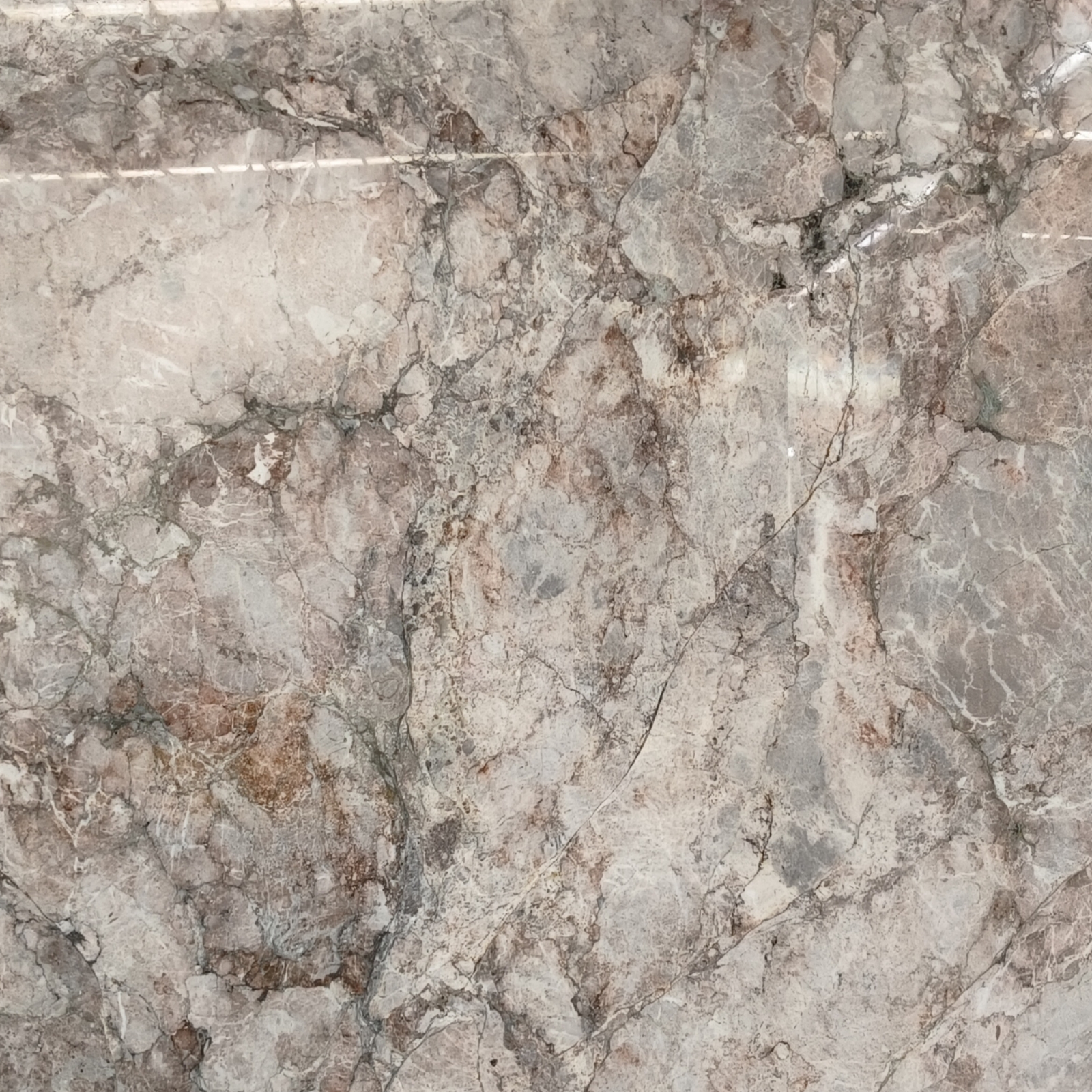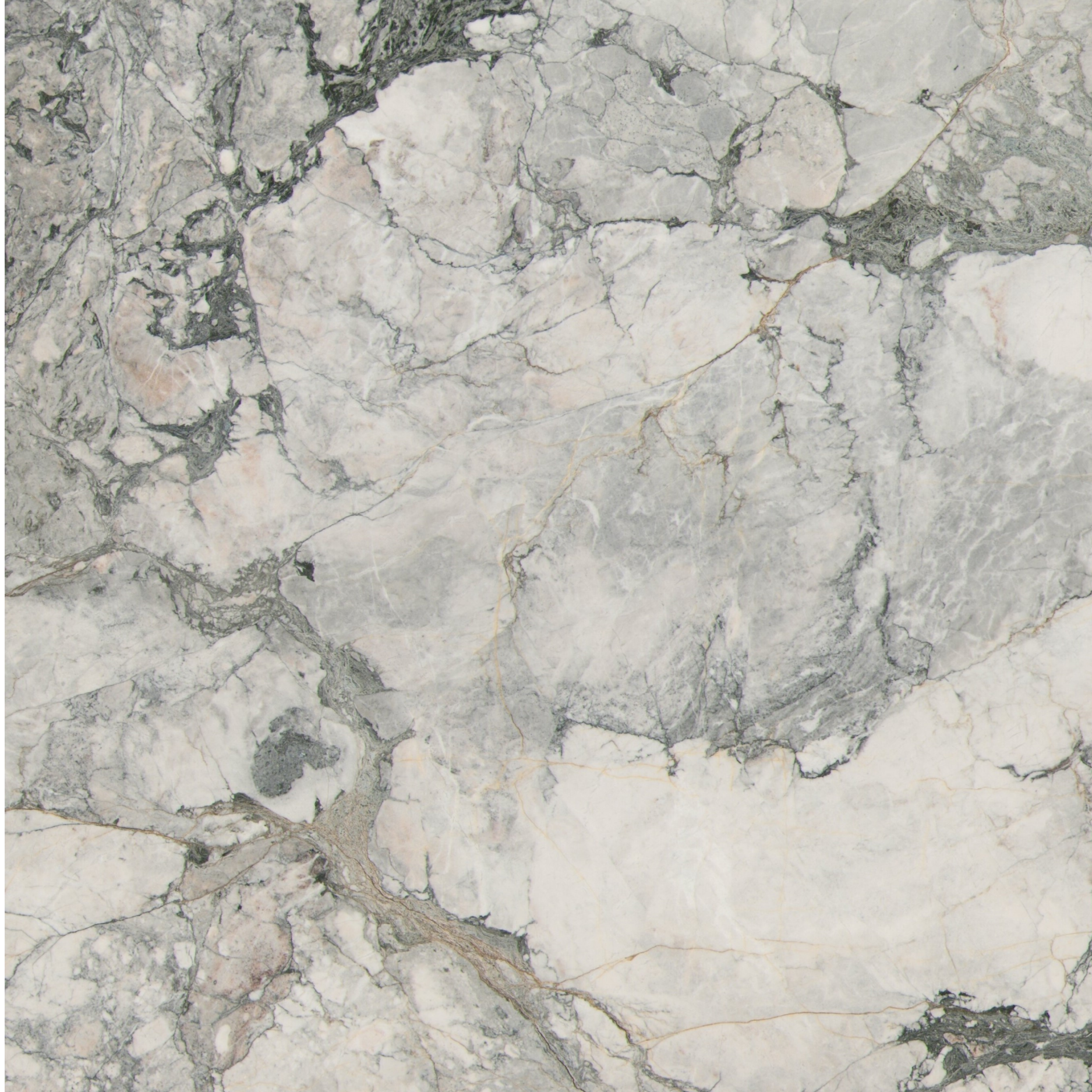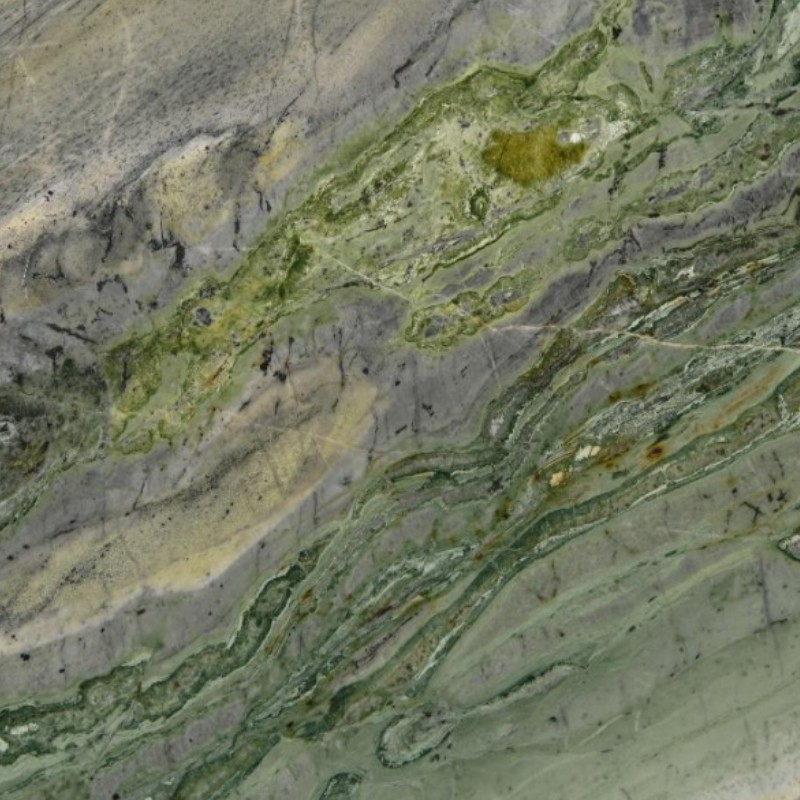
Four Season Green Marble Slabs become most powerful when they are not treated as random green stone panels, but as mirrored natural artwork where color, vein direction, and symmetry are planned before cutting begins. In luxury interiors, bookmatching is not only a decorative technique. It is a technical design process that controls slab sequence, centerline symmetry, color flow, panel size, dry-lay approval, and final installation order.
Four Season Green Marble is visually strong. Its green base, white veins, dark mineral movement, cloudy transitions, and natural contrast can create a dramatic architectural statement. But that same beauty also creates sourcing and installation risk. If slabs are selected randomly, if the dry-lay is skipped, or if panels are numbered poorly, the final wall may look disconnected even when the material itself is expensive.
For buyers reviewing the material at the product level, the first step is to study the actual stone character through a dedicated Four Season Green Marble product reference. Product photos help identify color tone, vein movement, and decorative potential, but final project approval should still depend on current slab photos, bookmatch sequence, dry-lay layout, and cut-to-size planning.
Four Season Green Marble Slabs for Applications
What Are Four Season Green Marble Slabs?
Four Season Green Marble Slabs are exotic natural green marble slabs known for rich green tones, dramatic veining, layered mineral movement, and strong decorative variation. Depending on the block, the stone may show green, white, black, grey, cream, golden, or earthy vein movement. This makes it especially suitable for luxury interiors where the stone itself becomes a focal point.
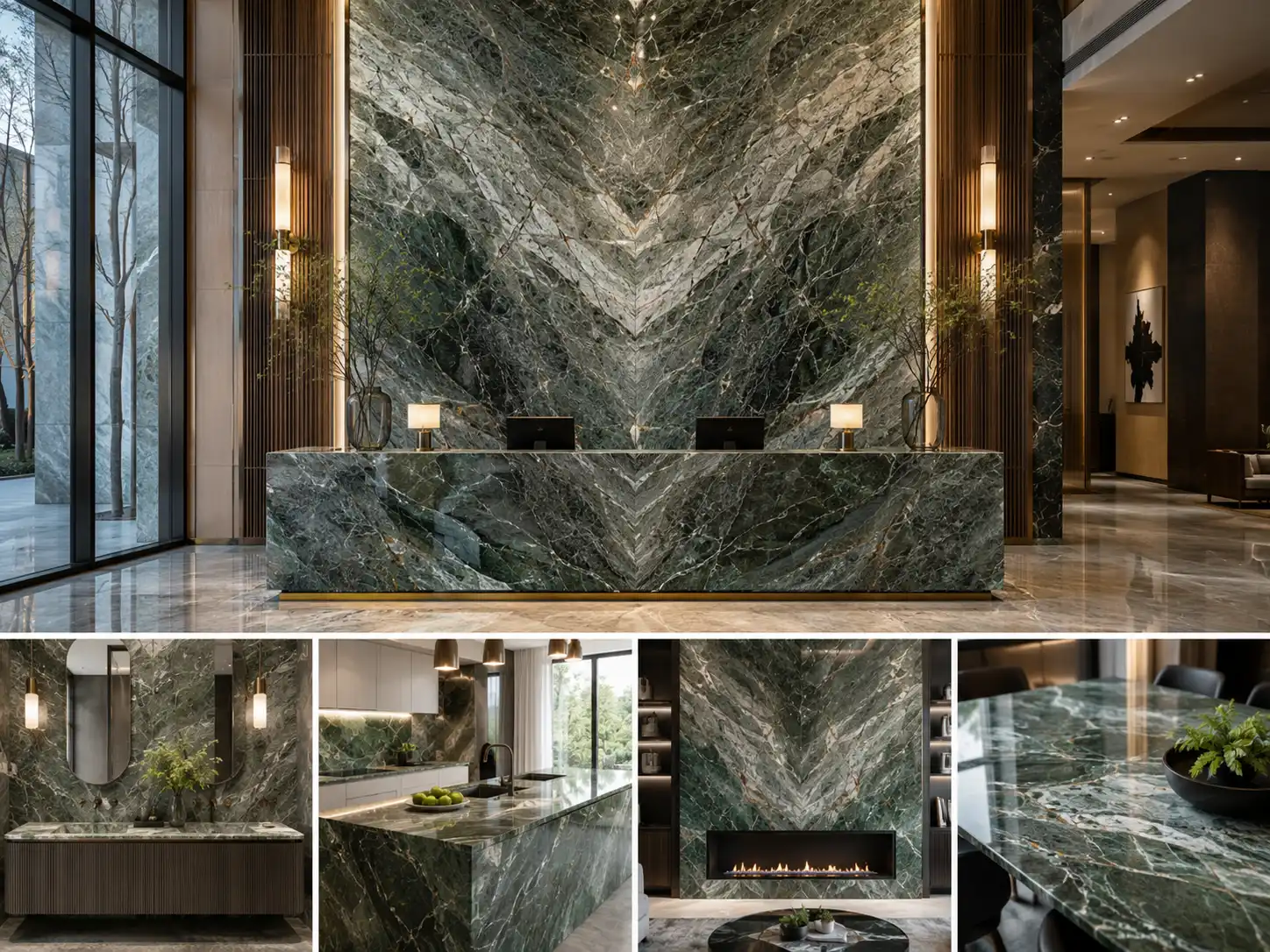
The material is commonly used for bookmatched feature walls, hotel lobbies, villa living rooms, bathroom walls, reception counters, fireplace surrounds, elevator lobbies, private dining rooms, and high-end commercial interiors. It is not a quiet background stone. It should be specified as a planned visual composition. The more dramatic the slab, the more important the layout becomes.
Buyers comparing Four Season Green with other marble options can also review a broader marble slabs collection to understand how this green material differs from white marble, beige marble, grey marble, onyx-style stones, and other decorative slab materials used in luxury walls and countertops.
| Material Feature | Design Meaning | Buyer Check |
|---|---|---|
| Strong green base | Creates a luxury natural identity | Confirm actual slab color |
| Dramatic veins | Supports bookmatch effect | Review slab sequence |
| Natural variation | Makes each wall unique | Approve real photos |
| Large slab size | Reduces seams | Check available dimensions |
| Polished surface | Enhances depth and contrast | Confirm finish quality |
| Directional movement | Helps mirrored layout | Plan cut direction |
The Challenge of Vein Continuity in Exotic Stones
Vein continuity is one of the biggest challenges when working with exotic stones. Four Season Green Marble often has strong movement, but the pattern is natural and irregular. Veins may shift direction across a slab. Green zones may become darker or lighter. White mineral lines may widen, split, or disappear. Dark veins may create beautiful contrast in one panel but visual imbalance in another.
Bookmatching works best when slabs are cut sequentially from the same block, then opened like pages of a book. Random slabs cannot create true symmetry. Even slabs from the same material name may not match if they come from different blocks or bundles. Buyers should never assume that “same stone name” equals “same wall effect.”
For a stronger understanding of the material’s origin, processing path, and luxury design value, buyers can review Four Season Green Marble from quarry to luxury design. This type of sourcing perspective is important because bookmatched results are decided long before installation; they begin at block selection, slab sequence, and factory layout planning.
| Vein Continuity Issue | Cause | Result |
|---|---|---|
| Broken vein line | Wrong slab sequence | Wall looks disconnected |
| Color mismatch | Mixed bundles or different blocks | Uneven visual tone |
| Off-center symmetry | Poor layout planning | Weak bookmatch effect |
| Pattern overload | Too many strong veins | Visual chaos |
| Wrong panel rotation | Poor numbering | Installation mistake |
| Narrow seam visibility | Poor cutting or installation | Luxury effect reduced |
How Bookmatching Works with Four Season Green Marble Slabs
A two-panel bookmatch uses two adjacent slabs opened like a book. This is suitable for smaller feature walls, bathroom vanity backgrounds, fireplace surrounds, and reception panels. The center seam becomes the mirror axis. If the vein movement meets naturally at the center, the wall can feel like a stone artwork.
A four-panel bookmatch is more dramatic. It is common for villa living room walls, hotel lobby walls, elevator backgrounds, and large reception zones. Four panels can create stronger symmetry and more architectural impact, but they also increase risk. The slab sequence, cut direction, seam position, and panel numbering must be controlled carefully.
Multi-slab bookmatching is used for large commercial walls. In these cases, the goal may be perfect mirror symmetry, continuous movement, or a controlled visual rhythm across many panels. Sometimes the best layout is not strict mirroring but a continuous match that allows the green and white veins to flow across a long wall. The right strategy depends on the stone’s natural pattern and the designer’s intent.
| Bookmatch Type | Best Use | Visual Effect | Buyer Warning |
|---|---|---|---|
| Two-panel bookmatch | Bathroom wall, fireplace, small feature wall | Simple symmetry | Center seam must align |
| Four-panel bookmatch | Villa wall, hotel lobby, reception wall | Strong luxury impact | Needs precise dry lay |
| Multi-slab bookmatch | Large commercial wall | Grand architectural effect | Higher risk of mismatch |
| Continuous match | Long corridor or bar wall | Flowing movement | Requires slab sequence control |
| Cross-match | Artistic feature wall | More abstract design | Needs designer approval |
Best Applications for Bookmatched Feature Walls
Bookmatched Four Season Green Marble is strongest in high-visibility spaces. A hotel lobby wall can use the stone to create a memorable arrival experience. A reception wall can communicate luxury and brand identity before the guest speaks to anyone. An elevator lobby can turn a compact transition area into a premium design moment.
In villa interiors, Four Season Green Marble works well behind a sofa wall, TV wall, fireplace wall, or double-height living room wall. The green tone pairs beautifully with bronze metal, warm wood, beige flooring, black accents, cream upholstery, and soft indirect lighting. The stone should be the main visual statement, so surrounding materials should not compete too strongly.
For designers studying how green marble works inside calm luxury homes, the article on Four Season Green Marble in modern sanctuary homes is especially relevant. It supports the idea that green marble can feel dramatic without becoming aggressive when it is balanced with soft lighting, natural textures, and controlled surrounding colors.
| Application | Design Value | Key Requirement | Risk If Ignored |
|---|---|---|---|
| Hotel lobby wall | Strong first impression | Dry lay and fixing review | Vein mismatch or safety risk |
| Villa living room wall | Luxury focal point | Slab size and vein direction | Overwhelming visual effect |
| Bathroom feature wall | Spa-like luxury | Waterproofing and sealing | Moisture stains |
| Fireplace wall | Architectural centerpiece | Heat and substrate review | Cracking or discoloration |
| Reception wall | Brand identity | Lighting and panel numbering | Poor installation sequence |
| Elevator lobby | Compact high-impact zone | Edge protection | Impact damage |
| Restaurant private room | Premium atmosphere | Warm lighting | Too dark or visually heavy |
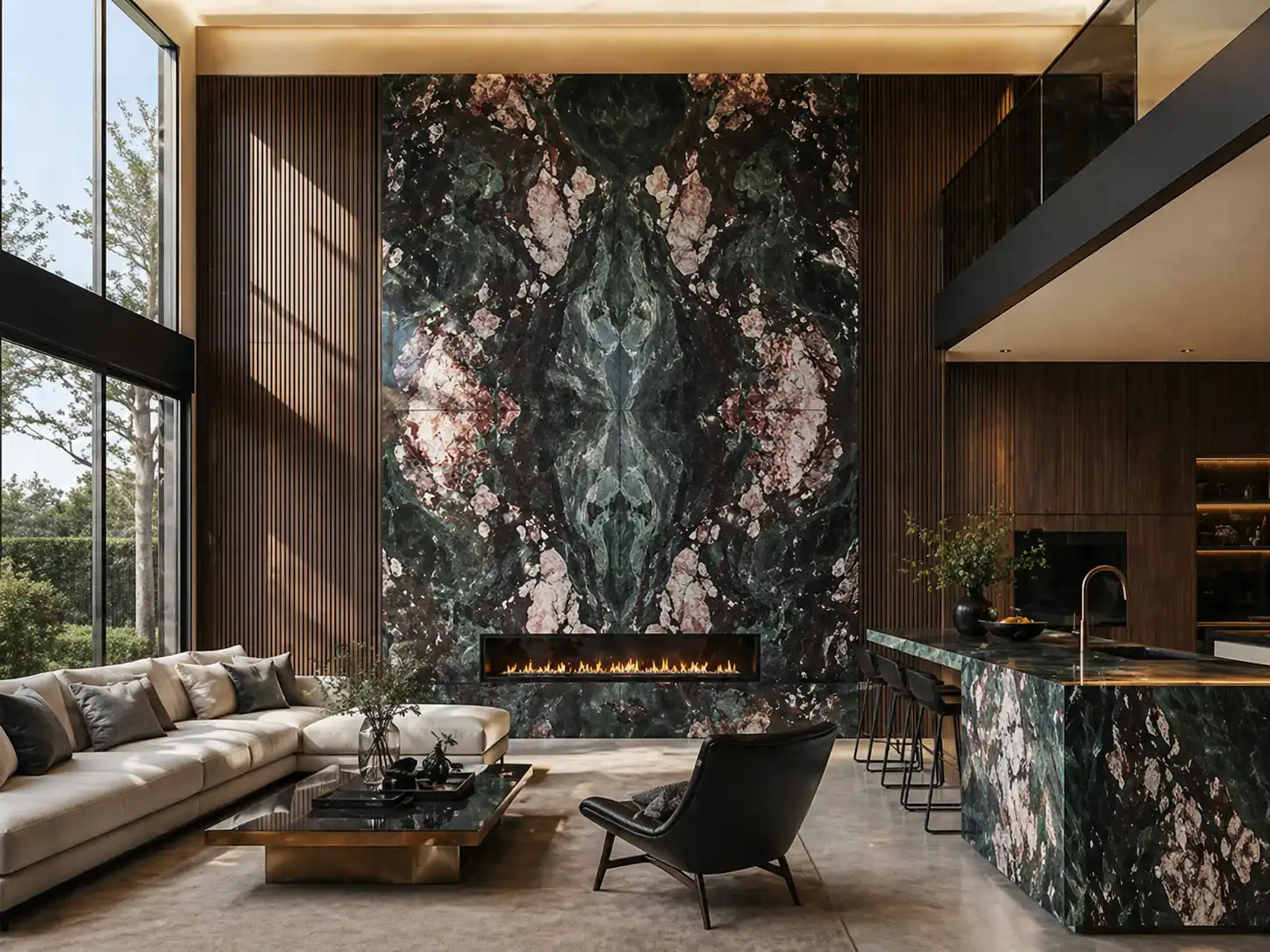
Four Season Green Marble
Four Season Green Marble in Different Interior Styles
In modern luxury interiors, Four Season Green Marble should be used with clean lines, large polished slabs, simple metal trims, hidden lighting, and neutral furniture. The wall becomes the artwork, so the design should avoid too many decorative materials around it. If the room already has strong patterned flooring, dramatic wallpaper, colorful furniture, and complicated ceiling details, the green marble may lose its power.
In a natural resort or spa style, the stone can be paired with beige limestone, travertine, warm wood, linen textiles, plants, and soft lighting. In a classic villa, it can work with bronze, dark wood, marble floors, and formal wall proportions. In boutique hotels, it can be used in smaller but memorable areas such as reception walls, bar fronts, elevator lobbies, powder rooms, or private lounge niches.
Color matching is important because green marble can look different under warm, neutral, and cool lighting. Buyers planning multiple stone colors can use a marble color matching guide for green and grey interiors to plan how Four Season Green works with pink marble, grey marble, beige stone, wood, metal, and neutral wall surfaces.
| Interior Style | Best Marble Strategy | Avoid |
|---|---|---|
| Modern luxury | Large slabs with clean lines | Excessive trim detail |
| Resort spa | Soft lighting and natural textures | Harsh white light |
| Classic villa | Bookmatched formal composition | Random slab layout |
| Boutique hotel | Focused high-impact zones | Covering every wall |
| Minimalist interior | One dramatic wall only | Competing patterns |
| Restaurant lounge | Warm light and dark accents | Poor stain control |
Technical Specifications Buyers Should Check
Large marble walls require more than a beautiful slab photo. Buyers should confirm slab size, thickness, water absorption, flexural strength, resin condition, backing, surface finish, vein direction, packing method, and installation planning. Common marble thickness may include 18mm, 20mm, and 30mm depending on market, application, and project requirement. Large slabs reduce seams but increase handling weight and installation risk.
Water absorption and sealing matter for bathrooms, spas, vanity walls, and wet areas. Natural marble should be sealed when required, and waterproofing must be completed behind the stone in wet zones. Large wall panels need stability. Cracks, fissures, resin lines, and weak vein areas should be checked before cutting. Polished finish enhances color depth and vein contrast, while honed finish softens reflection and creates a calmer mood.
For designers who want to understand how natural texture works with modern space planning, the article on Four Season Green Marble integration design is useful because technical selection and design composition must work together. A strong slab without layout control can still become a weak wall.
| Parameter | Why It Matters | Buyer Check |
|---|---|---|
| Slab size | Controls seams and layout | Confirm available dimensions |
| Thickness | Affects weight and strength | Match installation method |
| Water absorption | Affects wet-area use | Ask for sealing advice |
| Flexural strength | Important for large panels | Check slab stability |
| Resin and backing | Supports fragile areas | Review back-side photos |
| Surface finish | Controls visual mood | Compare polished and honed |
| Vein direction | Affects bookmatch | Review layout before cutting |
| Packing | Protects large slabs | Require strong export crates |
How to Review a Dry-lay Before Final Installation
Dry-lay is the process of arranging slabs or cut panels on the factory floor before final packing and installation. It allows the buyer, designer, contractor, and supplier to review pattern, vein direction, color flow, center symmetry, panel sequence, and seam position. For bookmatched Four Season Green Marble, dry-lay is not optional. It is one of the most important quality control steps.
Buyers should check the centerline first. Does the left panel mirror the right panel naturally? Do the strongest veins meet in a balanced way? Does the green tone remain consistent across panels? Are the darker areas too heavy on one side? Are the panels numbered clearly? Are arrows marked to show orientation? Are seam positions acceptable? Is the final layout approved before cutting or shipping?
Digital layout is useful during design planning, but physical dry-lay is more reliable for confirming real slab color and natural variation. A digital rendering may hide color differences, small cracks, resin lines, or visual imbalance. For luxury projects, both digital layout and physical dry-lay may be used together to reduce risk.
| Dry-lay Check | Why It Matters | Buyer Action |
|---|---|---|
| Slab sequence | Controls continuity | Confirm pieces are from same bundle |
| Center line | Defines bookmatch symmetry | Check mirror effect |
| Color tone | Prevents uneven wall | Compare under similar light |
| Vein flow | Creates visual connection | Mark key veins |
| Panel number | Prevents installation mistakes | Request clear labels |
| Seam location | Affects final appearance | Avoid cutting through key visual points |
| Orientation | Prevents upside-down panels | Confirm arrows and labels |
| Final approval | Reduces dispute | Approve before cutting or shipping |
Lighting Design for Bookmatched Green Marble Walls
Lighting can change the entire appearance of Four Season Green Marble. Warm light makes the green tone feel richer and more comfortable. Cool white lighting can make the stone feel sharper and more commercial. Wall washers can reveal large-scale movement, while spotlights can create strong reflections on polished surfaces. Indirect LED lighting around panels can add depth without overwhelming the stone.
Polished Four Season Green Marble can reflect light strongly. If lighting is too direct, glare may distract from the vein pattern. If lighting is uneven, one panel may look darker than another even when the slabs match. The lighting plan should be reviewed together with the dry-lay because the best wall composition depends on both stone movement and illumination.
| Lighting Type | Best Use | Risk |
|---|---|---|
| Wall washer | Large feature walls | Shows uneven installation |
| LED strip | Panel edges and niches | Hot spots if too close |
| Spotlight | Highlight vein movement | Glare on polished surface |
| Warm ambient light | Hotels and villas | Weak effect if too dim |
| Cool white light | Modern commercial spaces | May make green tone harsh |
Four Season Green Marble vs Other Green Stones
Four Season Green Marble is often compared with Verde Alpi, Green Onyx, Green Granite, and Green Quartzite. Verde Alpi usually has deep green color with bold white veining and a classic luxury look. Green Onyx may be more translucent and better for backlit walls, bars, and spa features. Green Granite is generally harder and more suitable for heavy-use or exterior applications. Green Quartzite may offer strong durability and dramatic natural movement, although properties vary by stone.
The right choice depends on the project goal. Use Four Season Green Marble when the project needs dramatic green marble movement, bookmatched wall design, and luxury interior identity. Use Green Onyx when translucency and backlighting are the priority. Use Green Granite when durability, floors, exterior use, or heavy-contact areas matter more. Use Green Quartzite when the design wants natural drama with stronger countertop performance.
| Material | Visual Style | Best Use | Buyer Note |
|---|---|---|---|
| Four Season Green Marble | Dramatic green marble movement | Bookmatched walls, luxury interiors | Needs dry-lay control |
| Verde Alpi Marble | Deep green with white veins | Classic green marble interiors | Strong contrast |
| Green Onyx | Translucent and layered | Backlit walls, bars, spas | More delicate |
| Green Granite | Hard and crystalline | Countertops, floors, exterior | Less marble-like movement |
| Green Quartzite | Natural and durable | Countertops, feature slabs | Properties vary |
Common Mistakes When Buying Bookmatched Four Season Green Marble Slabs
The first mistake is buying random slabs for a bookmatched wall. Bookmatching requires sequential slabs, not just the same material name. The second mistake is skipping dry-lay approval. Without dry-lay, the final wall may not match the designer’s expectation. The third mistake is ignoring color variation, which can make panels look like they come from different stones.
The fourth mistake is poor panel numbering. Even if the factory layout is correct, the installer can place pieces in the wrong order if labels are unclear. The fifth mistake is using too many competing materials around the wall. Four Season Green Marble is visually strong, so surrounding materials should support it, not fight it. The sixth mistake is choosing the lowest price only. Cheap selection can lead to weak slabs, cracks, poor cutting, mismatch, and rework.
Buying Guide: How to Source Four Season Green Marble Slabs
Buyers should request current slab photos, full slab videos, bookmatch photos, dry-lay photos, thickness details, finish samples, back-side photos, resin and mesh condition, cut-to-size capability, packing photos, and loading photos. For a high-value feature wall, do not approve only a small sample. A small sample cannot show the full green movement, vein direction, or bookmatch potential.
Supplier questions should be direct. Are the slabs from the same block or bundle? Can you provide bookmatched sequence photos? Can you support dry-lay before cutting? Can you number panels clearly? Can you produce cut-to-size wall panels? What thickness is recommended? How are slabs packed for export? Can you support hotel or villa project quantities?
A capable supplier must understand stone selection, layout, cutting, numbering, packing, and communication. Buyers can review a Four Season Green Marble supplier profile before discussing project requirements because bookmatched projects fail when suppliers only sell slabs without layout support.
| Supplier Capability | Good Signal | Risk Signal |
|---|---|---|
| Current slab photos | Real stock shown clearly | Only catalog images |
| Bookmatch support | Sequential slabs available | Random slabs only |
| Dry-lay service | Layout photo before cutting | No layout approval |
| Panel numbering | Clear labels and arrows | Confusing installation |
| Cut-to-size ability | Supports project drawings | Slab sales only |
| QC inspection | Checks cracks and finish | No inspection record |
| Packing | Strong crates and protection | Weak shipping method |
| Communication | Design-based answers | Price-only replies |
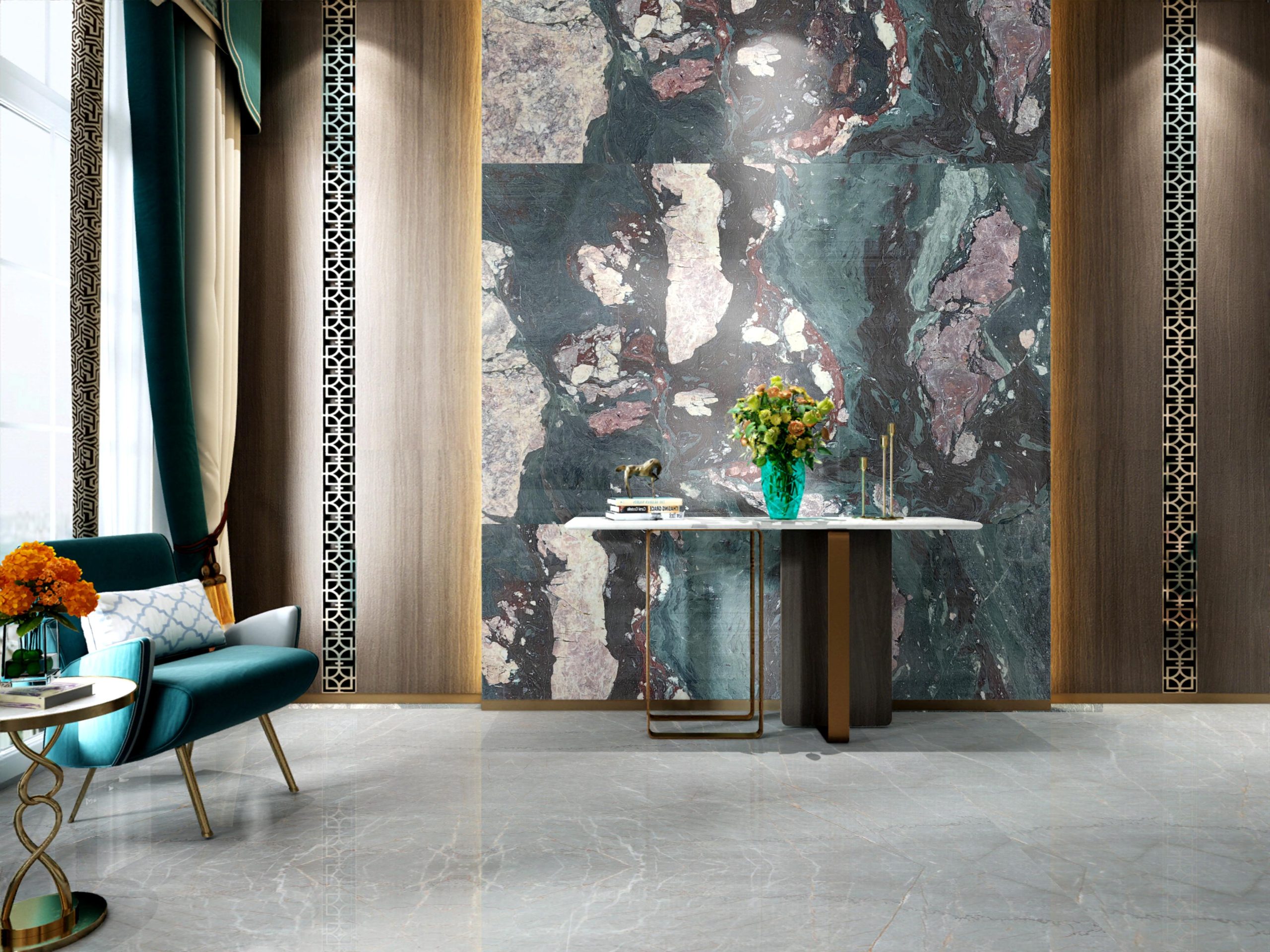
Wide-Ranging Applications of Icestone’s Four Season Green Marble
If This Is Your Project, Choose This Bookmatch Strategy
Four Season Green Marble should be selected according to project scale, visibility, lighting, budget, and installation difficulty. A hotel lobby may justify a four-panel or multi-slab bookmatch. A small bathroom wall may need only two panels. A large villa living room may need oversized slabs and dry-lay approval. A fireplace wall should center the strongest vein movement carefully.
For buyers ready to discuss drawings, slab sizes, finish, thickness, and bookmatch style, the Four Season Green Marble project consultation page can be used to request layout advice, current slab options, quotation, and dry-lay support before final order confirmation.
| If Your Project Needs | Choose | Avoid |
|---|---|---|
| Strong hotel lobby impact | Four-panel bookmatch wall | Random mixed slabs |
| Small bathroom feature | Two-panel bookmatch | Overly complex multi-slab layout |
| Large villa living room | Large slabs with dry lay | Small broken panels |
| Fireplace statement | Centered bookmatch | Veins cut off randomly |
| Budget control | Accent wall or partial bookmatch | Full wall without layout control |
| Wet area use | Sealed marble and waterproofing | Unsealed stone |
| Easy installation | Clear numbered panels | Unlabeled slabs |
| Premium result | Supplier with dry-lay support | Price-only supplier |
Frequently Asked Questions
1. What are Four Season Green Marble Slabs?
Four Season Green Marble Slabs are exotic natural green marble slabs known for dramatic veining, rich green tones, layered mineral movement, and strong decorative value. They are commonly used in luxury interiors such as hotel lobby walls, villa living room feature walls, bathroom panels, fireplace surrounds, reception walls, elevator lobbies, and commercial statement spaces. Because the material has strong natural variation, buyers should review actual slab photos, full slab videos, bookmatch sequence, and dry-lay layout before confirming an order.
2. Are Four Season Green Marble Slabs good for bookmatched walls?
Yes, Four Season Green Marble Slabs are very suitable for bookmatched walls because their green background and dramatic veins can create strong mirror symmetry and architectural impact. However, successful bookmatching depends on slab sequence, vein direction, color consistency, dry-lay approval, cutting accuracy, and panel numbering. Random slabs should not be used for a premium bookmatched wall. Buyers should request bookmatch photos or dry-lay photos before cutting to confirm the final layout.
3. Where can bookmatched Four Season Green Marble be used?
Bookmatched Four Season Green Marble can be used in hotel lobbies, villa living rooms, bathroom feature walls, fireplace surrounds, reception walls, elevator lobbies, private dining rooms, restaurants, spas, and luxury commercial interiors. It works best in high-visibility areas where the stone can act as a natural artwork. The material pairs well with warm wood, bronze metal, beige stone, black accents, soft lighting, and neutral furniture. Wet areas require waterproofing, sealing, and proper maintenance guidance.
4. What is dry-lay in marble bookmatching?
Dry-lay is the process of arranging slabs or cut panels on the factory floor before final installation or shipment to review vein continuity, color consistency, symmetry, seam position, and panel sequence. For bookmatched Four Season Green Marble, dry-lay is a critical quality control step. It allows buyers, designers, and contractors to approve the actual layout before cutting or packing. A good dry-lay should show panel numbers, orientation arrows, centerline symmetry, and clear vein flow.
5. What should buyers check before ordering Four Season Green Marble Slabs?
Before ordering Four Season Green Marble Slabs, buyers should check actual slab photos, full slab videos, bookmatch sequence, dry-lay support, thickness, finish, cracks, resin condition, backing, cut-to-size ability, packing method, and supplier experience. For bookmatched feature walls, buyers should also confirm whether the slabs come from the same block or bundle, whether panels can be numbered clearly, and whether the supplier can support layout approval before cutting and shipping.
References
- “Dimension Stone Design Manual” — Natural Stone Institute — Natural Stone Design Reference
- “ASTM C503/C503M Standard Specification for Marble Dimension Stone” — ASTM International — Marble Material Standard
- “ASTM C97/C97M Standard Test Methods for Absorption and Bulk Specific Gravity of Dimension Stone” — ASTM International — Stone Testing Method
- “ASTM C880/C880M Standard Test Method for Flexural Strength of Dimension Stone” — ASTM International — Stone Structural Testing Method
- “Natural Stone Care and Maintenance Guidelines” — Natural Stone Institute — Stone Maintenance Resource
- “Interior Stone Cladding and Feature Wall Design Guidance” — Natural Stone Institute — Architectural Stone Resource
- “Architectural Lighting for Interior Feature Walls” — Illuminating Engineering Society — Lighting Design Reference
- “Luxury Hospitality Interior Material Trends” — International Interior Design Association — Interior Design Practice Resource
Final Buyer Insight: Bookmatching Four Season Green Marble Is a Layout Decision Before It Is a Stone Purchase
What should buyers understand first?
Four Season Green Marble should be selected as a visual composition, not random slabs. The stone has strong personality, so layout planning is as important as material selection.
How should the bookmatch be controlled?
Bookmatching requires slab sequence, vein continuity, dry-lay review, panel numbering, cutting accuracy, installation orientation, lighting review, and supplier coordination. The buyer should approve layout before cutting and shipping.
Why do bookmatched marble projects fail?
The biggest risks are random slab selection, no dry-lay approval, mismatched color, poor numbering, wrong orientation, weak packing, and surrounding materials that compete with the feature wall.
Option logic: If the project is a hotel lobby, use a four-panel or multi-slab bookmatch. If the project is a small bathroom, use a two-panel bookmatch. If the project is a villa living room, use large slabs and dry-lay approval. If the project budget is limited, choose an accent wall instead of forcing full coverage.
Recommendation: Before ordering, prepare wall dimensions, preferred bookmatch style, slab size, finish, thickness, application area, lighting plan, and project quantity. Ask for current slab photos, bookmatch sequence, dry-lay photos, panel numbering, and packing details before confirming production.
The most successful Four Season Green Marble bookmatch is not created at installation—it is decided during slab selection, dry-lay review, and layout approval.