Explore Four Season Green Marble for 2026 luxury interiors, including slab grades, applications, risks, technical data, and buyer selection tips.
Why Four Season Green Marble Matters in 2026 Luxury Design
A designer stands in front of three green marble slabs. One looks calm and elegant, one looks like a natural forest painting, and one looks visually exciting in photos but slightly chaotic in full size. The client says, “I want the most luxurious one.” The contractor says, “I need the safest one to install.” The buyer says, “I need the one that will not create waste, complaints, or mismatch after shipping.”
That is exactly why Four Season Green Marble should not be treated as just another beautiful natural stone. It is a buying decision, a design decision, and a project risk decision at the same time.
In 2026, luxury interiors are moving away from cold, flat minimalism. Buyers want warmer spaces, stronger natural identity, tactile surfaces, and materials that feel authentic rather than artificial. Green marble fits this shift perfectly because it brings nature, drama, and permanence into one surface. When selected correctly, Four Season Green Marble slabs can turn a hotel lobby, villa feature wall, kitchen island, spa room, or reception counter into a visual anchor.
But here is the honest part: not every slab is suitable for every project. A small sample can lie. A photo can hide cracks. A beautiful vein can become a cutting problem. A commercial grade slab can look acceptable in a warehouse but fail badly on a full-height luxury wall. This guide helps buyers understand the stone from quarry to finished design, so the final decision is based on structure, grade, application, maintenance, and long-term value — not just first impression.
For buyers who want to start with product-level reference, the Four Season Green Marble product page is a practical entry point for understanding how the material is presented for real slab selection and luxury project use.
Four Season Green Marble
The Geological Origin of Four Season Green Marble
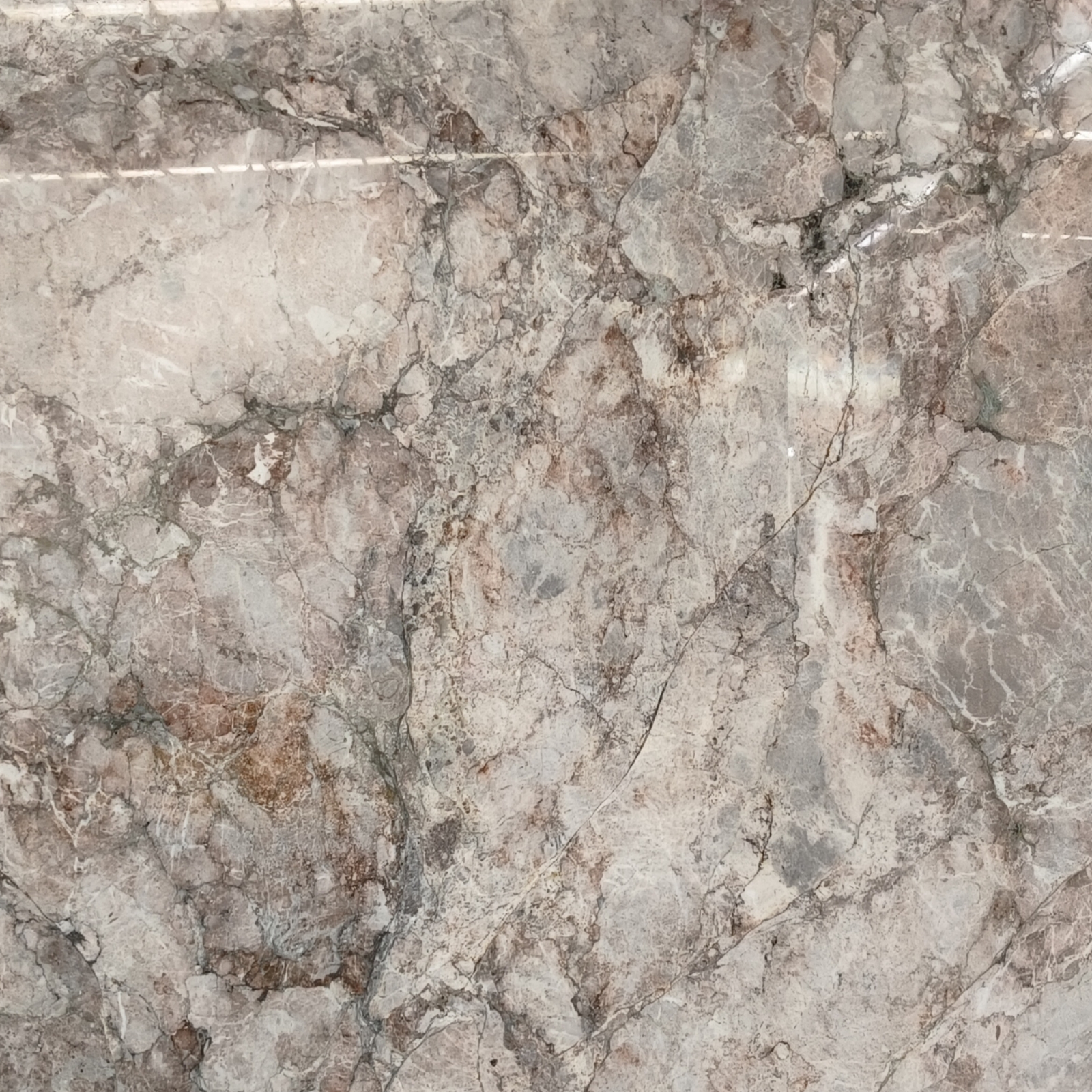
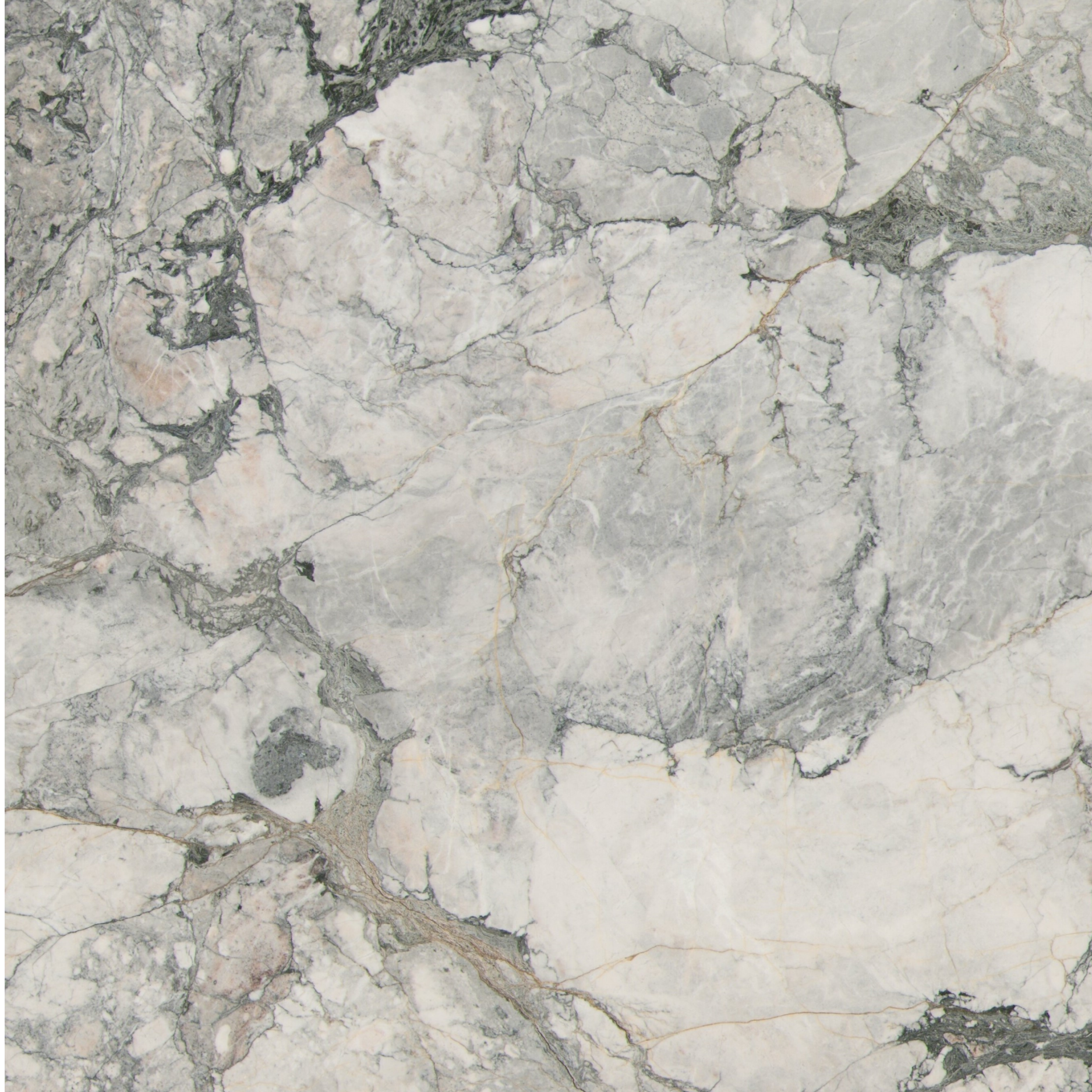
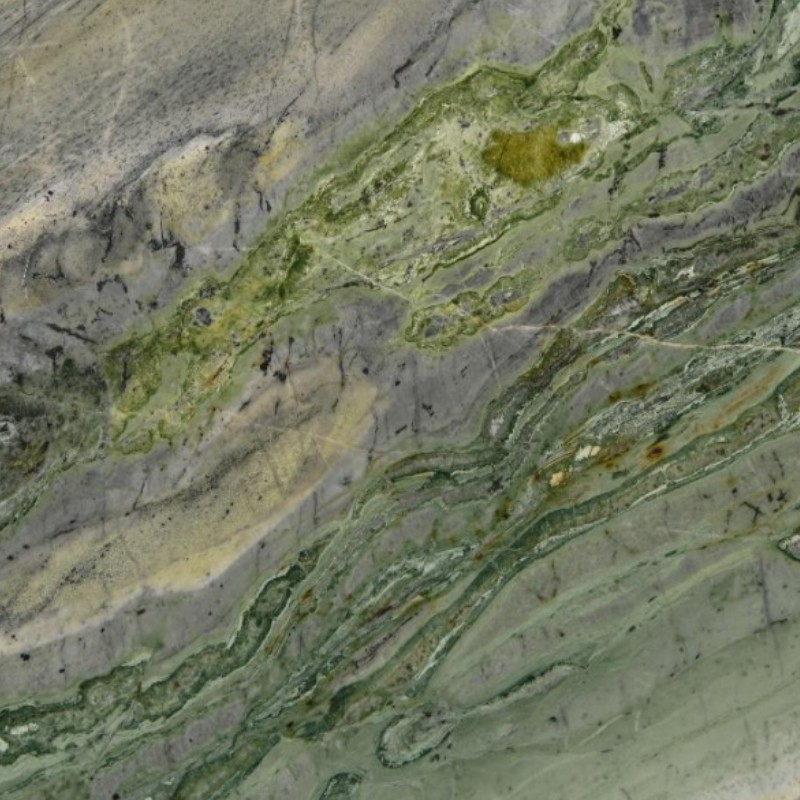
Four Season Green Marble is valued for its layered green tones, expressive veining, and natural landscape-like movement. Unlike plain green stones, it often combines forest green, jade green, grey-green, white veining, and sometimes warm brown or golden undertones. This variation is what gives the stone its emotional impact.
From a geological point of view, marble is formed when limestone or dolomitic limestone undergoes recrystallization under heat and pressure. The final color and veining depend on mineral impurities, pressure direction, crystal structure, and natural movement inside the stone body. That is why two slabs from the same quarry can still feel different. One may look soft and misty. Another may look bold, fractured, and dramatic.
For luxury buyers, this is both the charm and the challenge. The uniqueness of natural green marble slabs makes each project special, but it also means the buyer must review full slabs instead of relying on small samples. A 10 cm sample cannot show vein rhythm, large-area contrast, crack lines, or the final design feeling after installation.
The journey from quarry block to finished slab normally includes block extraction, block inspection, cutting, resin treatment, polishing, slab numbering, dry layout, inspection, and export packing. Each step affects the final result. A high-quality block with poor cutting direction may lose its visual value. A dramatic slab without proper reinforcement may become risky during transport. A beautiful surface without correct numbering may fail in bookmatched installation.
For buyers evaluating a supplier, the company background matters because stone is not a simple catalog product. It requires block selection, processing control, inspection, packing, and project support. A buyer who wants to understand supplier capability can review the natural stone company profile before moving into quotation, slab photos, or sample requests.
From Quarry Block to Finished Luxury Slab
The quality of Four Season Green Marble begins before the slab is polished. It starts at the block selection stage. A quarry block must be evaluated for color depth, vein direction, natural cracks, block size, and expected slab yield. If the block has unstable internal fractures, even attractive surface color may not be enough for large panels or bookmatched walls.
After extraction, the block is cut into slabs. Cutting direction is critical. A different cut can change the entire personality of the slab. It may produce long flowing veins, cloud-like movement, or bold diagonal patterns. This is why experienced stone buyers often ask for block photos and sequential slab photos, especially when buying for feature walls or large-format projects.
Resin treatment is common in natural marble processing. It helps fill micro-cracks and improve surface stability. Mesh backing may also be applied to reinforce slabs during handling, transport, and fabrication. These treatments should not automatically be seen as negative. In many natural marbles, they are part of responsible production. The real question is whether the treatment is well executed, whether the slab remains flat, and whether defects are clearly disclosed before shipment.
The final stage includes polishing, honing, leather finishing, or other surface treatments. Polished Four Season Green Marble creates depth and dramatic reflection, making it suitable for luxury walls, reception counters, and furniture. Honed finishes offer a softer, more architectural feel. Leathered or textured finishes may suit selected wall and furniture applications, but they should be evaluated carefully for cleaning and tactile requirements.
| Production Stage | What Buyers Should Check | Why It Affects Final Value |
|---|---|---|
| Quarry Block Selection | Color depth, vein direction, cracks, block size | Controls slab yield and visual consistency |
| Slab Cutting | Cutting direction, thickness, slab sequence | Determines pattern movement and bookmatch potential |
| Resin Treatment | Surface filling, transparency, stability | Reduces micro-crack risk and improves finish |
| Mesh Backing | Reinforcement quality and adhesion | Helps handling, transport, and installation |
| Surface Finishing | Gloss level, flatness, pinholes, texture | Affects luxury appearance and maintenance |
| Dry Layout | Vein matching, color transition, panel order | Prevents visual mismatch after installation |
| Export Packing | Wooden crates, slab protection, moisture control | Reduces damage during international shipping |
A serious buyer should not ask only, “What is the price per square meter?” Better questions are: Are the slabs from the same block? Can you provide full slab photos? Can you support dry layout? Is the material suitable for bookmatch? What finish do you recommend for my application? These questions separate professional sourcing from risky buying.
Identifying “First Choice” vs. Commercial Grade Slabs
In natural stone trading, “first choice” is often misunderstood. It does not simply mean expensive. It means the slab has stronger overall selection value: more balanced color, better visual rhythm, fewer obvious defects, cleaner surface, stronger slab integrity, and better suitability for high-visibility applications.
For Four Season Green Marble, first choice selection is especially important because the stone’s beauty depends on movement. If the green background is too inconsistent, the cracks too obvious, or the veining too broken, the final installation may look busy instead of luxurious. In small photos, this problem may not be obvious. On a full lobby wall, it becomes painfully clear.
Commercial grade slabs are not useless. They can still work well for smaller panels, bathroom vanity backsplashes, furniture pieces, secondary walls, or projects where the layout is flexible. The problem appears when commercial grade material is used in a hero area that demands visual continuity. A hotel lobby, villa living room wall, or waterfall kitchen island has very little tolerance for mismatch.
Buyers comparing multiple materials may also review broader marble slabs categories to understand how Four Season Green Marble sits within the wider marble selection landscape.
| Evaluation Factor | First Choice Four Season Green Marble | Commercial Grade Four Season Green Marble |
|---|---|---|
| Color Consistency | More balanced and controlled | Stronger variation between slabs |
| Vein Quality | More elegant, continuous, and design-friendly | Less predictable, may look broken |
| Surface Defects | Fewer visible cracks and filled areas | More selection and cutting planning needed |
| Bookmatch Potential | Better for luxury walls and large panels | Limited or inconsistent |
| Cutting Yield | Higher usable area for premium layouts | Higher waste risk if design is strict |
| Best Use | Hotel lobbies, villa walls, islands, luxury counters | Secondary walls, small panels, furniture, flexible layouts |
| Buyer Risk | Lower when properly inspected | Higher in high-visibility applications |
The easiest decision rule is simple: if the stone will become the visual center of the project, choose first choice. If the stone will be used in smaller or less visible areas, commercial grade may be acceptable after inspection.
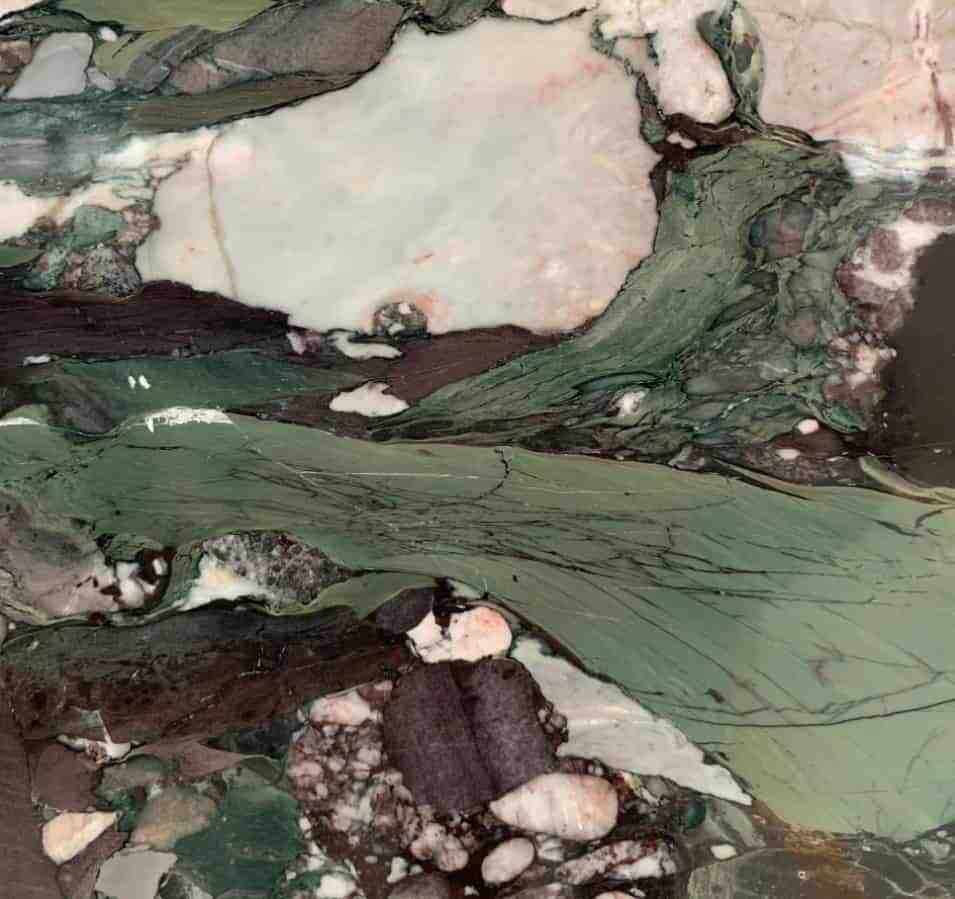
Four Seasons Green Marble Supplier
Common Buying Mistakes That Damage the Final Result
The first mistake is buying from a sample only. Samples are useful for checking basic color, but they cannot show full slab personality. Four Season Green Marble has large-scale movement. A small piece may look calm while the full slab looks dramatic. Or the sample may show a beautiful vein while the rest of the slab contains irregular cracks or color shifts.
The second mistake is ignoring slab sequence. For bookmatched walls, the buyer needs sequential slabs from the same block. Random slabs may all be green, but when installed side by side, they can look unrelated. This creates the “patchwork wall” problem, where expensive marble looks like leftover material.
The third mistake is choosing the most dramatic slab without considering cutting. A bold vein may look impressive, but if it crosses the wrong area of a kitchen island, vanity top, or wall panel, the final cut may lose the best part of the pattern. For waterfall islands, vein direction should be planned before fabrication, not after cutting begins.
The fourth mistake is underestimating waste. Natural marble projects usually need extra material for cutting loss, matching, edge work, breakage allowance, and future repair. Ordering exact quantity may look efficient on paper, but it increases project risk. For high-end applications, a practical surplus allowance is often safer than trying to save one slab and later failing to match replacement material.
The fifth mistake is forgetting maintenance expectations. Marble is not a zero-maintenance surface. It requires correct cleaning, sealing strategy, and user education. For kitchens, bars, bathrooms, and spas, this should be discussed before purchase, not after stains or etching appear.
Why Four Season Green Marble Is a 2026 Luxury Interior Trend
Four Season Green Marble fits several major luxury design directions for 2026: biophilic design, natural material storytelling, dramatic stone surfaces, wellness-inspired interiors, and quiet luxury with stronger personality.
Biophilic design is no longer limited to plants and large windows. It now includes mineral colors, organic textures, natural veining, and materials that create emotional comfort. Deep green stone works especially well because it visually connects indoor space with nature. It can make a bathroom feel like a spa, a lobby feel calmer, and a kitchen feel more architectural.
At the same time, luxury interiors are becoming more expressive. Buyers still want elegance, but they no longer want every high-end space to look the same. White marble remains classic, but green marble offers stronger identity. It says the space has taste, confidence, and material depth.
For readers who want a dedicated design trend discussion, the 2026 trend of Four Season Green Marble gives additional context on why this stone is becoming more visible in luxury interiors.
Four Season Green Marble also pairs beautifully with 2026 material palettes. It works with brushed brass, bronze, walnut, oak, cream stone, warm beige plaster, black metal, fluted wood, smoked glass, and soft indirect lighting. This pairing flexibility makes it useful for both modern and classic interiors. In a minimalist home, it becomes the statement. In a classic hotel, it adds richness. In a wellness spa, it adds calm and depth.
Best Applications in Villas, Hotels, Spas, and Commercial Spaces
Four Season Green Marble performs best when the design allows the stone to breathe. It should not be forced into every surface. The most successful projects usually use it as a focal material rather than background filler.
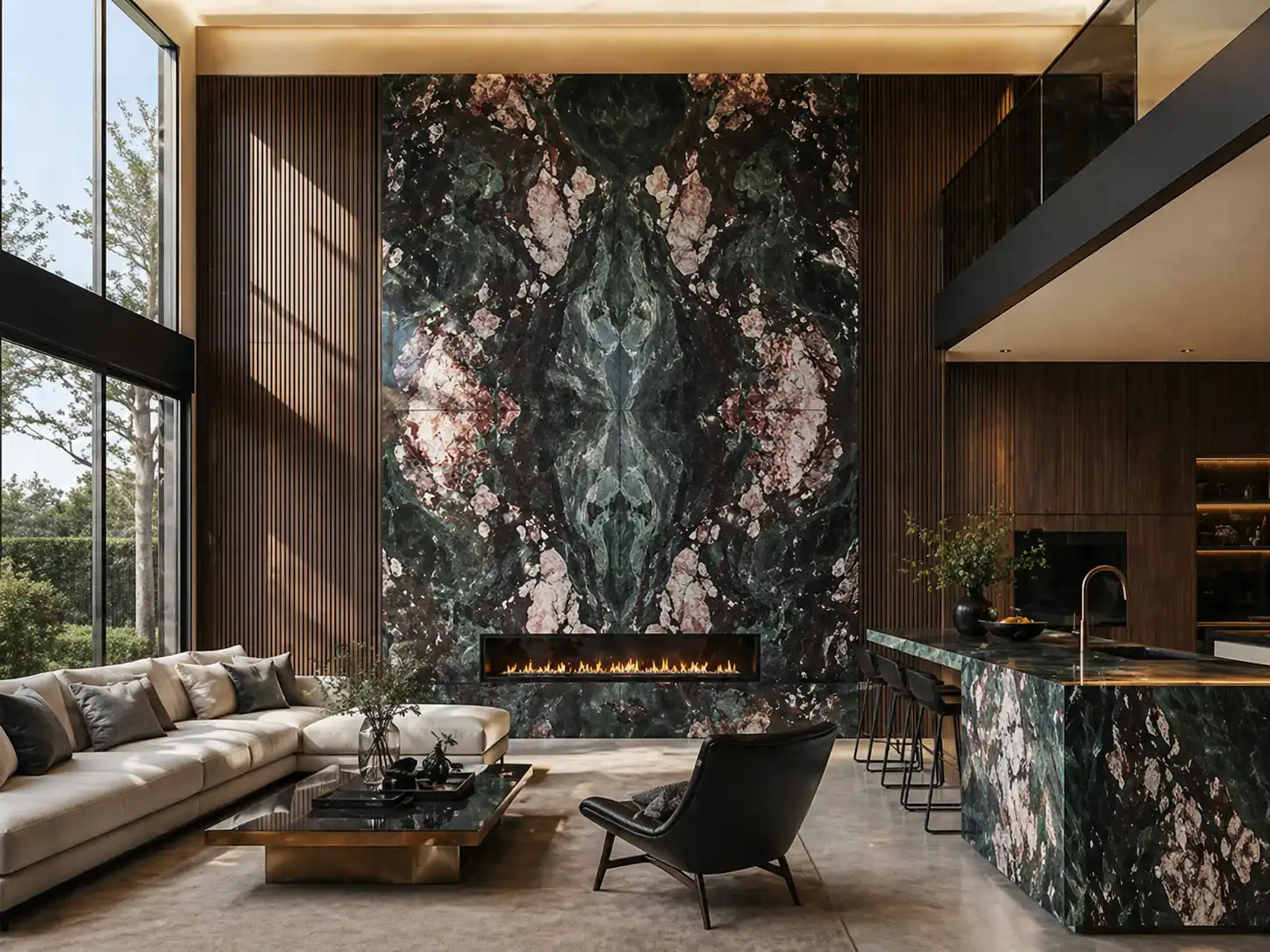
In villa interiors, it is highly effective for living room feature walls, fireplace surrounds, kitchen islands, bathroom vanity walls, staircase walls, and custom furniture. A full-height bookmatched wall can act almost like natural artwork. In kitchens, a waterfall island can create a powerful luxury statement, but the buyer must confirm sealing, edge structure, and daily use expectations.
In hotels, Four Season Green Marble is suitable for lobby reception walls, elevator halls, bar counters, VIP bathrooms, corridor accents, and luxury suite features. The stone helps create a memorable first impression. For hospitality buyers, this matters because interior material is not only decoration; it supports brand identity and guest experience.
In wellness spaces, green marble has a particularly strong advantage. It supports a calm, nature-connected atmosphere while still looking premium. Spa reception counters, treatment room walls, bathing areas, and retreat lounges can all benefit from this material when lighting and finish are properly planned. For this application angle, the Four Season Green Marble wellness spa and retreat topic is especially relevant.
In retail and restaurant spaces, the material can create a signature visual memory. A green marble bar counter, boutique display background, or reception desk can make the brand feel more premium. The key is balance. Too much dramatic marble may feel heavy. The best projects often combine green marble with calmer surrounding materials.
Material Parameters Buyers Should Check Before Ordering
Beautiful stone still needs measurable performance. For serious projects, especially commercial interiors, buyers should ask for technical data where available. Marble is a natural material, so values vary by quarry, block, and testing method. Still, the following parameters help buyers discuss suitability with suppliers, architects, and contractors.
| Technical Parameter | Practical Reference for Buyers | Why It Matters |
|---|---|---|
| Thickness | Common project options include 18 mm, 20 mm, and 30 mm | Affects strength, edge design, weight, and installation |
| Water Absorption | Lower absorption generally improves stain resistance | Important for bathrooms, kitchens, spas, and bars |
| Bulk Density | Indicates stone compactness and weight | Helps estimate load and handling requirements |
| Flexural Strength | Should be reviewed for large panels | Reduces risk of breakage during handling or installation |
| Compressive Strength | Relevant for structural and flooring discussions | Helps evaluate durability under load |
| Abrasion Resistance | Important for flooring | Affects long-term surface wear |
| Surface Finish | Polished, honed, leathered, or brushed | Changes appearance, slip feel, and maintenance |
| Resin and Mesh | Common reinforcement methods | Improves processing and transport stability |
| Slip Resistance | Needed for wet floors or commercial spaces | Important for safety and compliance |
A practical buyer should separate wall use from flooring use. A vertical feature wall does not face the same wear as a hotel floor. A kitchen island faces different risks from a spa wall. This is why a single “good or bad” answer is not enough. The right question is: good for which application, under which finish, with what maintenance plan?
| Application | Recommended Priority | Technical Notes |
|---|---|---|
| Feature Wall | Vein matching, slab size, bookmatch | Performance load is lower, visual quality is critical |
| Kitchen Island | Sealing, edge design, stain control | User behavior affects long-term appearance |
| Bathroom Wall | Moisture exposure, cleaner compatibility | Avoid acidic cleaners and poor ventilation |
| Flooring | Slip resistance, abrasion resistance, thickness | Needs stronger technical review |
| Furniture Top | Surface finish, edge protection, support structure | Good for dramatic slabs and smaller formats |
| Hotel Lobby | Full slab consistency, dry layout, packing safety | Requires high visual control and lower installation risk |
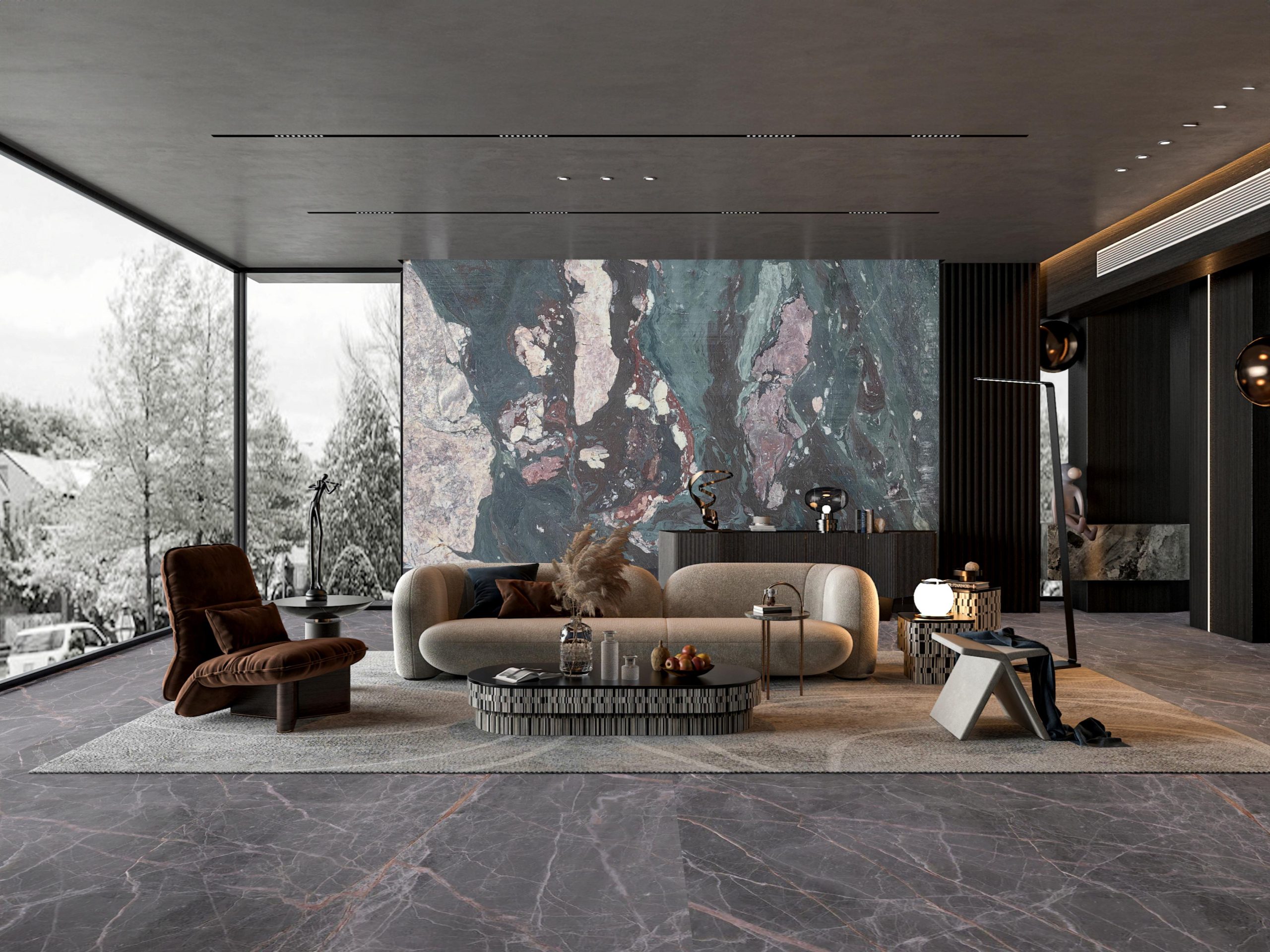 China Four Season Green Marble Manufacturer – Icestone |
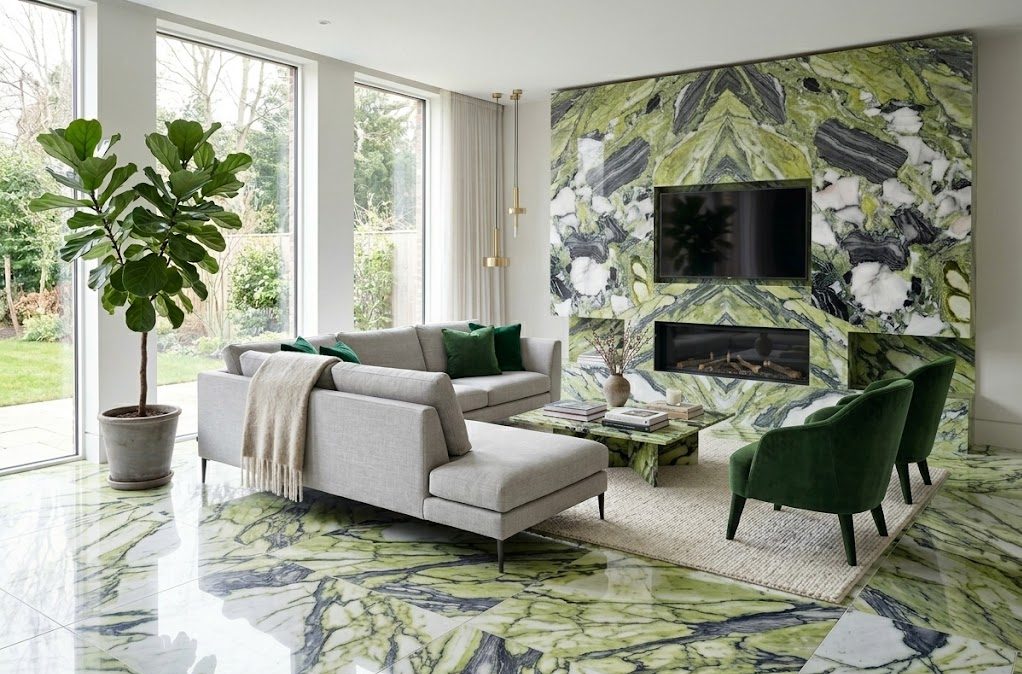 Ice Connect Marble Living Room |
Four Season Green Marble vs. Ice Connect Marble and Other Luxury Stones
Many buyers compare Four Season Green Marble with other expressive stones before making a decision. This is smart. A luxury stone should not be chosen in isolation. It should match the emotional direction of the project.
Four Season Green Marble feels deep, natural, artistic, and immersive. It is ideal when the design goal is richness, nature, and visual drama. Ice Connect Marble, depending on slab selection, may create a cooler, more crystalline, or more contemporary impression. White marbles such as Calacatta feel classic and bright, while darker green marbles can feel formal and traditional.
For buyers comparing design personalities, Ice Connect Marble vs Four Season Green Marble is a useful comparison topic because it helps connect stone choice with spatial identity.
| Stone Option | Visual Feeling | Best-Fit Space | Buyer Consideration |
|---|---|---|---|
| Four Season Green Marble | Deep, natural, dramatic, artistic | Villas, hotels, spas, feature walls | Needs careful slab selection |
| Ice Connect Marble | Distinctive, refined, contemporary | Luxury walls, statement interiors | Match tone with overall design |
| Calacatta Marble | Bright, classic, elegant | Kitchens, bathrooms, luxury homes | Can feel common if overused |
| Verde Alpi Marble | Dark, traditional, formal | Bars, bathrooms, classic interiors | May feel heavy in small rooms |
| Quartzite | Harder, layered, often durable | Countertops and high-use zones | Fabrication may be more complex |
If the space needs warmth, nature, and a memorable focal point, Four Season Green Marble is usually the stronger emotional choice. If the space needs brightness, restraint, or a cooler tone, another stone may be more suitable.
Interior Style Guide: Where to Use Four Season Green Marble at Home
In residential design, the safest strategy is to use Four Season Green Marble with intention. It should support the space rather than dominate every corner.
In a living room, it works best as a TV wall, fireplace wall, or art-like background panel. Warm lighting can soften the green tone and bring out the vein depth. Brass trims, dark wood, cream sofas, and textured rugs help the stone feel luxurious without becoming too cold.
In a kitchen, it is best used for an island, bar counter, or selected backsplash. Buyers should avoid assuming that polished marble behaves like engineered quartz. Marble needs care. It can be sealed and maintained, but it should not be treated carelessly with acidic liquids or harsh cleaners.
In bathrooms, Four Season Green Marble creates a spa-like experience. It works beautifully behind a bathtub, around a vanity, or as a feature shower wall. For floors, however, buyers should be more cautious and check finish, slip resistance, and maintenance expectations.
For homeowners and designers planning room-by-room use, the Four Season Green Marble home interior style guide can support more application-specific decisions.
Compliance, Installation, and Maintenance Considerations
For international buyers, stone sourcing is not only about slab beauty. Documentation, packing, installation conditions, and maintenance must be considered early.
Common export and project documents may include commercial invoice, packing list, certificate of origin if required, fumigation or treated wood packaging documentation where applicable, and inspection photos before shipment. For commercial projects, buyers may also need to confirm local installation codes, adhesive compatibility, wall anchoring systems, fire safety requirements, slip resistance for floors, and maintenance instructions for facility teams.
Maintenance is one of the most important expectation-setting points. Natural marble should be cleaned with pH-neutral stone cleaners, stone soap, or mild suitable cleaners. Acidic products such as vinegar or lemon-based cleaners may dull or etch calcareous stones. Sealing can help improve stain resistance, but sealing does not make marble stain-proof. This distinction matters. A buyer who understands maintenance will be happier with the material than one who expects impossible performance.
For kitchens and bars, use coasters, trays, and fast spill cleaning. For bathrooms and spas, manage soap residue and ventilation. For furniture, protect edges and avoid dragging hard objects across the surface. For hotel projects, provide the maintenance team with clear cleaning rules before opening day.
Buyer Decision Logic: If X, Choose Y
| Buyer Situation | Recommended Decision |
|---|---|
| If the project needs a luxury hotel lobby wall | Choose first choice bookmatched Four Season Green Marble slabs |
| If the project needs a villa kitchen island | Choose structurally stable slabs with continuous veining |
| If the project is a spa or retreat | Choose calmer green slabs with soft movement and warm lighting |
| If the design requires strong drama | Choose high-contrast slabs with bold white or golden veining |
| If the room is small | Use Four Season Green Marble as an accent, not on every surface |
| If the budget is limited but the area is visible | Reduce application area, not slab grade |
| If the buyer wants flooring | Check finish, abrasion resistance, slip resistance, and maintenance |
| If the buyer wants easy daily care | Consider whether marble maintenance fits the user’s habits |
The most professional recommendation is not always “buy the most expensive slab.” The better recommendation is to match slab grade with project visibility. High-visibility areas deserve first choice material. Flexible or secondary areas may use commercial grade if inspection is strict. This approach protects both budget and final appearance.

Four Season Green Marble supplier
Recommended Buying Checklist Before Confirming an Order
Before confirming Four Season Green Marble, buyers should request full slab photos, not only close-up details. They should ask whether the slabs are from the same block, whether bookmatch is possible, and whether the supplier can provide a dry layout before cutting.
Thickness should be confirmed based on application. A furniture top, wall panel, and kitchen island may have different structural needs. Surface finish should be chosen based on design effect and maintenance. Polished slabs look more dramatic, but honed surfaces may feel softer and more architectural.
Packing is another key issue. Large marble slabs require strong export wooden crates, proper internal protection, moisture control, and clear marking. Buyers should ask for pre-shipment inspection photos showing slab surface, crate condition, labels, and quantity.
If the buyer is ready to discuss slab photos, project requirements, or quotation details, the natural next step is to contact a Four Season Green Marble supplier with room dimensions, application type, preferred finish, quantity estimate, and design reference images.
| Checklist Item | Why It Matters |
|---|---|
| Full slab photos reviewed | Prevents sample-based mistakes |
| Same-block or same-batch confirmed | Improves color and vein consistency |
| Thickness confirmed | Avoids fabrication and installation mismatch |
| Surface finish selected | Controls visual effect and maintenance |
| Dry layout approved | Prevents bookmatch failure |
| Extra material planned | Reduces risk from cutting loss |
| Packing method confirmed | Protects slabs during shipping |
| Maintenance instructions prepared | Reduces future complaints |
| Installation method reviewed | Improves safety and long-term performance |
| Final inspection photos requested | Confirms quality before shipment |
Final Recommendation for Serious Buyers
Four Season Green Marble is best for buyers who want a stone with emotional power. It is not the safest choice for people who want plain uniformity. It is not the lowest-maintenance choice for people who do not want to care for natural marble. But for buyers who want a memorable, natural, high-value design feature, it is one of the most compelling stones for 2026.
Choose first choice slabs for hotel lobbies, villa living rooms, kitchen islands, spa walls, and high-visibility commercial spaces. Consider commercial grade only when the layout is flexible and the application is secondary. Always review full slab photos. Always plan dry layout. Always discuss sealing, cleaning, packing, and installation before production.
The real value of Four Season Green Marble is not only in its green color. It is in the way the stone controls atmosphere. It can make a space feel quiet, bold, natural, expensive, and unforgettable — but only when the buyer selects it with project logic rather than impulse.
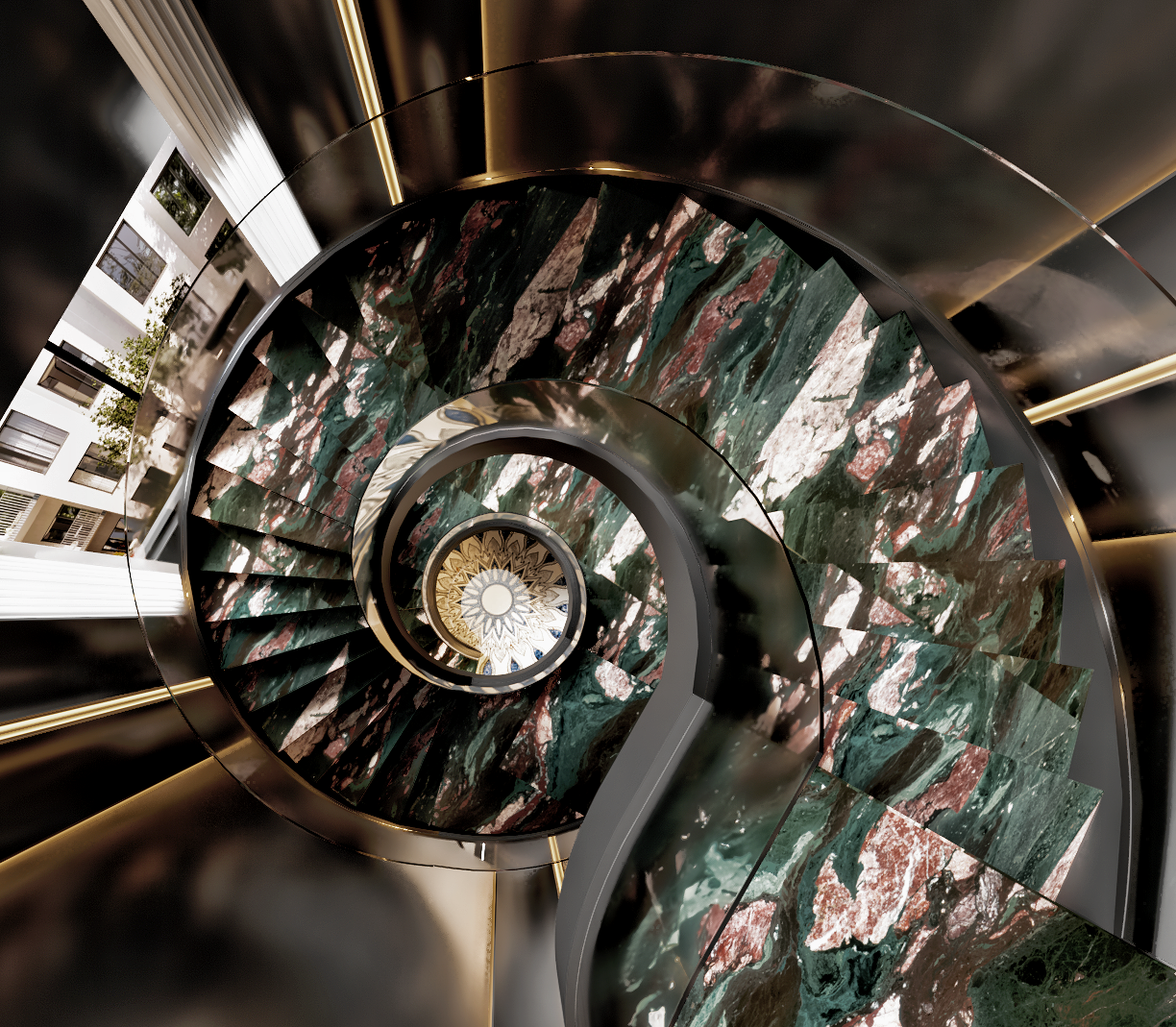
Wide-Ranging Applications of Icestone’s Four Season Green Marble
FAQ
1. What is Four Season Green Marble and why is it popular in 2026?
Four Season Green Marble is a luxury natural green marble known for its deep mineral green background, dramatic veining, and strong decorative identity. It is popular in 2026 because interior design is moving toward expressive natural materials, biophilic design, wellness-inspired spaces, and richer stone surfaces. Buyers often use it for hotel lobbies, villa feature walls, kitchen islands, spa interiors, bathroom walls, reception counters, and custom furniture because it creates a memorable focal point without relying on artificial decoration.
2. Is Four Season Green Marble suitable for kitchen countertops and islands?
Four Season Green Marble can be suitable for kitchen islands and premium countertops when buyers understand its maintenance requirements. It works especially well for waterfall islands, bar counters, and statement surfaces where visual impact is important. However, because marble is a natural calcareous stone, it should be sealed properly, cleaned with pH-neutral products, and protected from acidic liquids, harsh cleaners, and heavy impact. Buyers who want a luxury natural surface and are willing to follow basic care rules can use it successfully.
3. How do I choose first choice Four Season Green Marble slabs?
To choose first choice Four Season Green Marble slabs, buyers should review full slab photos instead of small samples, confirm whether the slabs come from the same block, check color balance, inspect visible cracks, evaluate vein continuity, and request dry layout photos before cutting. For bookmatched feature walls or luxury kitchen islands, sequential slabs are especially important. First choice slabs are usually recommended for high-visibility areas because they reduce mismatch risk and improve the final design effect.
4. What are the common mistakes when buying Four Season Green Marble?
The most common mistakes include choosing from a small sample only, ignoring slab sequence, using commercial grade slabs in a hero design area, underestimating cutting waste, and failing to discuss maintenance before installation. These mistakes can lead to color mismatch, broken vein flow, higher fabrication loss, visible defects, and client dissatisfaction. Serious buyers should confirm slab grade, thickness, finish, packing, dry layout, and application suitability before placing an order.
5. Where is Four Season Green Marble best used in luxury interiors?
Four Season Green Marble is best used in spaces where the stone can become a visual feature, such as hotel lobby walls, villa living room backgrounds, kitchen islands, bathroom vanity walls, spa reception areas, restaurant bar counters, boutique display zones, and custom marble furniture. It works especially well with brass, bronze, walnut, cream tones, warm lighting, and soft neutral surroundings. For small rooms, it is better used as an accent material rather than covering every surface.
 By
Xiamen Ice Stone Imp.& Exp. Co., Ltd.
By
Xiamen Ice Stone Imp.& Exp. Co., Ltd. Feature Product
-
 Sakura Marble: A Timeless Beauty and Elegant fo...
Why Choose Cambodian Sakura Marble? 1. Unmat...
-
Morse Code Natural Marble Slabs and Tiles
Dimensions and Specifications Morse Code...
-
Vivid Brilliant Natural Marble of Prague Green
How to pack and load ? 1. Fumigated wooden b...