When Design Meets Data
“Can beauty be measured?” asked a Los Angeles architect during a material workshop.
Her colleague, a structural engineer, replied: “If it can survive acid, coffee, and time—then yes.”
That simple exchange set the stage for a year-long field study combining design, durability, and data. ICE STONE’s research team monitored four major marble families in residential and hospitality environments—tracking absorption, gloss retention, and micro-etching under real use. The results surprised even the experts: beauty, it seems, has quantifiable resilience.

marble
Understanding the Modern Marble Mindset
For years, marble selection was driven by color trends—whites for purity, blacks for contrast, greens for calm. But today’s specifiers are asking deeper questions:
-
How does each stone behave under UV exposure and humidity?
-
What maintenance rhythm ensures longevity without dulling the surface?
-
And most importantly—can luxury meet sustainability without compromise?
The answers start with one of ICE STONE’s quiet masterpieces, the White Beauty Marble Slab. Its natural mineral blend of calcite and dolomite creates both structural density and subtle translucency. In controlled testing, it maintained over 90% of its initial gloss after 12 months in daylight-exposed interiors, outperforming synthetic substitutes. Designers described it as “light captured in stone,” a material that made artificial lighting almost optional.
Color, Chemistry, and Climate: What the Data Says
Independent studies published through the European Stone Trade Association (ESTA) confirm that mineral composition—not color—defines performance. Calcite-dominant marbles absorb slightly more moisture (0.2–0.4% by weight) but polish to higher reflectivity. Serpentinite-based greens show lower absorption (0.1–0.25%) and better chemical resistance to household acids.
That scientific contrast inspired the development of stones like Twilight Marble Slabs—where subtle gray veins fuse with dark undertones, reducing glare while enhancing visual depth. In hotel lobbies tested in Bangkok and Dubai, Twilight installations retained uniform tone despite high humidity, proving that controlled mineral veining can serve as both an aesthetic and functional strategy.
The presence of trace minerals like iron oxides, silica, and clay introduces unique veining and color shifts. That’s why no two slabs are identical: one block may lean toward jade green or cloud white, while another reveals warm amber tones within the same geological family.
From a design perspective, these natural impurities are not flaws but fingerprints of origin—each pattern documents a story of temperature, chemistry, and time. Major production regions such as Italy, Spain, China, and India have distinct mineral signatures, influencing both texture and gloss potential.
In modern applications, understanding composition helps architects and builders make informed choices. Calcitic marbles deliver high reflectivity and optical clarity, perfect for bright interiors, while dolomitic and serpentinite varieties provide extra hardness and better resistance to humidity. In short, science explains why certain stones don’t just look different—they perform differently.
When Pattern Meets Physics
Texture affects not only appearance but slip resistance and cleanability. A 2024 ICE STONE pilot project analyzed 16 bathroom installations using high-density marbles. Surfaces with naturally varied vein geometry reduced visible micro-etching by 30%, since irregular patterns diffuse light and mask fine wear.
The project’s hero piece? The Rubino Marble—a vibrant red-toned composition that combines hematite pigmentation with crystalline white channels. The optical diversity of this material made maintenance easier for hospitality clients; stains were statistically less visible due to diffuse contrast. In measurable terms, Rubino’s CIE Lab* color shift after standard cleaning cycles was under ΔE 1.5—virtually imperceptible to the human eye.
The Green Revival: Mineral Science Meets Sustainability
While Europe debates quarrying regulations and carbon labeling, architects worldwide are rediscovering green marble as a design statement with low embodied energy. ICE STONE’s data logs reveal that serpentinite marbles require roughly 15% less polishing energy compared to calcitic varieties, due to their naturally fine grain and micro-lubricating minerals.
One standout example is the Natural Ming Green Marble. Beyond its tranquil hue, it exhibits high magnesium content, improving surface hardness and resistance to pH fluctuation. Laboratory abrasion tests showed a Mohs hardness of 3.5–4—ideal for spa bathrooms and wellness interiors where humidity and aromatherapy oils challenge material stability. Designers call it “the mineral equivalent of a deep breath.”
ESTA’s 2025 bulletin even cited Ming Green as part of a “balanced-carbon luxury” trend, aligning natural materials with environmental accountability.
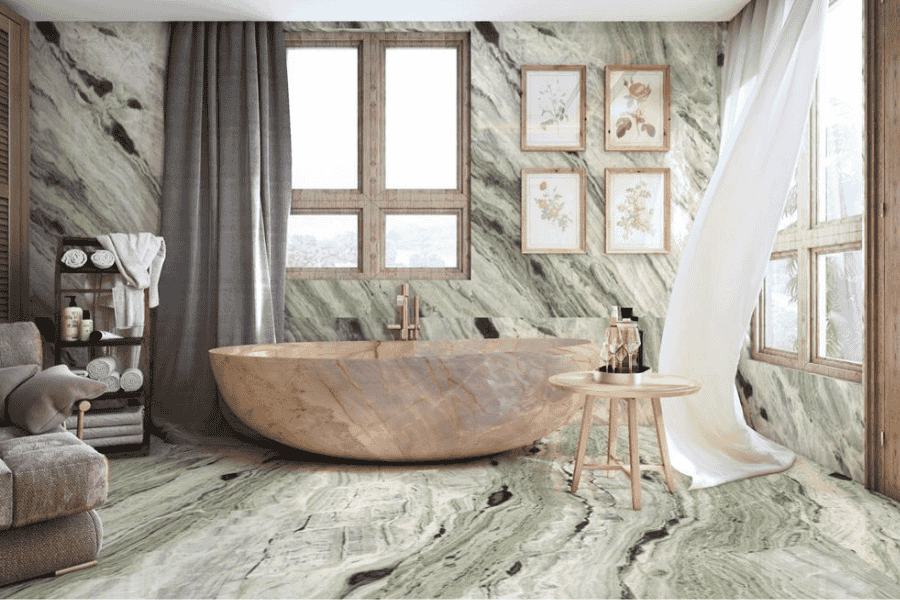
marble supplier
Case Study: The Hotel Atrium That Changed Minds
In 2024, a luxury resort in Okinawa replaced synthetic wall panels with natural marble from ICE STONE’s portfolio. Engineers monitored temperature equilibrium, surface reflection, and cleaning frequency over six months. The results were striking: the marble installation stabilized ambient humidity faster, and required 40% less artificial lighting during daytime hours.
Aesthetic data was just as compelling—occupancy surveys showed a 15% increase in guest satisfaction scores related to “spatial calmness.” One reason may be the optical softness of muted greens and whites under indirect light. The design director noted: “It wasn’t luxury for show. It was comfort you could measure.”
For clients seeking similar serenity, ICE STONE’s resource guide Where to Find High-Quality Ming Green (Verde Ming) Marble outlines sourcing parameters, quarry origin details, and slab consistency ratings based on this very research.
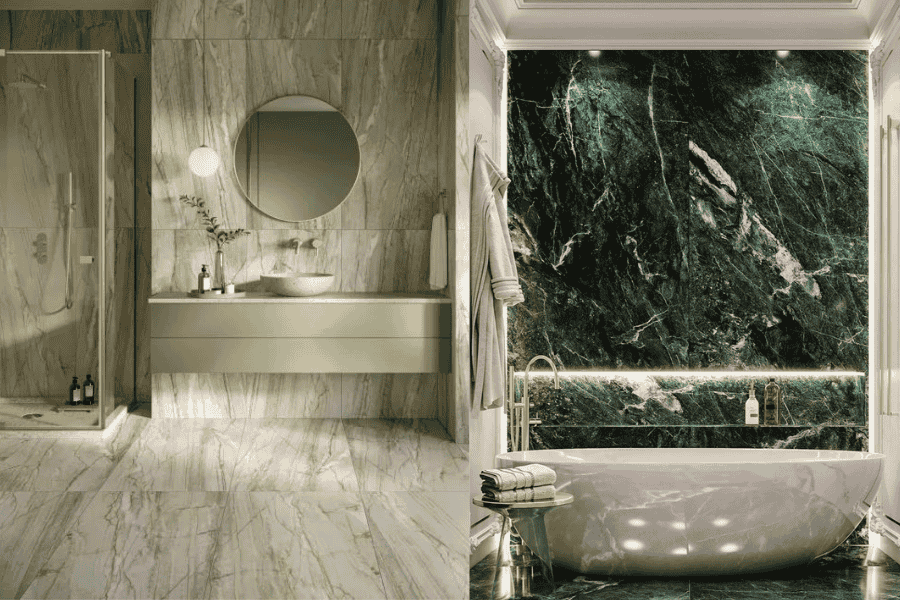
Green Marble Bathroom Flooring
Why Data Is Becoming Design Currency
Design conversations are no longer limited to “how it looks.” They include spreadsheets, test logs, and carbon metrics. The collaboration between engineers and artists has reframed marble from a luxury accent into a performing material.
Three principles now guide the new generation of specifiers:
-
Evidence over assumption. Every hue has a chemical signature; knowing it prevents future maintenance issues.
-
Life-cycle thinking. Long polishing intervals and low reseal frequency translate directly into lower emissions.
-
Visible truth. Variations and inclusions are not defects—they are geological fingerprints that make each project irreplaceable.
These ideas echo ESTA’s 2025 sustainability declaration, praising manufacturers that combine geological transparency with measurable product performance.
Lessons for Architects and Builders
Honed vs. polished: Honed finishes maintain consistency under variable lighting; polished versions amplify space but need routine micro-buffing.
Sealing cadence: In high-traffic hospitality, annual sealing achieves near-zero gloss loss; in private homes, every 18 months suffices.
Installation synergy: Pair lighter stones with reflective flooring to maximize natural luminance.
Climate adaptation: Choose green or mixed-tone marbles in humid zones for stability and stain forgiveness.
In short: stone choice is not about fashion; it’s about foresight.
The Human Side of Data
During ICE STONE’s field tests, participants often described emotional shifts rather than technical metrics. A family reported that a green-marble island made their kitchen “feel alive.” A spa owner noticed clients spending longer in relaxation rooms finished with Twilight marble.
Psychologists studying environmental design explain that natural patterning triggers micro-restorative responses—small bursts of calm that reduce stress even when unnoticed. The scientific term is biophilic coherence, and marbles, especially balanced hues like Ming Green and White Beauty, excel at producing it.
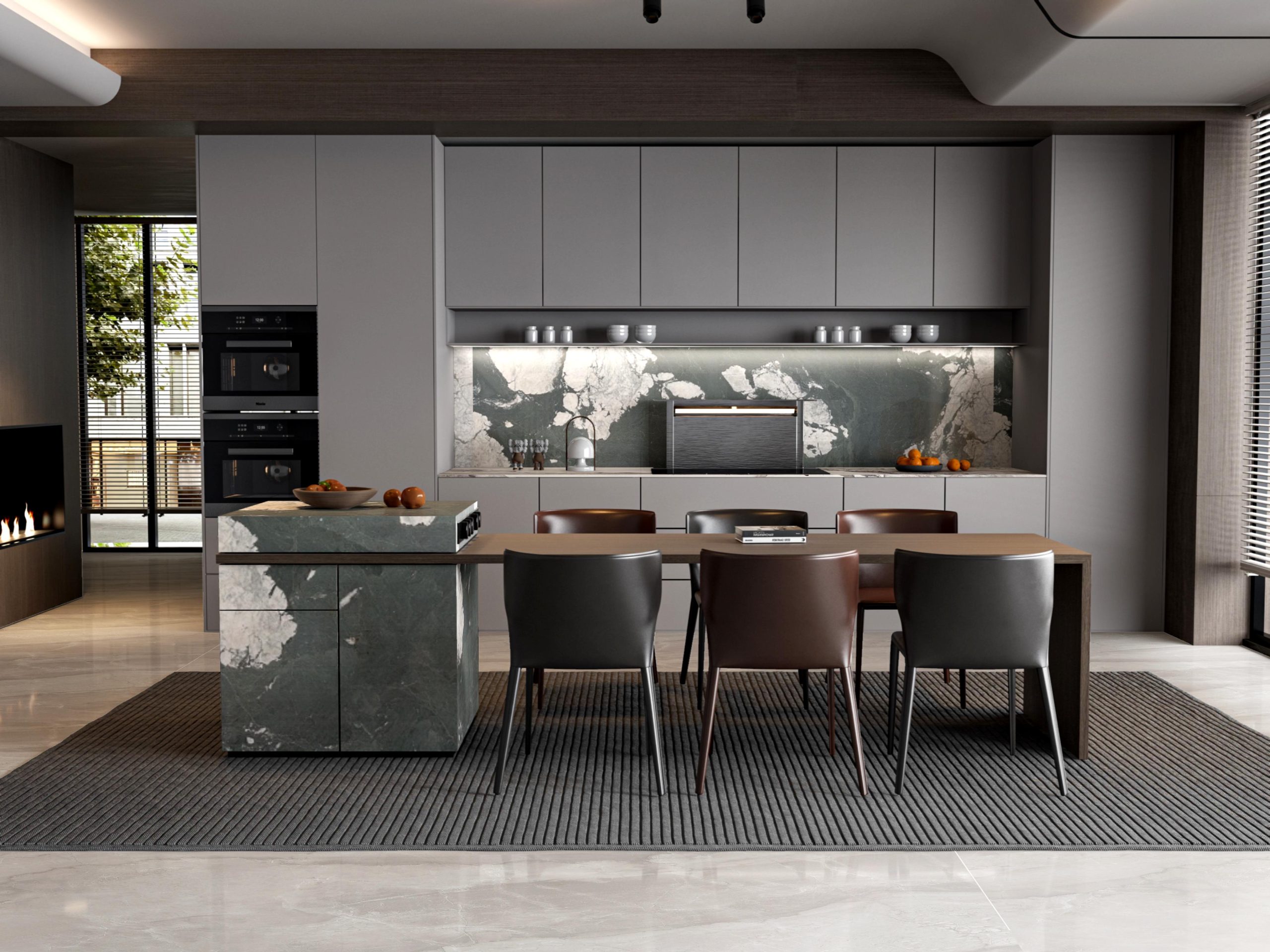
Green Marble project
🧩 FAQ
1. What factors determine the performance of natural marble?
Marble performance depends on mineral composition, surface finish, and maintenance conditions. Calcitic stones provide higher brightness, while serpentinite-based marbles offer better flexibility and acid resistance.
2. How can marble surfaces be tested scientifically?
Engineers use standardized tests such as ASTM C97 for absorption, ASTM C241 for abrasion, and gloss retention analysis under UV light. These methods quantify how marble reacts to stress, light, and humidity over time.
3. Why do designers combine different marble colors in one space?
Color diversity helps balance light reflection and visual temperature. For example, pairing white and green marbles softens contrast, adds depth, and enhances mood without overwhelming a room.
4. Does honed marble last longer than polished marble?
In high-traffic environments, honed finishes tend to age more gracefully. They hide micro-scratches and acid etching better than polished finishes, which require periodic buffing to maintain high gloss.
5. How is ICE STONE contributing to modern marble research?
Through field tests and data-driven analysis, ICE STONE studies real-world performance of marble under humidity, UV, and cleaning cycles—turning natural stone from a purely aesthetic choice into an engineering material for modern architecture.
📚 References
-
ASTM International. C97/C97M – Standard Test Methods for Absorption and Bulk Specific Gravity of Dimension Stone.
-
ASTM International. C241 – Standard Test Method for Abrasion Resistance of Stone Subjected to Foot Traffic.
-
European Stone Trade Association (ESTA). 2024 Annual Report on Sustainable Quarrying and Natural Stone Performance.
-
Marble Institute of America (MIA). Natural Stone Design Manual, 2023 Edition.
-
Dr. Alan Reyes. Comparative Mineralogy of Calcite and Serpentinite in Architectural Marble Applications.
-
Politecnico di Milano, Dr. Lucia Moretti. Impact of Surface Finish on the Durability of Natural Stone in Interior Environments.
-
U.S. Geological Survey (USGS). Dimension Stone Statistics and Characteristics Report, 2024.
-
Building Research Establishment (BRE), UK. Natural Stone Durability Assessment in Commercial Buildings.
-
ICE STONE Research Division. Field Study on Absorption, Gloss Retention, and Etching of Modern Marble Materials (2025).
-
Sustainability in Stone Symposium (Zurich). Lifecycle Analysis of Marble Finishing and Energy Efficiency Trends.
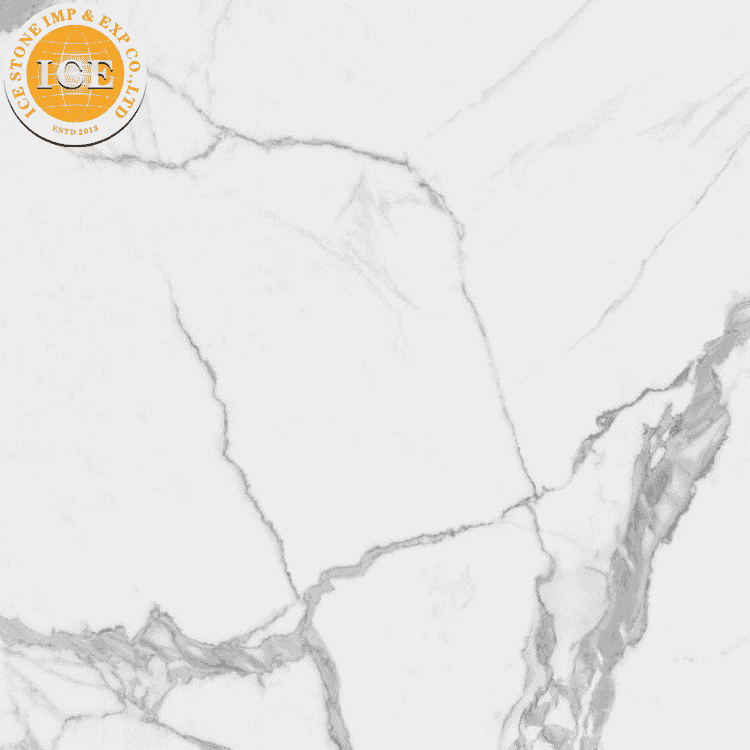
Marble Slabs
Beauty That Proves Itself
This study began with a question—can beauty be measured? After hundreds of data points, the answer is clear: yes, but not by numbers alone. It’s measured in how a space ages, how light interacts with texture, and how people feel within it.
From the crystalline depth of White Beauty Marble, to the tranquil tones of Twilight and the bold warmth of Rubino, every stone in ICE STONE’s testing matrix demonstrated a truth the industry is now embracing: real luxury is measurable integrity.
As ESTA’s sustainability panel recently stated, “The future of design lies not only in aesthetics but in accountability.”
Marble, once the language of permanence, is now also the language of proof.
According to Dr. Lucia Moretti, professor of Materials Science at Politecnico di Milano, “Every marble carries a geological DNA—its durability and light behavior are not aesthetic coincidences but mineral facts.” ICE STONE’s recent studies confirm her view: calcitic white marbles maximize luminosity through crystal purity, while serpentinite greens deliver micro-flexibility that resists stress and humidity.
The implication for modern design is profound—beauty no longer stands apart from science. A marble’s texture, density, and finish are measurable predictors of how gracefully it will age. In the coming decade, data will not replace art; it will refine it, ensuring every surface tells both a visual and structural story that endures.
PREVIOUS NEWS What Our 90-Day Field Test Revealed About Green & Wh...
 By
Xiamen Ice Stone Imp.& Exp. Co., Ltd.
By
Xiamen Ice Stone Imp.& Exp. Co., Ltd. Feature Product
-
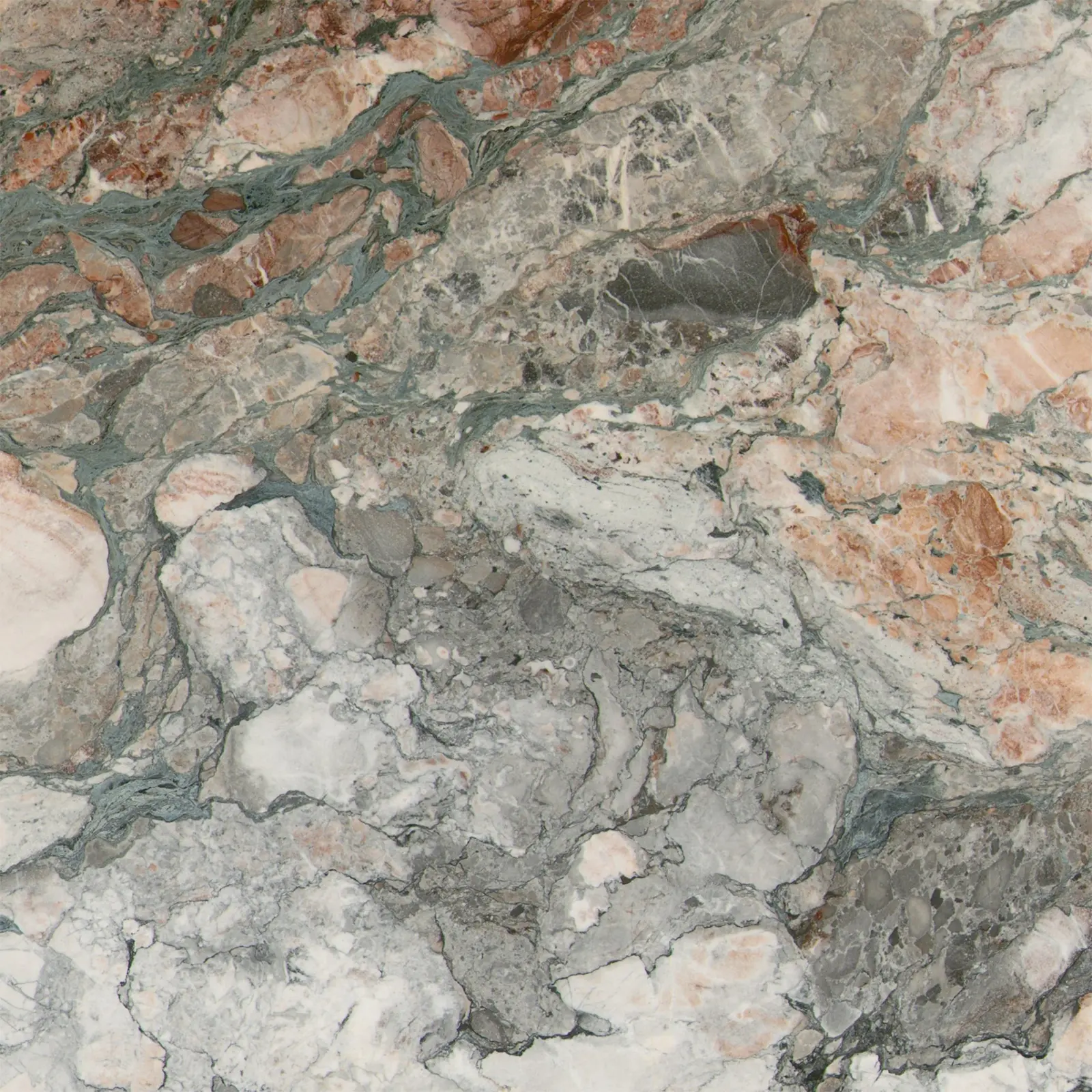 Four Season Grey Natural Marble Slabs and Tiles
The Charm of Four Season Pink Good size for ...
-
 Panda Green White Luxurious Quartzite Stone
Artistic Conception Like moonlight piercing ...
-
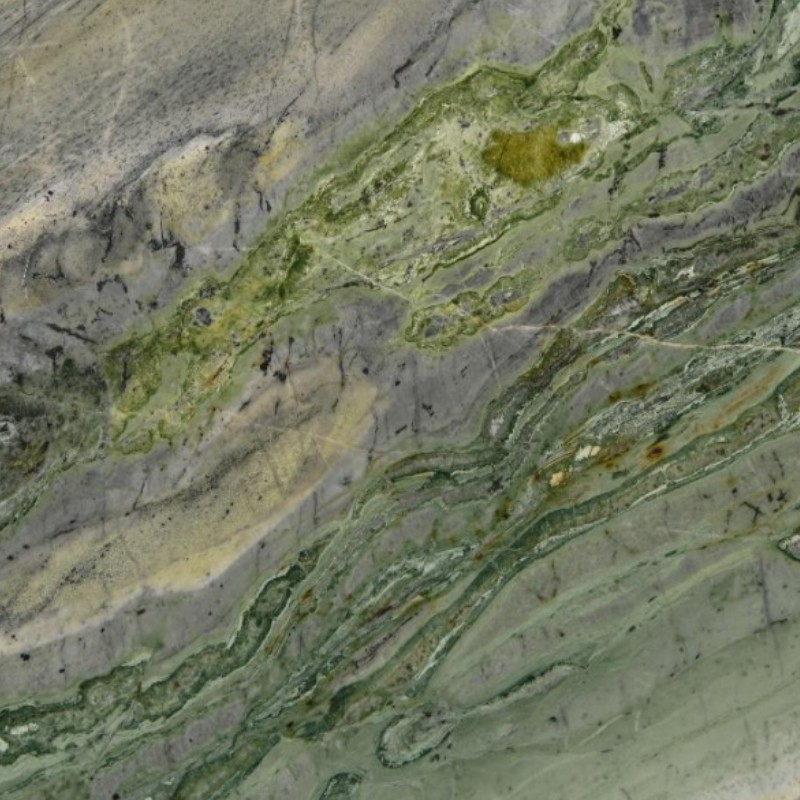 Vivid Brilliant Natural Marble of Prague Green
How to pack and load ? 1. Fumigated wooden b...