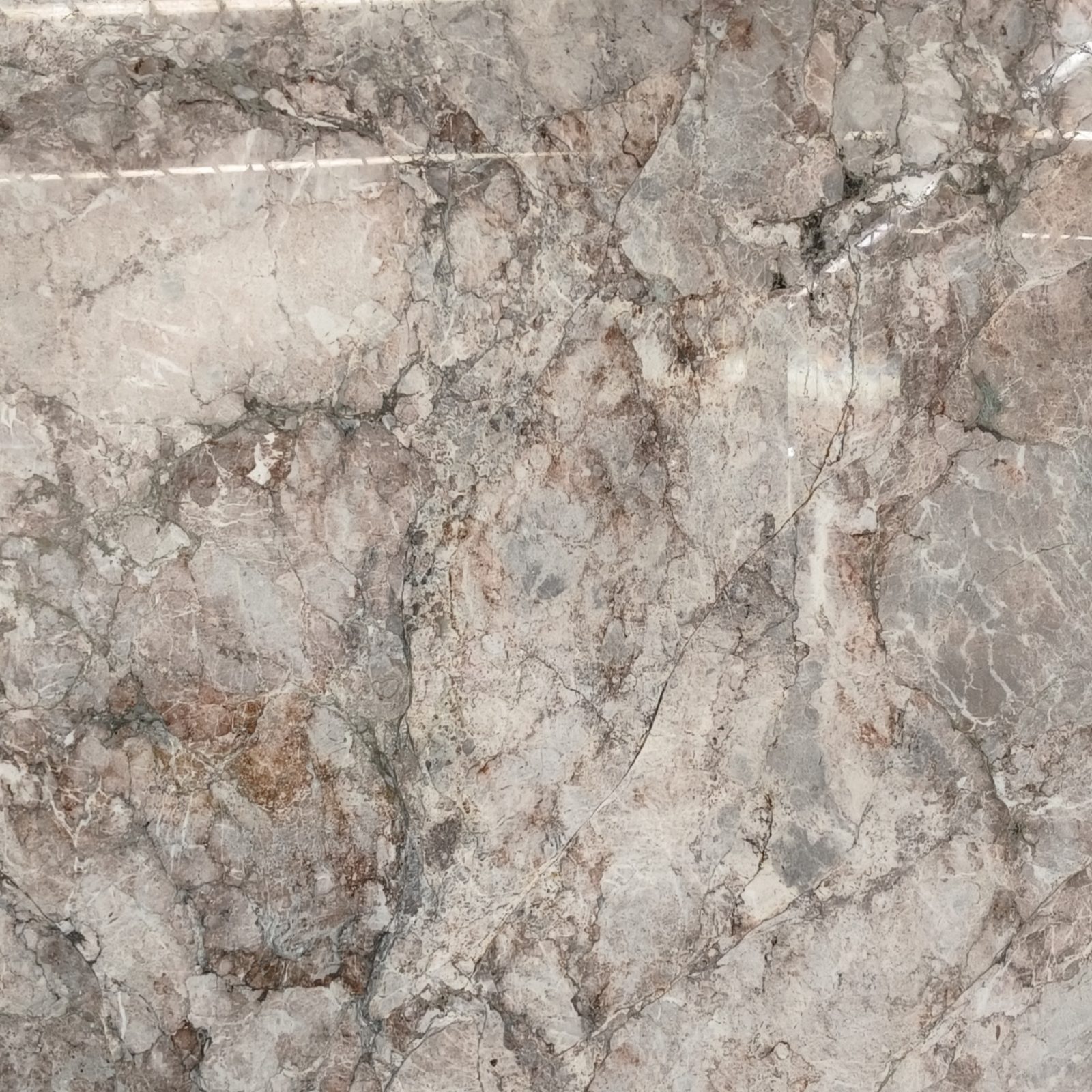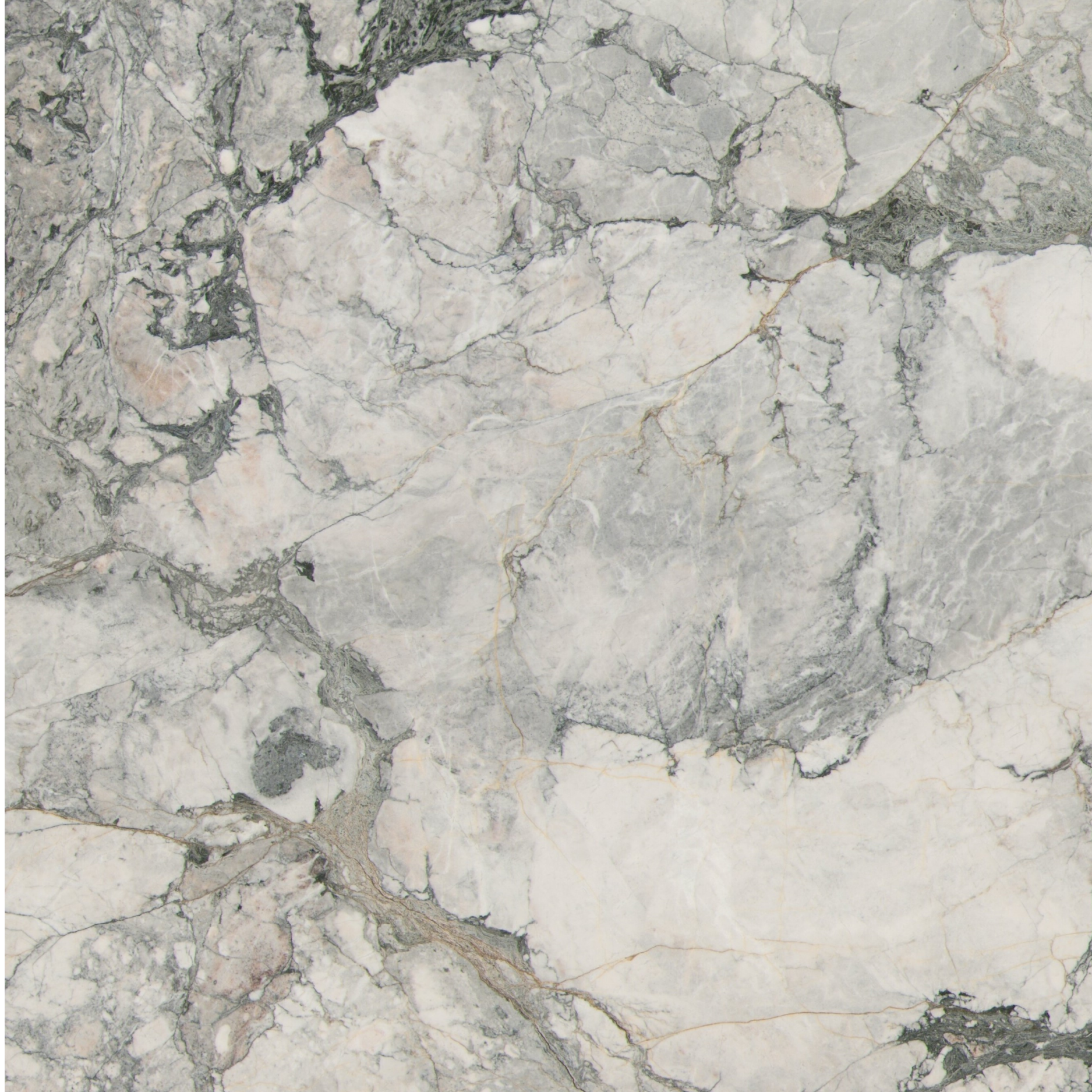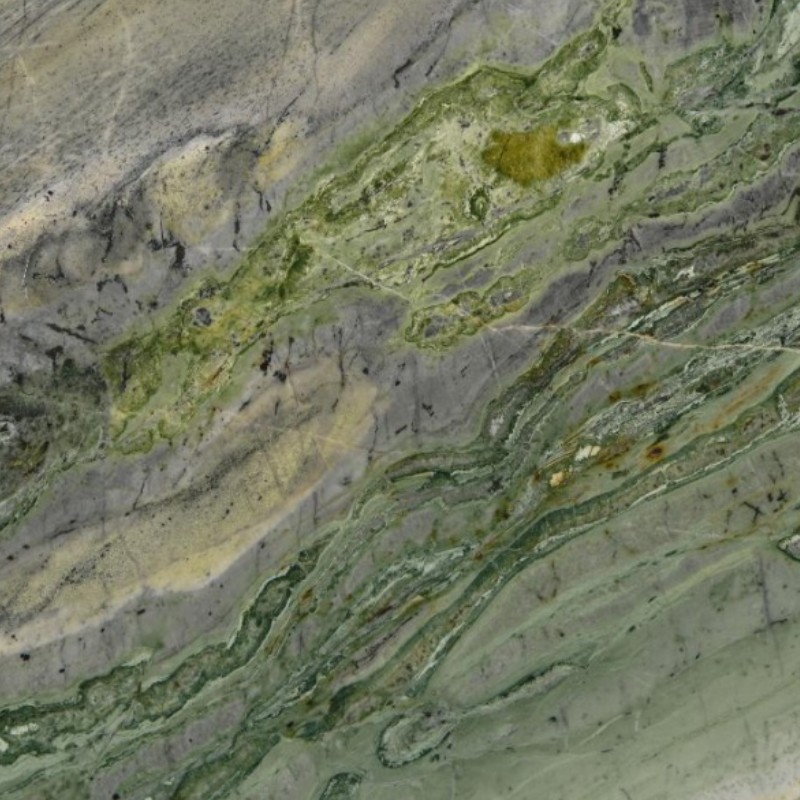
Four Seasons Green Marble is a distinctive natural marble selected for its green color character, expressive veining and versatility in luxury interior design. The Four Seasons Green Marble Series can be considered for feature walls, flooring, countertops, furniture and hospitality interiors, with the final selection depending on actual slab patterns, surface finishes, technical properties and project requirements. For architects, designers and wholesale buyers, reviewing full slabs and confirming fabrication specifications are essential steps before placing a bulk order.
Natural stone has become an important design element in contemporary luxury interiors, where material selection is expected to contribute more than surface decoration. Color, texture, natural variation and the relationship between stone and surrounding materials all influence the character of a finished space. Among decorative marble options, green marble offers a distinctive balance between natural expression and architectural sophistication.
Four Seasons Green Marble is particularly interesting for projects that require a recognizable natural-stone feature without relying exclusively on conventional white or beige palettes. Its green visual direction can complement warm timber, brass, neutral surfaces and contemporary architectural finishes. Depending on the selected slab, the material can become a dramatic focal point or a more subtle element within a coordinated interior scheme.
For professional buyers, however, choosing marble requires more than identifying an attractive color. Slab consistency, thickness, surface treatment, fabrication quality, natural fissures, installation conditions and long-term maintenance all influence project results. This guide explains how to evaluate the Four Seasons Green Marble Series and how to select suitable materials for residential, hospitality and commercial applications.
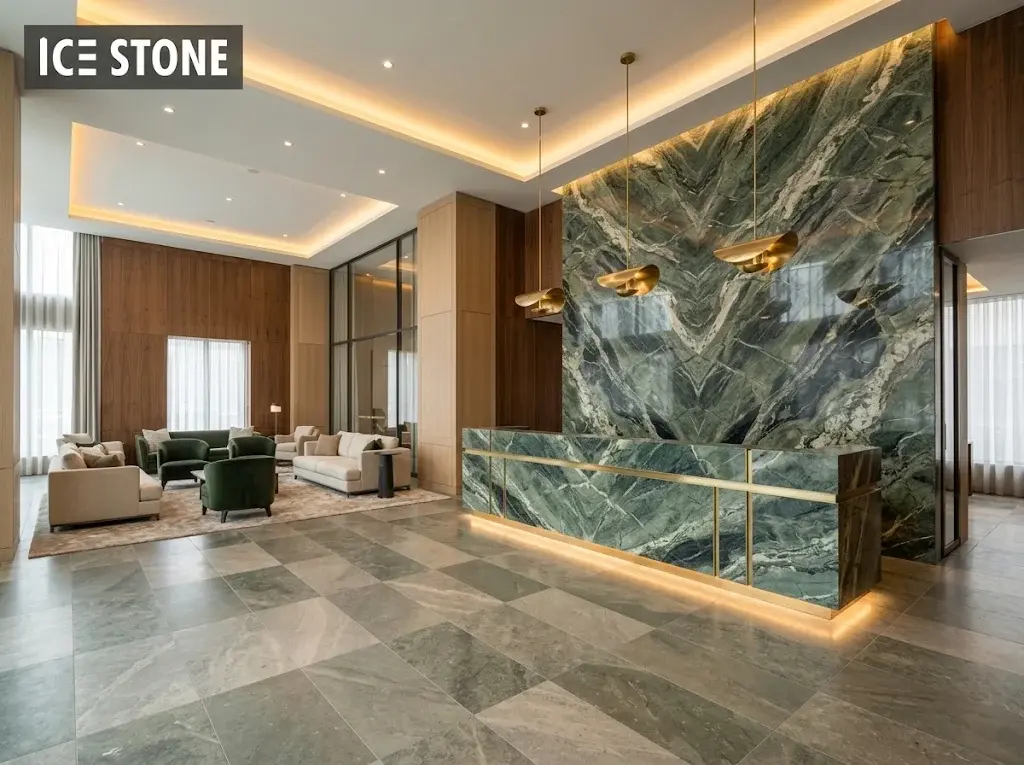
Applications of Premium Four Seasons Green Marble
1. What Makes Four Seasons Green Marble a Distinctive Natural Stone Series?
Natural Characteristics of Green Marble
Marble is a natural dimension stone formed through geological processes that transform carbonate-rich rocks under heat, pressure and other geological conditions. Its visible characteristics are influenced by mineral composition, impurities, recrystallization and the geological environment in which the stone developed.
Green marble can contain different mineral components and natural color-producing features. The exact composition varies between geological sources, so the appearance and technical properties of one green marble should not automatically be assigned to another. This is especially important when buyers compare commercially named marble varieties.
The Four Seasons Green Marble Series is positioned as a decorative natural-stone direction for projects that value green tones and expressive natural patterns. Its appeal comes from the combination of color, vein movement and the individual character of each slab rather than from a perfectly repeated industrial pattern.
Why Natural Variation Matters to Buyers
Unlike printed surfaces or engineered decorative panels, natural marble does not reproduce an identical pattern across every slab. Differences may appear in background color, vein direction, mineral distribution and the visual density of the pattern. These characteristics are part of the natural material, but they must be managed carefully in projects that require multiple pieces.
For a hotel renovation involving several guest suites, for example, the design team may want all vanity tops to share a similar green tone. The slabs do not need to be identical, but the overall visual range should be approved before fabrication. For a single reception feature wall, a more dramatic and contrasting slab may be preferred.
Buyers researching natural green marble slabs should therefore request full-slab photographs or videos rather than relying entirely on a small sample. A sample can communicate the general color direction, but it cannot fully represent the scale and movement of a complete slab.
Green Marble in Luxury Interior Design
Green marble can create a visual connection with nature while providing a more substantial architectural appearance than paint or decorative laminates. It can be used as a statement material in a reception area, as a coordinated surface in a residential bathroom, or as a decorative element in a boutique retail environment.
Its effectiveness depends on proportion. Covering every surface in a highly expressive stone may create a visually crowded interior. Using it selectively on a feature wall, vanity, console or furniture piece can create a more balanced result.
2. Four Seasons Green Marble Series: Color Variations and Visual Character
Understanding Light, Medium and Deep Green Directions
When comparing green marble, buyers often describe colors according to their overall visual direction. Light green tones can create a fresh and relatively understated atmosphere. Medium green tones may provide a balance between natural color and decorative impact, while deeper green appearances can establish a stronger focal point in a room.
These descriptions are useful for design planning, but they should not be treated as official product variant names unless the supplier confirms them. Natural marble can show several tones within the same slab, and the final appearance may change under different lighting conditions.
| Color Direction | Visual Character | Potential Design Style | Selection Consideration |
|---|---|---|---|
| Light Green | Fresh, softer and visually open | Contemporary and minimalist | Check background color consistency |
| Medium Green | Balanced natural color and movement | Modern luxury | Review vein density and contrast |
| Deep Green | Rich and visually dramatic | Classic luxury and boutique interiors | Evaluate lighting and surrounding colors |
| Mixed Green Patterns | Dynamic and distinctive | Artistic and customized interiors | Approve the actual slab composition |
Veining and Mineral Distribution
Color alone does not determine the quality of a decorative marble slab. Vein direction, pattern scale and the distribution of natural mineral features can significantly influence the final appearance.
For example, a large slab with broad, flowing veins may be suitable for a feature wall or long countertop. A slab with smaller, more concentrated patterns may work better for a coffee table or decorative panel. Buyers should consider the finished dimensions before deciding whether a particular slab is visually appropriate.
When selecting Four Seasons Green Marble slabs, it is useful to identify the areas that will be visible after cutting. A dramatic vein located near the edge of a slab may disappear during fabrication, while a quieter central section may become the main feature of the finished product.
Lighting and Color Perception
Lighting can change how green marble is perceived. Natural daylight, warm artificial lighting and cool white lighting may emphasize different parts of the stone’s color composition.
For a luxury hotel project, material approval should ideally take place under lighting conditions similar to those planned for the finished interior. A slab that appears balanced in a warehouse may look darker or more saturated in a room with limited daylight.
Designers should also compare the marble with adjacent materials, including wall paint, wood finishes, metal details and floor coverings. This helps prevent color conflicts after installation.
3. Natural Patterns, Slab Selection and Surface Appearance
Full-Slab Inspection Before Bulk Purchasing
Full-slab inspection is one of the most important steps in natural marble procurement. Small samples are useful for confirming a general material direction, but they do not show the full pattern composition or all natural characteristics.
For a project requiring ten or twenty pieces, buyers should review the available slabs as a group. This makes it easier to select materials with a compatible color range and to allocate different slabs to different areas of the project.
A practical slab approval process should include:
- Reviewing full-slab photographs with clear identification numbers.
- Checking the background color and natural vein distribution.
- Identifying visible fissures, repairs and filled areas.
- Confirming the required thickness and surface finish.
- Marking the intended cutting areas on slab images.
- Keeping an approved visual record before production begins.
For buyers who want to understand the available material range, the natural marble slab collection provides a starting point for comparing different marble directions and product categories. The final choice should still be based on the actual material available for the order.
Bookmatching and Continuous Vein Design
Bookmatching is a layout method in which adjacent stone pieces are arranged as mirrored or visually coordinated surfaces. It is commonly used for feature walls, large decorative panels and selected furniture designs.
With green marble, bookmatching can emphasize natural movement and create a more artistic result. However, successful bookmatching requires advance planning. Consecutive slabs should be reserved and reviewed together before cutting. Buyers should also confirm whether the selected slabs have compatible dimensions, thicknesses and visual characteristics.
Natural Fissures, Repairs and Surface Quality
Natural marble may contain geological features that require careful assessment. A visible line in the stone is not automatically a structural defect, but buyers should understand whether it is a natural vein, a fissure, a filled area or damage caused during handling.
For applications involving unsupported edges, narrow countertop sections or large furniture tops, the location and condition of these features deserve particular attention. The supplier and fabricator should review the actual slab before confirming the cutting plan.
4. Surface Finishes for Four Seasons Green Marble
Polished Finish
A polished finish creates a reflective surface that can emphasize the depth of green tones and the contrast between natural veins. It is often considered for decorative walls, countertops, vanity surfaces and furniture where a more formal appearance is desired.
Polished marble can also make surface marks more noticeable under strong directional lighting. Buyers should therefore inspect polish consistency and understand the cleaning requirements before selecting it for high-use surfaces.
Honed Finish
A honed finish provides a smooth, matte or low-reflectivity appearance. It can work well in contemporary interiors where designers prefer a quieter surface with less reflection.
Honed marble is not automatically resistant to staining or chemical damage. The underlying material remains natural marble, so the same basic precautions concerning acidic products and unsuitable cleaners still apply.
Leathered and Textured Finishes
Leathered and other textured finishes create a more tactile appearance. They can add visual depth and may be suitable for selected decorative surfaces or furniture projects.
Texture can affect cleaning behavior because dirt and residue may remain in surface irregularities. Before specifying a textured finish for a hospitality project, buyers should confirm the cleaning method and maintenance expectations with the supplier and facility operator.
| Surface Finish | Appearance | Potential Applications | Important Consideration |
|---|---|---|---|
| Polished | Glossy and reflective | Feature walls, countertops, furniture | Etching and visible surface marks |
| Honed | Smooth and matte | Modern interiors, vanity surfaces | Stain management and sealing |
| Leathered | Softly textured | Decorative furniture and selected surfaces | Cleaning and texture consistency |
| Brushed | Textured and natural-looking | Selected architectural applications | Confirm availability and maintenance suitability |
5. Best Applications for Four Seasons Green Marble
Luxury Hotel and Hospitality Interiors
Hotels use natural stone to establish a recognizable design identity. Green marble can be considered for reception counters, lobby feature walls, lounge tables, guest-suite vanities and decorative panels.
For example, a boutique hotel may use green marble behind the reception desk, with brass detailing and warm lighting. Guest suites may repeat the same material in smaller vanity surfaces or bedside furniture. This creates a coordinated design language without requiring the stone to cover every surface.
For hospitality applications, procurement teams should evaluate appearance together with maintenance, installation conditions, replacement availability and cleaning procedures. A decorative material that looks impressive in a sample room must also be appropriate for the operational requirements of the property.
Bathroom Vanities and Decorative Bathroom Surfaces
Green marble can add a distinctive visual element to bathroom vanities, wall cladding and selected decorative surfaces. It can be paired with white sanitaryware, brushed brass fittings, dark cabinetry or neutral wall finishes.
However, bathrooms require careful detailing. Water exposure, cleaning chemicals, joints, substrate preparation and waterproofing all affect long-term performance. Marble is not a waterproofing system, and sealing the stone does not replace a correctly designed waterproof membrane.
Before using the material in shower floors or other regularly wet areas, buyers should review the finish, wet slip performance, drainage design and applicable local building requirements.
Living Rooms and Residential Feature Walls
In residential interiors, green marble can be used as a television background, fireplace surround, decorative wall panel or coffee-table surface. The stone can become a central visual feature when the surrounding palette is relatively restrained.
Light timber, neutral upholstery and warm metal details can soften the contrast of a deep green surface. Dark wood and black metal can create a more formal appearance. The final combination should be tested with actual samples rather than selected from digital color references alone.
Furniture, Dining Tables and Countertops
Furniture applications offer another way to use green marble without installing large quantities of stone across the entire room. Dining tables, coffee tables, consoles and side tables can all make natural vein patterns more visible at close range.
For a furniture project, the designer should coordinate the slab layout with the table shape, edge profile, support structure and finished dimensions. A rectangular tabletop may benefit from directional veins, while a round table may require a more carefully centered pattern.
The current Four Seasons Green Marble product information is a useful reference point for buyers evaluating the material’s appearance and application direction. Exact slab availability, dimensions and technical details should be confirmed for the intended order.
 Four Seasons Green Marble in the Bathroom Vanity Wall |
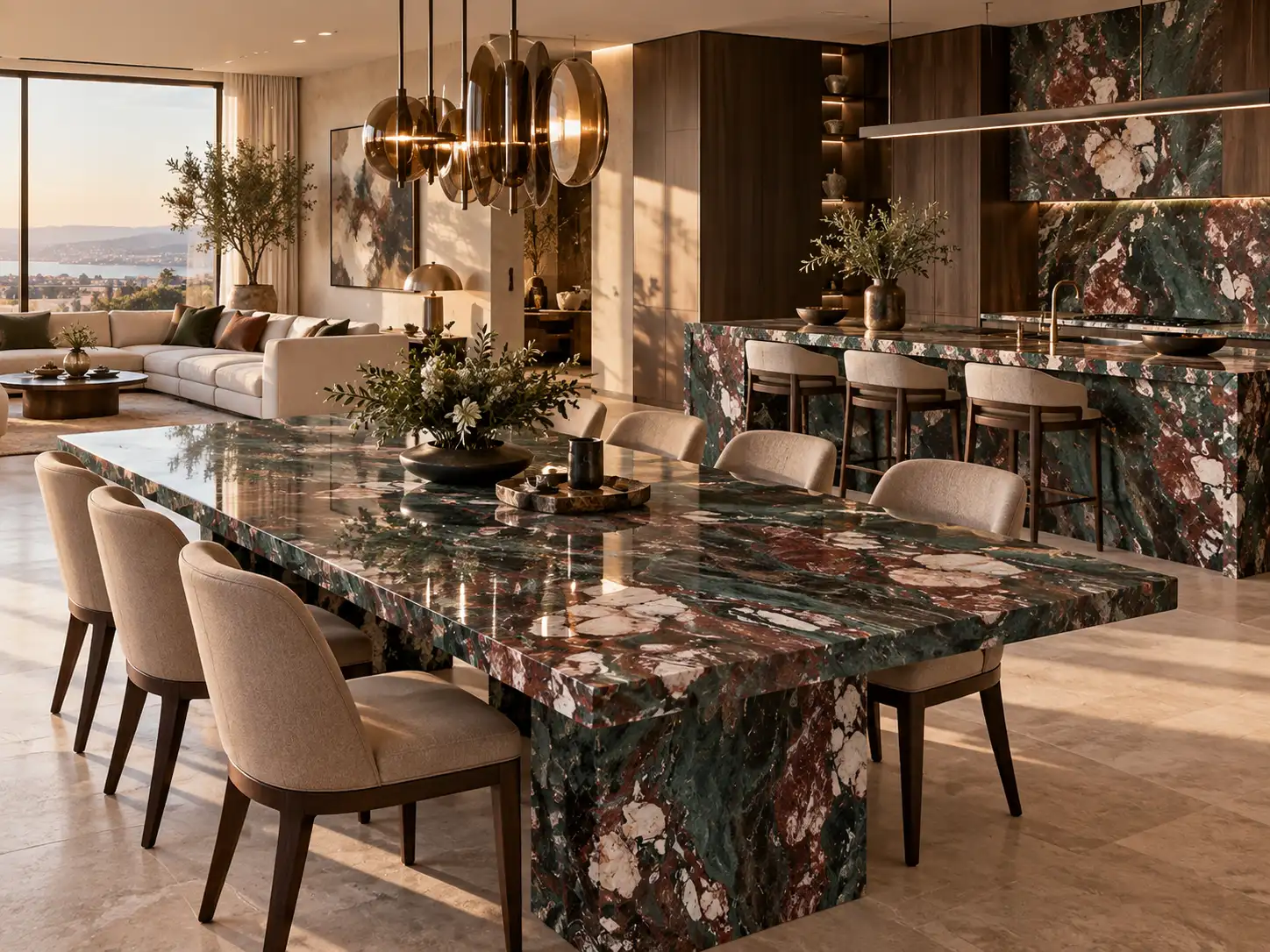 Four Seasons Green Marble Dining Table and Kitchen Island Design |
6. Comparing Green Marble with Other Natural Stone Materials
Four Seasons Green Marble vs. White Marble
White marble is often selected for its light background and established association with classic luxury interiors. Green marble provides a more distinctive color statement and may be better suited to projects that need a stronger visual identity.
The choice depends on the surrounding palette, lighting and design objective. White marble can help create a brighter visual impression, while green marble can introduce contrast and a more recognizable focal element.
Green Marble vs. Granite
Granite is an igneous rock with a different mineral structure from marble. It is often considered for applications where abrasion resistance and practical surface performance are important. Marble is frequently selected for its decorative veining and visual character.
Neither category should be evaluated using appearance alone. Actual performance depends on the specific material, finish, test results, fabrication and installation conditions.
Green Marble vs. Quartzite
Quartzite is a metamorphic rock formed from quartz-rich sandstone. It is different from marble in mineral composition and geological characteristics. Some quartzites are selected for their hardness and distinctive crystalline appearance.
When comparing green marble with quartzite, buyers should verify the material identity and request relevant technical documentation. Commercial names are not always sufficient to establish geological composition or performance.
| Material | Visual Character | Typical Design Direction | Key Evaluation Point |
|---|---|---|---|
| Four Seasons Green Marble | Green natural color and expressive patterns | Distinctive luxury interiors | Slab variation and maintenance |
| White Marble | Light background and natural veining | Classic and contemporary luxury | Acid sensitivity and staining |
| Granite | Crystalline mineral patterns | Practical commercial surfaces | Product-specific durability data |
| Quartzite | Crystalline and often directional patterns | Premium architectural surfaces | Verify material identity and test results |
7. Technical Properties and Quality Evaluation
Water Absorption and Porosity
Water absorption is an important consideration for natural stone used in bathrooms, kitchens and other areas where moisture exposure is expected. A higher absorption result may indicate a greater need to evaluate sealing, cleaning and moisture-management requirements.
ASTM C97/C97M provides test methods for absorption and bulk specific gravity of dimension stone. Buyers should request test results for the actual material or relevant production batch when technical specifications are important to the project.
Compressive and Flexural Strength
Compressive strength measures how a stone specimen behaves under compressive loading. Flexural strength evaluates its resistance to bending under specified test conditions. These properties can help technical teams assess material suitability for particular applications.
ASTM C170/C170M covers compressive strength testing, while ASTM C880/C880M covers flexural strength testing of dimension stone. These tests should be interpreted together with slab thickness, support conditions, natural fissures and fabrication design.
Abrasion Resistance and Surface Durability
For flooring and frequently used surfaces, abrasion resistance may be relevant to long-term appearance. However, the performance of a finished floor also depends on traffic, footwear, cleaning methods, surface finish and maintenance frequency.
ASTM C1353 is one test method used to evaluate abrasion resistance of dimension stone. A test result should not be treated as a universal prediction of service life in every building.
Technical Data and Relevant Testing Standards
| Technical Property | Relevant Standard | Purpose | Buyer Action |
|---|---|---|---|
| Water Absorption | ASTM C97/C97M | Evaluates water absorption behavior | Request applicable test results |
| Bulk Specific Gravity | ASTM C97/C97M | Evaluates density-related characteristics | Use measured data for weight calculations |
| Compressive Strength | ASTM C170/C170M | Evaluates resistance under compression | Review for relevant applications |
| Flexural Strength | ASTM C880/C880M | Evaluates bending behavior | Consider slab geometry and support |
| Abrasion Resistance | ASTM C1353 | Evaluates surface wear characteristics | Consider traffic and finish |
| Marble Specification | ASTM C503 | Provides a dimension marble specification framework | Confirm applicability to the supplied material |
8. How to Match Four Seasons Green Marble with Other Interior Materials
Green Marble with White and Beige Materials
White and beige materials can create a visual balance with green marble. White surfaces make the green color more noticeable, while beige stone and warm neutral finishes can create a softer atmosphere.
This combination is useful in bathrooms, hotel suites and residential living areas where the designer wants a natural focal point without making the entire space visually heavy.
Green Marble with Wood
Wood introduces warmth and texture. Light oak can create a relaxed contemporary appearance, while walnut and darker timber can produce a richer and more formal interior.
When marble is combined with wood, designers should consider the grain direction and visual scale of both materials. A highly patterned marble may work best with a relatively restrained timber finish.
Green Marble with Brass, Gold and Black Metal
Brass and bronze can emphasize warmer tones in the stone and create a refined luxury appearance. Black metal provides a sharper contrast and can support a more contemporary design direction.
Metal selection should also account for practical issues such as corrosion resistance, cleaning compatibility and the fixing method used in the finished furniture or architectural installation.
9. Current Design Trends and the Role of Natural Green Marble
Natural Color Palettes and Biophilic Design
Interior designers increasingly explore combinations of natural materials, organic textures and colors inspired by landscapes. Green marble can support this direction when used with timber, plants, natural fabrics and daylight.
Rather than applying the stone across every surface, a more controlled approach is to use it as a feature material. This creates visual focus while allowing other finishes to contribute to the overall atmosphere.
Large-Format Slabs and Reduced Visual Interruption
Large-format slabs can create a more continuous visual effect on walls, counters and selected furniture surfaces. Fewer joints may help preserve the movement of natural veins, although the actual result depends on slab size, cutting yield and installation requirements.
Large slabs also create logistical considerations. Buyers should confirm access routes, lifting arrangements, crate dimensions and installation methods before ordering oversized materials.
Personalized Natural Stone Furniture
Custom furniture gives designers more control over how natural patterns are presented. A selected section of a slab can be used for a tabletop, console or cabinet front, while suitable offcuts may be allocated to smaller pieces.
This approach can improve material utilization, but it requires a cutting plan that considers both visual composition and production efficiency.
10. How to Select a Reliable Green Marble Manufacturer and Wholesale Supplier
Evaluate Product Range and Processing Capabilities
For importers, distributors and project contractors, a reliable supplier should be able to explain the available material forms and processing options. These may include blocks, slabs, tiles and cut-to-size products, depending on the material and production arrangement.
Buyers should also understand the supplier’s capabilities in slab cutting, polishing, surface treatment, edge fabrication, inspection and export packing. Not every supplier offers the same processing scope, so these details should be confirmed before an order is placed.
A supplier’s background, product categories and operating arrangements can help buyers understand its business scope. Reviewing the natural stone company profile is one way to begin this evaluation, followed by direct confirmation of the capabilities relevant to the specific project.
Review Quality Control Procedures
Natural stone quality control should begin before fabrication. Block selection, slab processing, surface treatment and final inspection all influence the finished product.
For a bulk order, buyers should ask how the supplier identifies slabs, records production information and checks finished dimensions. It is also useful to confirm how visible repairs, natural fissures and color variation are documented.
Compare Wholesale Quotations Beyond the Unit Price
A low slab price does not necessarily represent the lowest finished project cost. Buyers should compare material grade, slab dimensions, usable yield, thickness, finish, cutting charges, packing, freight and replacement risk.
For example, a slab with an attractive price may have a pattern that produces significant cutting waste for a specific countertop layout. Another slab with a higher unit price may provide a better yield and a more consistent visual result.
Questions to Ask a Green Marble Factory
- Can the supplier provide current full-slab photographs and videos?
- Are the available slabs from the same block or production batch?
- What thicknesses and finishes are currently available?
- Can the supplier provide relevant technical test reports?
- What inspection procedures are used before shipment?
- Can custom dimensions and edge details be processed?
- How are slabs protected during international transportation?
- What is the process for handling damage or quality disputes?
For a specific order, the buyer should provide the intended application, estimated quantity, dimensions, finish, destination and expected schedule. These details make it easier for a green marble manufacturer or wholesale natural stone supplier to prepare a meaningful quotation rather than a price based only on a general product name.
11. Installation, Maintenance and Long-Term Care
Substrate Preparation and Installation Planning
Successful installation begins with a suitable substrate and a clear installation plan. Wall cladding, flooring, countertops and furniture components have different support requirements.
For vertical installations, the project team should evaluate stone weight, fixing systems, substrate condition and applicable local requirements. Large panels may require mechanical restraint or a specifically engineered installation system.
Sealing and Moisture Management
Whether a marble surface needs sealing depends on its absorption characteristics, finish, application and maintenance expectations. A suitable penetrating sealer may reduce the rate at which certain liquids enter the stone, but it does not make marble completely stain-proof or acid-proof.
In bathrooms and wet areas, waterproofing must be designed as a separate part of the building assembly. The stone finish, adhesive, grout, membrane and drainage system should be coordinated rather than treated as independent decisions.
Daily Cleaning and Stain Prevention
Routine cleaning should use products approved for natural stone. Acidic cleaners, aggressive chemicals and abrasive tools may damage certain marble surfaces or affect their appearance.
For dining tables and countertops, spills should be removed promptly. Citrus juice, vinegar, wine and other acidic substances can cause etching on carbonate-based marble. Sealing may help reduce some absorption-related staining, but it cannot prevent acid etching.
Maintenance Planning for Hotels and Commercial Properties
Hotels should establish practical cleaning instructions for housekeeping teams. The maintenance plan should identify suitable cleaning products, spill-response procedures, periodic inspection requirements and the correct process for addressing surface damage.
For projects using green marble in several locations, retaining spare material from the approved batch may help with future repairs. Replacement planning is particularly important when the original slabs have distinctive patterns that may not be available again.

Four Season Green Marble
12. Common Mistakes When Buying Four Seasons Green Marble
Choosing Only from Small Samples
A small sample cannot fully represent a large slab. Buyers may approve a sample with a balanced green background and later receive slabs with significantly different vein density. Full-slab approval helps reduce this risk.
Assuming All Green Marble Has Identical Technical Properties
Commercial color categories do not guarantee identical geological composition or performance. Different green marbles may have different absorption, strength and maintenance characteristics. Request relevant test data instead of relying on general assumptions.
Ignoring the Final Cutting Layout
A visually attractive slab may not provide the best yield for a particular project. Sink cutouts, furniture shapes, edge profiles and vein direction can all affect the usable area. A cutting layout should be reviewed before production.
Selecting a Finish Without Considering Maintenance
A textured surface may look attractive but require more detailed cleaning. A polished surface may create strong visual impact but make certain scratches or etching more visible. The correct finish depends on the application and operating conditions.
Comparing Suppliers Only by Price
Supplier evaluation should include material selection, processing, quality control, communication, packing and delivery coordination. A quotation that excludes important fabrication or logistics costs may not provide a reliable comparison.
13. Frequently Asked Questions About Four Seasons Green Marble
1. What Is Four Seasons Green Marble?
Four Seasons Green Marble is a commercially identified natural marble product known for its green visual character and natural pattern variation. It is considered for decorative interior applications such as feature walls, countertops, furniture, vanity surfaces and selected hospitality projects. Because it is natural stone, individual slabs may differ in background color, vein direction and mineral distribution. Buyers should review actual slab photographs and confirm the product’s available dimensions, finish options and technical documentation before placing a project order.
2. What Colors and Patterns Are Available in the Four Seasons Green Marble Series?
The visual character of Four Seasons Green Marble should be evaluated through the actual slabs available for the order. Natural green marble can display different shades, contrasting veins and variations in mineral distribution, even within the same commercially named material. Descriptions such as light green, medium green and deep green can help organize design preferences, but they should not be treated as official product variants unless confirmed by the supplier. For projects requiring several slabs, buyers should compare full-size images and approve the intended color range before fabrication.
3. Where Can Four Seasons Green Marble Be Used?
Four Seasons Green Marble can be considered for interior feature walls, decorative panels, reception counters, bathroom vanities, coffee tables, dining tables, consoles and selected countertop applications. The suitability of each application depends on the stone’s actual properties, finish, thickness, support system and expected use. Decorative walls and furniture may prioritize appearance and fabrication details, while countertops and flooring require closer attention to maintenance, abrasion, moisture and installation conditions. Wet-area applications should also be assessed for slip resistance and compliance with local building requirements.
4. Is Four Seasons Green Marble Suitable for Bathroom and Kitchen Countertops?
Four Seasons Green Marble may be used for selected bathroom and kitchen countertop designs when the material is properly evaluated and maintained. Marble is a carbonate-based natural stone and can be sensitive to acidic substances, including vinegar, citrus juice and some household cleaners. Buyers should review water absorption, surface finish, sealing requirements, edge details and the intended cleaning routine. In bathrooms, a separate waterproofing system is essential. In kitchens, users should understand that sealing can help manage some staining risks but does not make marble completely resistant to etching, scratching or heat damage.
5. How Can Buyers Choose a Reliable Four Seasons Green Marble Manufacturer or Wholesale Supplier?
Buyers should evaluate more than the quoted price per square meter. A reliable supplier should be able to explain current slab availability, provide full-slab photographs, confirm thickness and finish options, document relevant quality checks and clarify export packing arrangements. For customized projects, buyers should also review cutting layouts, edge fabrication, natural fissures, dimensional tolerances and the inspection process before shipment. Requesting a detailed quotation with material specifications, quantity, finish, dimensions, packing and delivery terms makes it easier to compare suppliers and reduce procurement risks.
14. References and Technical Resources
- ASTM C503/C503M – Standard Specification for Marble Dimension Stone – ASTM International – Committee C18 on Dimension Stone.
- ASTM C97/C97M – Standard Test Methods for Absorption and Bulk Specific Gravity of Dimension Stone – ASTM International – Committee C18 on Dimension Stone.
- ASTM C170/C170M – Standard Test Method for Compressive Strength of Dimension Stone – ASTM International – Committee C18 on Dimension Stone.
- ASTM C880/C880M – Standard Test Method for Flexural Strength of Dimension Stone – ASTM International – Committee C18 on Dimension Stone.
- ASTM C1353 – Standard Test Method for Abrasion Resistance of Dimension Stone – ASTM International – Committee C18 on Dimension Stone.
- Dimension Stone Design Manual – Natural Stone Institute – Technical guidance for dimension stone selection, fabrication and installation.
- Dimension Stone Design Manual: Stone Counter and Lavatory Tops – Natural Stone Institute – Technical guidance for countertop applications.
- Dimension Stone Design Manual: Stone Furniture – Natural Stone Institute – Technical guidance for natural-stone furniture design and fabrication.
15. A Practical Framework for Selecting Four Seasons Green Marble
Choosing a natural marble is a process that connects design intent, material characteristics, fabrication requirements and project operations. The following framework summarizes how buyers can move from an initial design concept to a confirmed order.
What should buyers decide first?Start with the intended application. A feature wall, bathroom vanity, dining table and hotel floor do not have identical requirements. Define the visible area, expected use, maintenance conditions and installation method before selecting the slab.
Material Fit by Product Direction
The following matrix is a qualitative material-fit guide for comparing natural stone directions that appear in the current marble product range. It is an application suitability indication, not statistical data, a laboratory rating or a guarantee of performance. The symbols do not represent probabilities or percentages. Actual suitability depends on the selected slab, finish, dimensions, fabrication and project conditions.
●●● = Primary
●●○ = Strong Option
●○○ = Depends on Workflow
— = Usually Not First Choice
| Natural Stone Direction | Feature Walls | Furniture | Countertops | Flooring | Design Positioning |
|---|---|---|---|---|---|
| Four Seasons Green | ●●● | ●●● | ●●○ | ●○○ | Distinctive green statement material |
| Four Seasons Pink | ●●● | ●●● | ●●○ | ●○○ | Warm decorative color direction |
| Ice Connect Marble | ●●● | ●●○ | ●●○ | ●○○ | Distinctive light-toned decorative direction |
| Sakura Marble | ●●● | ●●● | ●●○ | ●○○ | Decorative natural-stone direction |
| Morse Code Marble | ●●● | ●●○ | ●●○ | ●○○ | Expressive pattern-led design |
| Fantasy Violet Marble | ●●● | ●●● | ●●○ | ●○○ | Strong color-focused interiors |
Important: This matrix compares design directions only. It does not certify that every listed material is suitable for every countertop, floor or wet-area application. Technical reports, finish testing, structural design and local compliance requirements must be checked separately. The current product range and available slabs should be confirmed before specifying any material.
How to Choose According to the Project
If the project needs a distinctive green focal point: Four Seasons Green can be considered for a feature wall, reception counter or statement furniture piece. Review the full slab and decide how the natural pattern should be positioned.
If the project requires a warmer decorative palette: Four Seasons Pink may provide an alternative color direction. Compare the actual slabs with the interior’s timber, metal and textile finishes before approval.
If the project needs a light visual background: Consider light-toned marble directions and review how their patterns respond to the intended lighting. The most suitable option depends on the desired contrast and the surrounding materials.
If the project involves repeated furniture or multiple rooms: Prioritize batch planning, slab reservation and cutting layouts. A coordinated selection process is more reliable than choosing individual pieces independently.
Why Full-Slab Approval Is a Procurement Decision, Not Just a Design Preference
Full-slab approval helps buyers manage color expectations, pattern distribution and production yield. It also provides a record of the material accepted before cutting begins. This is especially important when natural stone is used in multiple rooms or when a project requires coordinated furniture sets.
What Should Be Confirmed Before Production?
- Actual material identity and available slab quantity.
- Approved slab photographs and identification numbers.
- Required thickness, dimensions and surface finish.
- Cutting layout and natural vein direction.
- Visible natural features and agreed quality criteria.
- Relevant test reports where required.
- Fabrication details, edge profiles and reinforcement.
- Inspection, packing and shipment arrangements.
How Should Buyers Balance Appearance and Performance?
The most visually dramatic slab is not necessarily the most suitable slab for every application. A furniture top may require careful support and edge planning, while a bathroom vanity may require more attention to moisture management and cleaning products. A large wall panel may prioritize pattern continuity and fixing design.
The correct decision is the one that satisfies the project’s visual objective while remaining compatible with fabrication, installation, maintenance and budget requirements.
Final Insight: Treat Four Seasons Green Marble as a Complete Design and Procurement Choice
Four Seasons Green Marble offers a distinctive natural color direction for projects that want to move beyond conventional neutral surfaces. Its design flexibility comes from the way individual slabs can be selected, cut, finished and coordinated with other materials. The same stone can create a dramatic feature wall, a refined vanity surface or a custom furniture piece, provided that the actual slab and intended application are carefully evaluated.
For architects, designers, importers and project contractors, the most effective procurement process begins with a clear application brief. Confirm the required quantity, dimensions, finish, visual range and technical expectations before requesting a quotation. Review the available slabs, agree on fabrication details and establish quality criteria before production begins.
Buyers planning a residential, hospitality or commercial project can also review the Four Seasons Green Marble furniture and design guide for further considerations involving tables, countertops, finishes and custom furniture applications.
For broader design inspiration, the discussion of Four Seasons Green Marble in modern sanctuary homes provides another perspective on how natural green stone can contribute to a calm and distinctive interior atmosphere.
Ultimately, the value of a natural marble project is determined not only by the stone’s appearance, but also by the quality of selection, processing, installation and long-term care. A well-planned specification helps buyers achieve a more consistent result and reduces avoidable risks throughout the project.
For project-specific slab availability, dimensions, finishes and wholesale requirements, buyers can contact the natural stone supplier with their drawings, estimated quantities and application details to discuss suitable material options.