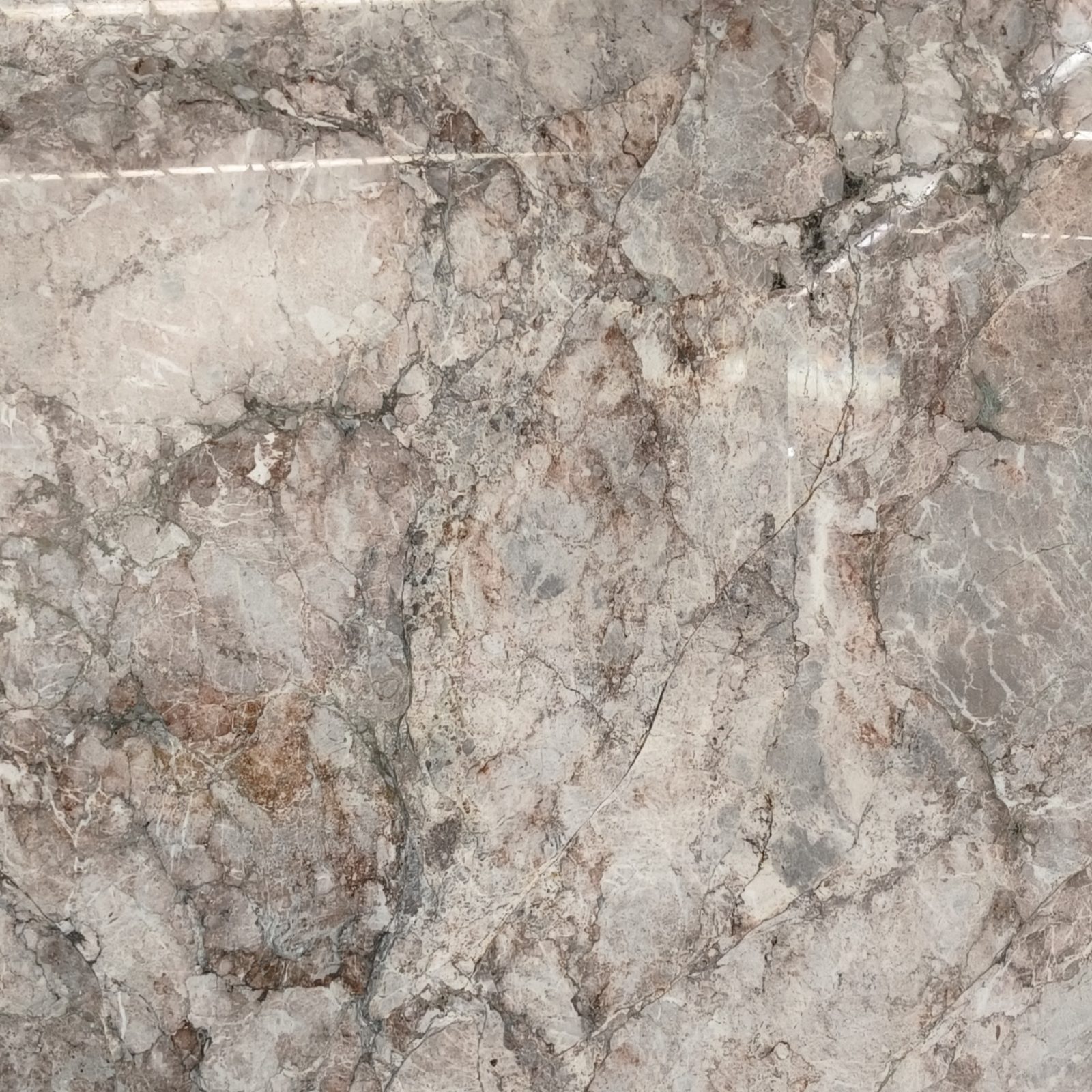
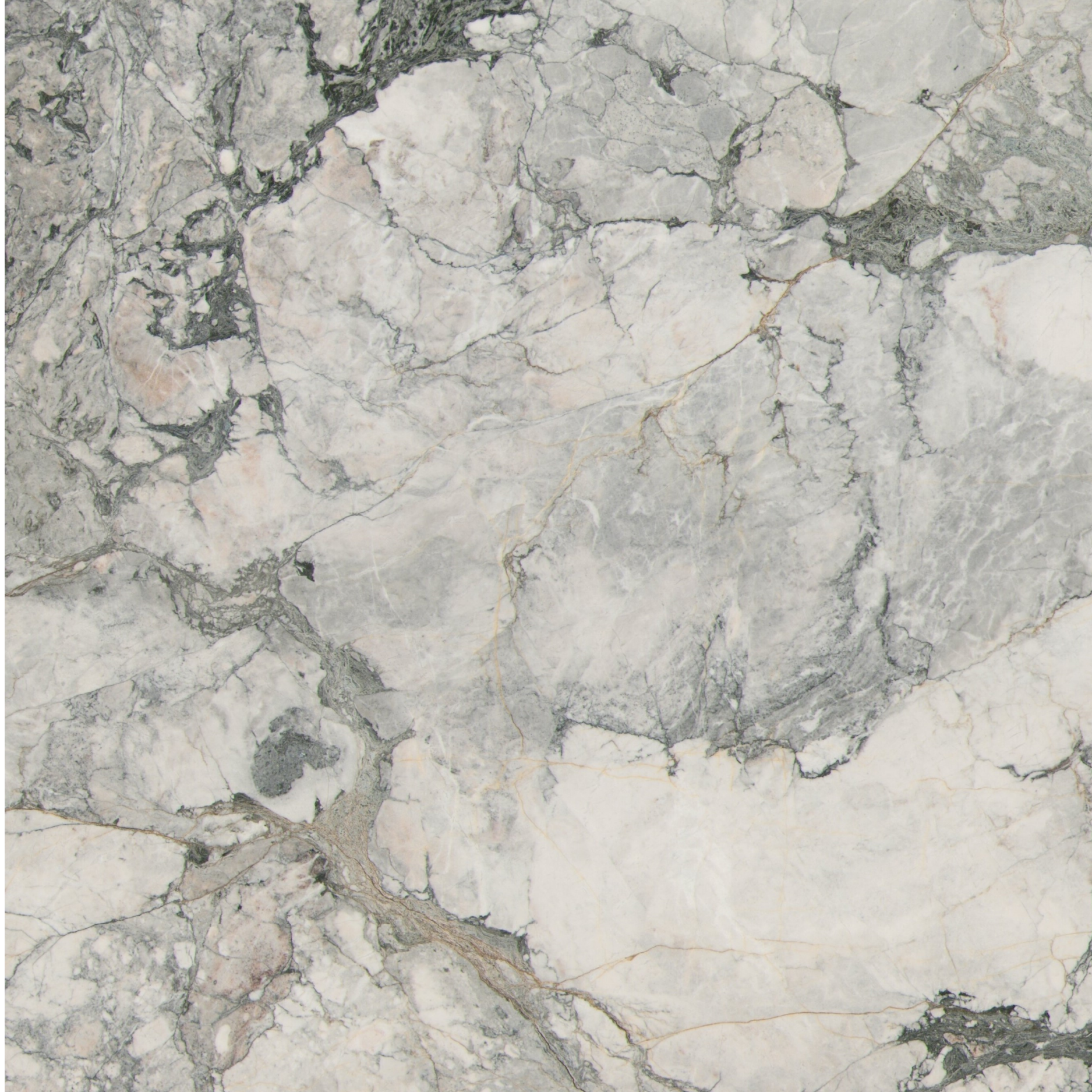
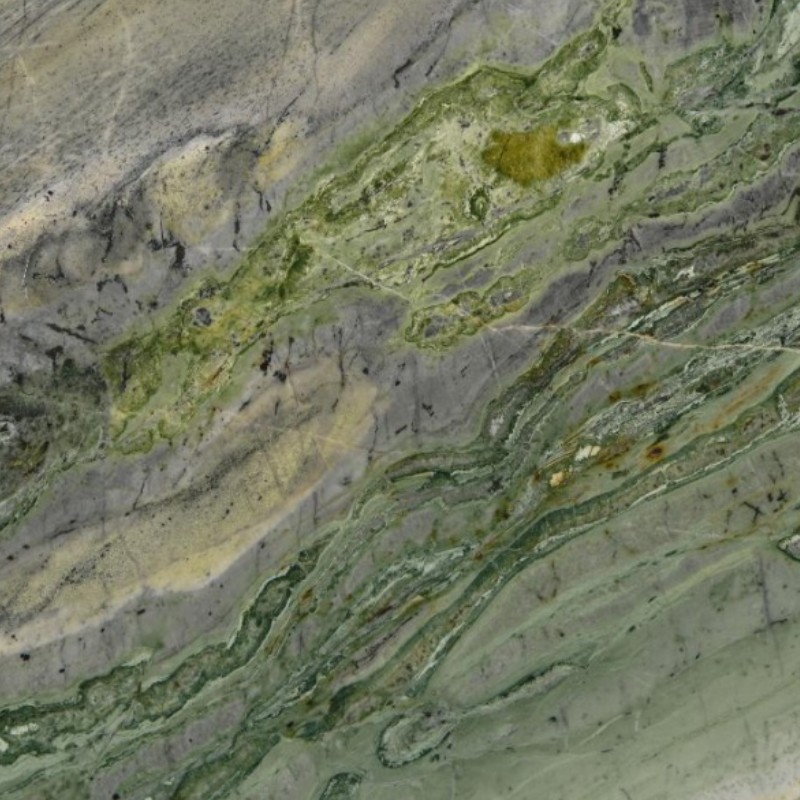
Explore Wooden Grey Marble flooring and wall cladding ideas for luxury interiors. Compare Vein Cut and Cross Cut patterns, finishes, specifications, and sourcing tips.
Wooden Grey Marble is a natural Chinese marble recognized for its layered grey-and-white wood grain, making it a distinctive material for modern luxury interiors. From Wooden Grey Marble Flooring to Wooden Grey Marble Wall Cladding, its Vein Cut and Cross Cut patterns offer different design possibilities for hotels, private estates, villas, and contemporary apartments. Successful project selection depends on slab consistency, surface finish, verified physical properties, installation conditions, and professional stone sourcing.
Natural stone has a unique ability to connect architectural design with the character of the natural world. In modern luxury interiors, designers increasingly look beyond conventional white and beige marble to explore materials with distinctive textures, subtle colors, and stronger visual identities. Wooden Grey Marble is one such material. Its layered grey-and-white patterns resemble natural wood grain, creating a visual balance between the warmth of timber and the solid character of marble.
For residential and hospitality projects, Wooden Grey Marble Flooring can establish a calm, continuous foundation, while Wooden Grey Marble Wall Cladding can transform ordinary walls into distinctive architectural features. The material is particularly interesting because its appearance changes according to the cutting direction. Vein Cut slabs emphasize elongated, linear patterns, whereas Cross Cut slabs reveal a more irregular composition with rounded or bubble-like details.
However, choosing natural marble for a large interior project involves more than selecting an attractive slab. Architects, developers, contractors, and stone buyers must evaluate surface finish, physical test results, slab dimensions, batch consistency, fabrication requirements, maintenance, and installation safety. This guide explains how to use Wooden Grey Marble effectively and how to assess it from both a design and procurement perspective.
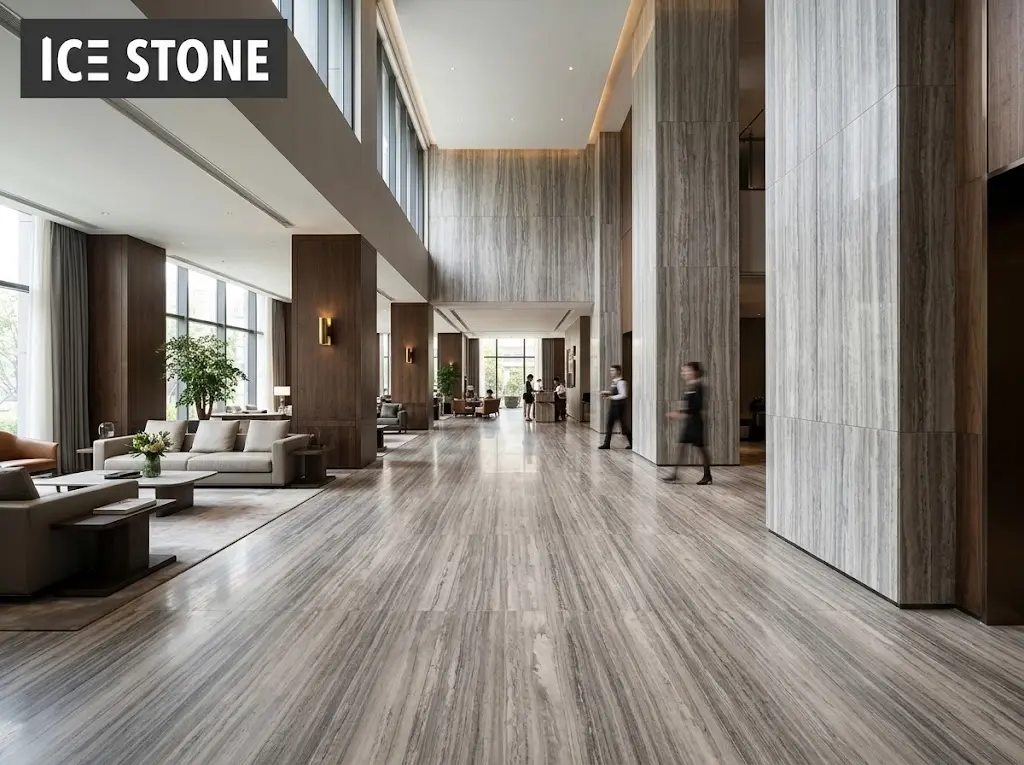
Applications of Wooden Grey Marble
What Makes Wooden Grey Marble a Distinctive Natural Stone?
Understanding Its Natural Wood Grain Appearance
Wooden Grey Marble, also known in the market as Grey Wood or Grey Serpegiante, is a natural marble from Guizhou, China. Its characteristic appearance comes from grey and white layers arranged in patterns that resemble the grain of timber. Unlike manufactured wood-effect surfaces, each natural slab has its own geological pattern and visual variation.
The grey background provides a restrained and contemporary foundation. White and lighter grey bands introduce movement without necessarily creating the dramatic contrast associated with heavily veined marble. This makes the stone suitable for interiors where designers want texture and natural character without making every surface visually dominant.
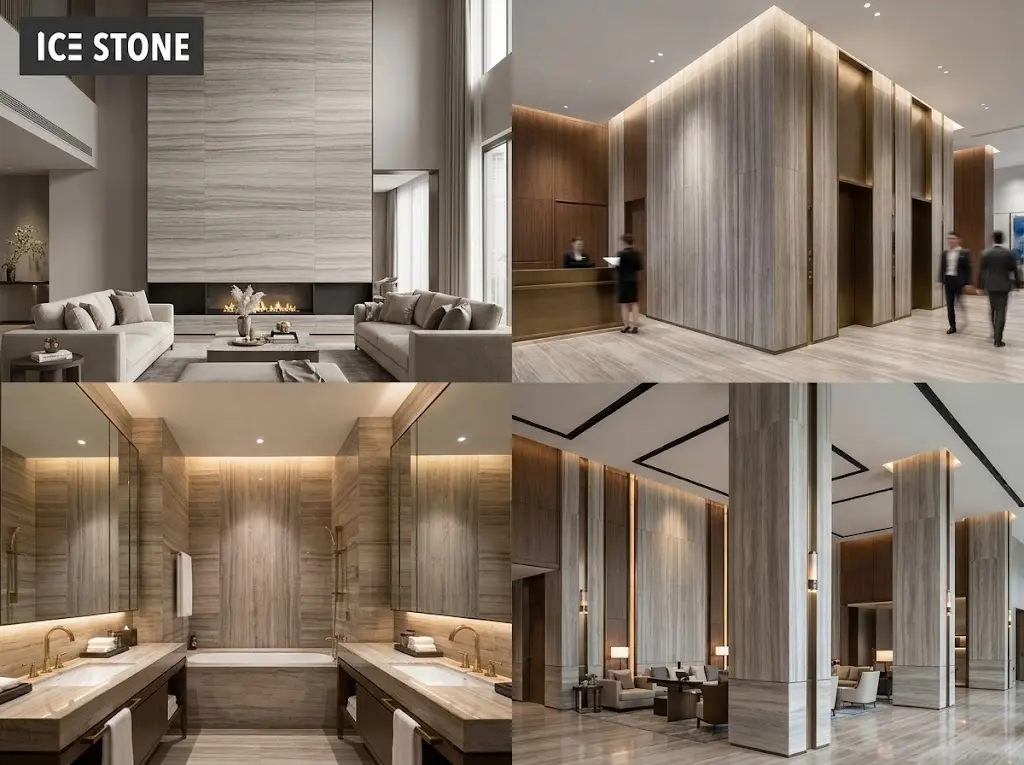
One of the material’s main design advantages is its ability to work across different architectural styles. In a minimalist living room, it can complement simple furniture and warm lighting. In a luxury hotel, it can provide a recognizable natural-stone identity for reception areas, corridors, and selected guest spaces. In a private estate, it can connect the visual language of the living room, bathroom, staircase, and entrance hall.
It is important to distinguish natural wood grain marble from wood-look porcelain tiles. Porcelain products generally reproduce a wood pattern through a controlled manufacturing process, while natural marble displays geological variation from slab to slab. Neither material is automatically better for every project. The correct choice depends on the design brief, technical requirements, maintenance plan, and available budget.
Vein Cut and Cross Cut: Two Different Visual Expressions
Cutting direction has a major influence on the appearance of Wooden Grey Marble. Buyers should understand the difference before requesting samples or approving a large order.
Vein Cut Wooden Grey Marble retains the straighter, more continuous wood-like pattern. Its linear appearance creates a sense of direction and order. Designers may use this format to visually extend a hallway, emphasize the length of a room, or create a more structured feature wall. When several slabs are installed together, careful selection and orientation can help maintain a consistent visual rhythm.
Cross Cut Wooden Grey Marble produces a different pattern by exposing the stone across its linear structure. The resulting appearance can include rounded, circular, or bubble-like forms. Compared with the orderly character of Vein Cut, Cross Cut often creates a more irregular and expressive surface. It can be useful for feature walls, decorative panels, and spaces where the stone is intended to attract attention.
Neither cutting method should be selected based on a small photograph alone. Buyers should request photographs or videos of the actual available slabs, preferably showing several pieces together. For a large installation, the design team should review the proposed slab sequence before fabrication begins.
Why Natural Wood Grain Marble Appeals to Modern Design
Modern luxury interiors frequently combine restrained color palettes with materials that provide natural texture. Grey wood grain marble fits this direction because it can coordinate with timber, brushed metal, glass, leather, concrete-look finishes, and neutral fabrics.
Its value is not simply that it resembles wood. It introduces the visual rhythm of wood grain through a mineral material. This allows designers to explore a timber-inspired aesthetic in areas where a natural stone surface is preferred, provided the selected finish and technical properties are appropriate for the intended use.
Wooden Grey Marble Flooring Ideas for Modern Luxury Spaces
Large-Format Flooring in Living Rooms
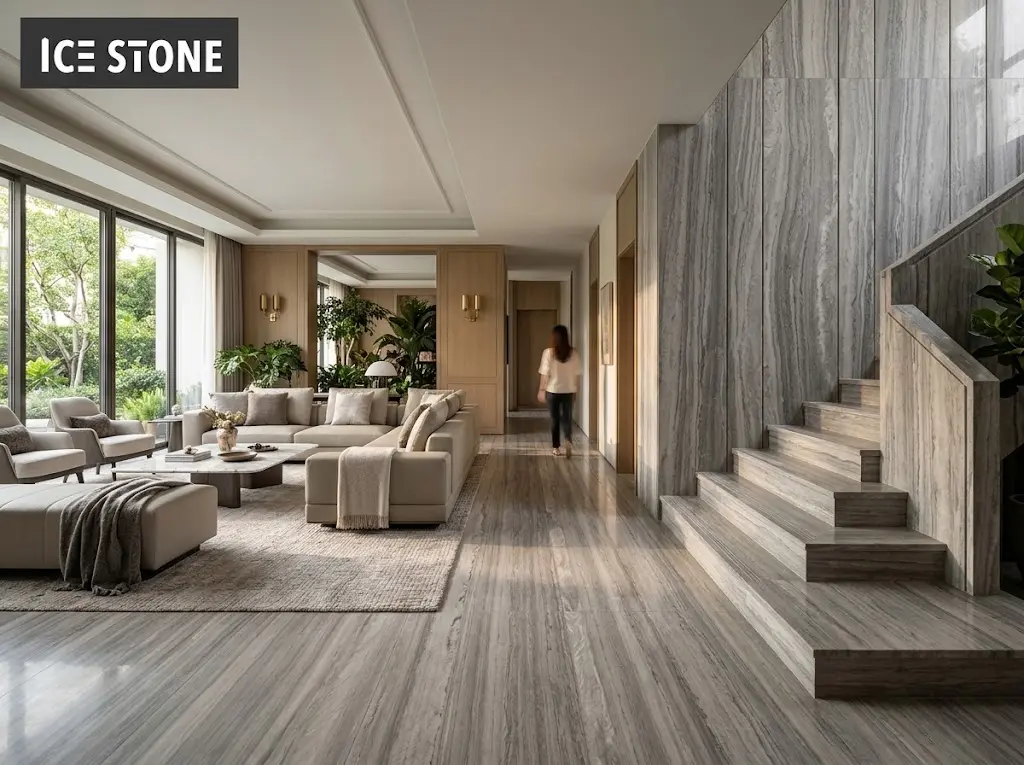
A living room is often the central visual space in a private residence. Large-format Wooden Grey Marble Flooring can create a continuous foundation that connects the entrance, lounge, dining area, and open-plan kitchen. The elongated patterns of Vein Cut slabs can reinforce the geometry of a room, especially when the stone is laid in a consistent direction.
For a warm contemporary interior, designers can combine grey marble flooring with walnut furniture, beige upholstery, bronze details, and warm-white lighting. For a cooler minimalist scheme, the same stone can be paired with black metal, clear glass, white walls, and simple architectural furniture.
Slab selection is especially important in large open spaces. A floor containing abrupt changes in pattern direction may look fragmented, even when the individual slabs are attractive. Before installation, the fabricator should prepare a layout drawing showing slab positions, cutting lines, visible veins, and transitions between rooms.
Hotel Lobby Flooring and Public Areas
Luxury hotel lobbies require materials that contribute to the property’s identity while supporting intensive daily use. Wooden Grey Marble may be considered for reception zones, selected circulation areas, and decorative flooring schemes where its natural pattern supports the interior concept.
For hotel projects, appearance is only one part of the specification. Designers and procurement teams should examine abrasion performance, surface texture, cleaning requirements, slip resistance, and the expected traffic conditions. A polished surface may emphasize the stone’s color and pattern, but a polished appearance does not automatically indicate suitable slip performance in every location.
For a hotel lobby, the design team should request finish-specific test information and evaluate the flooring under conditions that resemble actual use. Entrance areas exposed to rainwater, wet footwear, or frequent cleaning need particular attention. If the project includes large public circulation zones, the architect should also coordinate the stone specification with local building requirements and the maintenance team’s operating procedures.
Bedroom and Private Residence Flooring
In bedrooms and private suites, the objective is often to create a quieter atmosphere. The grey-and-white wood grain can complement upholstered headboards, natural timber furniture, soft rugs, and warm neutral wall finishes. A consistent flooring material across a bedroom and dressing area can also help create a connected interior.
For these applications, designers should consider whether the stone’s pattern is intended to be a background element or a central feature. A more restrained slab selection can support a calm bedroom environment, while stronger Cross Cut patterns may be reserved for a feature zone or adjoining decorative wall.
Choosing the Right Flooring Layout
Several layout methods can be considered when planning Wood Grain Marble Flooring Ideas:
- Straight Lay: Slabs or tiles are installed in a consistent orientation. This is useful when the design aims to emphasize linear grain.
- Directional Layout: The pattern direction is aligned with the room’s main axis or circulation route.
- Bookmatch: Selected adjacent slabs are arranged to create a mirrored visual composition. Actual suitability depends on the slab pattern and cutting sequence.
- Random or Natural Layout: Slabs are arranged to retain a more organic appearance while still controlling abrupt color changes.
For natural marble, the final layout should be approved using actual slabs rather than relying entirely on digital renderings. Digital images are useful for planning, but they cannot fully reproduce natural variation, lighting conditions, or the appearance of the finished surface.
Wooden Grey Marble Wall Cladding for Contemporary Interior Design
Feature Walls in Luxury Living Rooms
Wooden Grey Marble Wall Cladding can give a living room a strong focal point without relying on highly contrasting colors. A full-height feature wall behind a sofa, television, or fireplace can introduce natural texture while maintaining a restrained palette.
Vein Cut material is often considered when the design calls for long, directional lines. Cross Cut material may be more suitable when a less predictable pattern is desired. In either case, the slab layout should be considered together with the position of lighting, furniture, electrical outlets, television brackets, and other wall openings.
Large panels can reduce the number of visible joints, but they also increase handling and installation demands. The weight of each panel, substrate condition, fixing method, and access route must be checked before the specification is finalized.
Hotel Reception, Elevator Lobbies, and Corridors
In hospitality interiors, stone walls can establish a consistent visual identity across several public areas. Wooden Grey Marble may be used for reception backgrounds, elevator surrounds, selected corridor walls, and decorative columns. Repeating a similar pattern direction across these spaces can help connect different parts of a hotel.
For large commercial projects, procurement teams should pay attention to batch consistency. A sample from one block may not represent the full production quantity. The buyer should request a selection of available slabs, confirm acceptable color and pattern variation, and approve a numbered layout before cutting begins.
Projects requiring multiple floors or separate construction phases should also establish a reference sample and documented acceptance criteria. This reduces the risk of disputes when later deliveries show natural differences from the first shipment.
Bathroom Walls and Spa Interior Applications
Bathrooms and spa interiors offer opportunities to use natural stone as a continuous design element. Wooden Grey Marble can be considered for vanity backgrounds, shower walls, bathtub surrounds, and selected decorative panels. Combining similar stone on walls and floors may create a unified visual effect, but the technical requirements for each surface are different.
Bathroom wall applications require a properly designed waterproofing system, compatible fixing materials, suitable joints, and careful detailing around plumbing penetrations. The stone itself should not be treated as a substitute for a waterproof membrane. Water management must be designed as part of the complete wall assembly.
For shower floors and other wet walking surfaces, buyers should not assume that a particular marble is slip-resistant simply because it has a matte finish. Slip performance depends on the stone, finish, surface texture, installation, cleaning condition, and applicable test method. A finish-specific test should be reviewed before the material is approved for a wet floor.
Decorative Panels, Columns, and Vertical Applications
Beyond large walls, Grey Marble Wall Design can include elevator panels, fireplace surrounds, wall niches, reception desks, and decorative columns. These applications allow designers to use smaller quantities of stone while giving the material a prominent architectural role.
For vertical installations, the fixing system must be designed according to panel dimensions, thickness, weight, substrate, building conditions, and local regulations. Large-format marble panels should be handled and installed by qualified professionals using an engineered fixing method appropriate to the project.
High-quality Wooden Grey Marble
How to Combine Wooden Grey Marble with Other Interior Materials
Pairing Grey Wood Grain Marble with Natural Wood
One of the most effective combinations is grey wood grain marble with real timber. The stone provides mineral texture and a cooler grey foundation, while oak, walnut, ash, and other wood species introduce warmth. This pairing can work in hotel suites, private villas, contemporary apartments, and open-plan living areas.
Designers should avoid matching every material to the same grey tone. A more balanced result often comes from using contrasting but related tones: warm brown timber, soft grey marble, off-white walls, and a limited number of darker accents.
Combining Marble with Metal, Glass, and Concrete
Brushed stainless steel, dark bronze, and black metal can reinforce the architectural character of Wooden Grey Marble. Glass can make a room feel lighter, while concrete-look surfaces can create a restrained contemporary atmosphere. These combinations are particularly useful in reception areas, hotel corridors, and modern residential interiors.
Material coordination should consider more than color. Different materials reflect light differently, have different maintenance requirements, and respond differently to moisture and cleaning products. A sample board showing all major materials together is more useful than approving each finish independently.
Lighting Strategies for Natural Marble Textures
Lighting can change how a marble pattern is perceived. Side lighting may emphasize surface texture and create shadows along the grain. Diffused lighting can produce a softer appearance, while direct spotlights may create strong reflections on polished surfaces.
For a feature wall, designers should test the proposed lighting angle using a full-size or representative stone sample. This is especially important when choosing between polished and honed finishes. The same slab may look noticeably different under daylight, warm artificial lighting, and cool architectural lighting.
Technical Characteristics: What Buyers Should Check Before Specification
Physical Properties and Testing Requirements
Natural marble is not a factory-made material with identical properties across every variety and batch. Its physical performance must be established through testing of the actual stone being supplied. For Wooden Grey Marble, buyers should request product-specific test reports rather than using values from another grey marble or a visually similar stone.
ASTM C503/C503M is a relevant specification for marble dimension stone. It addresses material characteristics, physical requirements, and sampling for marble used in general building and structural applications. The appropriate test program should be agreed with the project consultant and laboratory.
| Technical Property | Relevant Evaluation | Why It Matters | Buyer Action |
|---|---|---|---|
| Bulk Density | Density test | Weight estimation and material characterization | Request a report for the supplied stone |
| Water Absorption | Absorption by weight | Moisture and staining considerations | Confirm the tested value and method |
| Compressive Strength | Compression test | Material strength assessment | Compare with project specifications |
| Flexural Strength | Flexural or modulus-of-rupture test | Panel design and handling considerations | Review for the intended installation |
| Abrasion Resistance | Applicable abrasion test | Flooring wear considerations | Check suitability for expected traffic |
| Slip Resistance | Applicable finish-specific test | Pedestrian safety in wet and dry areas | Request results for the selected finish |
| Dimensional Tolerance | Thickness and size measurement | Fabrication accuracy and installation joints | Confirm tolerances before production |
The table identifies the information buyers should obtain; it does not represent measured Wooden Grey Marble results. No universal absorption, density, compressive-strength, or slip-resistance value should be assigned to this material without a relevant test report. For technical approval, the report should identify the stone, test method, laboratory, date, and sample description.
Surface Finishes and Their Applications
The surface finish changes both the appearance and practical behavior of natural marble. The main options to discuss with the supplier include:
- Polished: A reflective surface that can make colors and patterns appear more pronounced. It is often selected for decorative walls and some interior floors where the project specification permits it.
- Honed: A smoother matte or low-sheen appearance that can create a softer visual effect. Slip performance still requires testing.
- Leathered: A textured finish with a distinctive tactile character. Its availability and suitability should be confirmed for the specific stone.
- Brushed: A mechanically textured finish that changes the surface appearance and feel. Final performance depends on the stone and processing method.
Buyers should request finish samples from the actual material. A finish name alone does not define the final texture, reflectivity, maintenance needs, or slip performance.
Slab Thickness, Size, and Fabrication
Thickness should be specified according to the application, panel dimensions, fixing method, structural requirements, and available production options. Natural stone suppliers may offer thickness choices such as 18 mm, 20 mm, and 30 mm, but availability and tolerances must be confirmed for the particular order.
For example, a 20 mm slab and a 30 mm slab should not be treated as interchangeable in every installation. A thicker panel weighs more and may require different handling, support, edge detailing, and fixing arrangements. Thin panels may require additional engineering or reinforcement depending on their size and use.
Fabrication planning should cover edge profiles, cut-outs, corner details, joints, polishing, and the sequence of installation. For large projects, the buyer should approve shop drawings and a slab allocation plan before production.
Wooden Grey Marble vs. Wood-Look Porcelain and Other Natural Stones
Natural Marble vs. Wood-Look Porcelain Tiles
Wood-look porcelain is often selected for projects requiring standardized tile dimensions, controlled pattern repetition, and a manufactured product specification. Wooden Grey Marble offers a different proposition: genuine natural variation, slab-based pattern selection, and the visual character of geological formation.
Porcelain may be practical where repeatability, standardized installation systems, or particular maintenance requirements are priorities. Natural marble may be preferred where the project places greater value on authentic stone texture, distinctive slab selection, and a natural material palette.
| Comparison Factor | Wooden Grey Marble | Wood-Look Porcelain |
|---|---|---|
| Pattern | Natural geological variation | Manufactured and digitally controlled design |
| Format | Slabs, tiles, and custom-cut pieces | Standardized tile and panel formats |
| Fabrication | Stone cutting, finishing, and edge processing | Ceramic or porcelain tile processing |
| Variation | Natural differences between slabs | Controlled product variation |
| Maintenance | Requires stone-appropriate care | Depends on product and grout system |
| Project Considerations | Slab selection, stone testing, and specialist installation | Tile specification, substrate, and grout selection |
Wooden Grey Marble vs. Other Grey Natural Stones
Other grey marbles and natural stones may have similar background colors but different geological structures, patterns, and physical properties. A buyer should not assume that two grey stones will perform identically simply because they look similar in a photograph.
When comparing alternatives, evaluate the actual slab appearance, available dimensions, finish options, test reports, and supply consistency. For a project that depends on linear wood-like patterns, the cutting direction and continuity of the grain may be more important than the general grey color.
Natural Marble and Engineered Surfaces in Commercial Projects
Engineered surfaces can offer controlled product designs and standardized specifications. Natural marble offers geological variation and the character of an authentic stone material. The decision should reflect the intended application rather than a broad assumption that one category is always more durable or more suitable.
For example, a hotel reception feature wall may prioritize appearance and slab selection, while a busy public floor requires closer attention to wear, cleaning, slip resistance, and maintenance. A material should be evaluated against the demands of its exact location.
Design Applications in Luxury Hotels, Private Estates, and Modern Apartments
Luxury Hotel Projects
Wooden Grey Marble can be considered for selected hotel interiors, including reception backgrounds, lobby feature areas, elevator surrounds, guestroom walls, and decorative flooring. A hotel design may use Vein Cut slabs in circulation areas to emphasize direction and Cross Cut slabs in selected feature zones to create visual contrast.
For a multi-floor hotel, consistency must be planned rather than assumed. Procurement teams should confirm the available quantity, review several slabs together, and agree on acceptable natural variation. If the project will be installed in phases, the buyer should discuss stock reservation and batch allocation before confirming the order.
High-End Private Estates and Villas
In a private estate, the stone can be used as part of a broader material palette. A living room floor may connect visually with a feature wall, while a staircase or bathroom introduces a related pattern in a different finish. The design should avoid using the same strong pattern everywhere. Selective application often creates a more balanced result.
For villas with large windows, sample review under natural daylight is important. The same slab can appear warmer or cooler depending on the direction and intensity of light. Designers should therefore review material samples in the actual room or under lighting conditions that closely match the finished space.
Modern Apartments and Serviced Residences
In apartments, Wooden Grey Marble can be used selectively in entrance areas, living room floors, bathroom walls, and feature panels. It can help connect different spaces through a consistent natural material while allowing furniture, lighting, and textiles to provide contrast.
For compact apartments, large-format stone may reduce visual interruption, but it should not be specified without considering access, elevator dimensions, staircases, and installation logistics. The largest slab is not always the most practical slab for a particular building.
From Design Drawings to Slab Installation
A reliable project workflow begins with the architectural drawings and a clear finish schedule. The design team identifies the areas using stone, establishes slab dimensions, and prepares a preliminary layout. The supplier and fabricator then review the actual available material and confirm whether the requested pattern sequence can be achieved.
Quantity planning should distinguish net installed area from gross material required. For example, a hypothetical project with 100 square meters of net stone coverage will require more than 100 square meters of purchased material once cutting, edge details, pattern selection, and replacement allowance are considered. A preliminary 10% allowance would produce a planning quantity of 110 square meters, but this is only an illustrative calculation. The final allowance must be determined from the actual slab dimensions and approved cutting layout.
Maintenance, Installation, and Regulatory Considerations
Correct Installation for Marble Flooring and Wall Cladding
Natural marble installation requires coordination between the stone supplier, fabricator, installer, architect, and general contractor. The substrate must be suitable for the stone system, and the installation method must account for panel size, weight, movement, moisture conditions, and the building structure.
For flooring, the installer should check substrate flatness, adhesive compatibility, joint design, and transitions to adjacent materials. For wall cladding, the fixing method must be appropriate to the panel dimensions and the wall assembly. Large panels may require mechanical restraint or a specifically engineered fixing system rather than relying on assumptions based on smaller tiles.
Before installation, the team should confirm the stone’s condition, inspect edges and corners, check the slab numbering, and compare the delivered material with the approved layout. Damaged pieces should be identified before they are installed.
Cleaning and Long-Term Marble Maintenance
Marble care should be based on the stone’s geological composition and the recommendations of the stone supplier and cleaning-product manufacturer. Natural Stone Institute guidance recommends neutral cleaners or mild cleaning solutions for natural stone and warns that acidic products such as lemon juice and vinegar can etch acid-sensitive calcareous materials.
For routine maintenance, use a suitable neutral stone cleaner, a clean mop or soft cloth, and fresh rinse water. Avoid abrasive powders and unapproved acidic cleaners. In bathrooms, removing standing water and soap residue after use can help reduce deposits. The maintenance team should also follow the recommended procedures for any protective treatment applied to the stone.
Impregnating sealers can improve resistance to certain stains, but they do not make marble completely stain-proof. Whether sealing is appropriate, which product should be used, and how often it should be reapplied depend on the stone, finish, installation location, and manufacturer’s instructions.
Building Standards and Workplace Safety
For projects in the United States and other markets that reference ASTM standards, ASTM C503/C503M is relevant to marble dimension stone. ASTM C97/C97M addresses absorption and bulk specific gravity testing for dimension stone, while ASTM C170/C170M and ASTM C880/C880M address compressive and flexural strength testing respectively. The project specification should identify the required standard, test edition, acceptance criteria, and laboratory documentation.
Local building codes may also govern floor slip performance, accessible routes, wet-area construction, wall-panel attachment, fire and life safety, and structural design. These requirements vary by jurisdiction and application. A general product description cannot replace project-specific approval.
Stone fabrication and installation also require occupational safety controls. Cutting, grinding, and drilling stone can generate respirable crystalline silica dust. OSHA and NIOSH guidance identifies this as a serious workplace hazard and emphasizes appropriate exposure controls. Fabricators and installers should use suitable wet methods, dust extraction, exposure assessment, training, and respiratory protection where required by applicable regulations.
How to Source Wooden Grey Marble Slabs for Large Projects
What to Look for in a Natural Stone Supplier
Choosing a Wooden Grey Marble Manufacturer or supplier should involve more than comparing a quotation. Buyers should examine the supplier’s product knowledge, available inventory, processing capacity, quality-control procedures, export experience, and ability to coordinate large orders.
A reliable sourcing process begins with clear technical and visual requirements. The buyer should provide the intended application, required finish, approximate dimensions, thickness, quantity, delivery location, and project schedule. This allows the supplier to evaluate the request and identify possible limitations before production begins.
When assessing a supplier, request actual slab photographs, videos, sample pieces, available test reports, and a clear description of the production process. Ask how slabs are selected, numbered, inspected, packed, and documented. These details are particularly important when the material will be installed across multiple rooms or buildings.
For buyers comparing natural stone categories, reviewing the supplier’s marble slab collection can help establish the available range of colors, patterns, and related materials. The comparison should remain focused on the intended project rather than selecting a stone simply because it appears similar in a product photograph.
Factory Inspection, Slab Selection, and Batch Consistency
Natural marble contains variation, so batch consistency must be managed through inspection and selection. A buyer should not rely on a single small sample to approve a large project. Instead, request a representative group of slabs and evaluate their color range, grain direction, visible natural features, and overall suitability.
A practical approval procedure includes:
- Confirming the stone name, origin, and product description.
- Reviewing actual available slabs or a representative production selection.
- Agreeing on acceptable color and pattern variation.
- Preparing a slab numbering and layout plan.
- Approving the finish, thickness, dimensions, and edge details.
- Checking the final inspection records and packing list before shipment.
For projects with phased delivery, ask whether sufficient material can be reserved or whether later production may show a different appearance. A documented reference sample and approved slab photographs can reduce misunderstandings between the buyer, supplier, and installation team.
Wholesale Supply and Custom Cut-to-Size Solutions
Wholesale Wooden Grey Marble procurement may involve raw slabs, tiles, stair components, vanity pieces, wall panels, or custom-cut elements. The most suitable supply format depends on the project drawings and the buyer’s fabrication capabilities.
Buying slabs gives local fabricators greater control over cutting and finishing, but it also requires suitable machinery, skilled labor, and material planning. Custom cut-to-size supply can reduce some on-site processing work, although it requires accurate shop drawings and approval of every critical dimension before production.
For export projects, buyers should also confirm protective packaging, crate construction, slab support, container loading, shipping documentation, and insurance responsibilities. Natural stone is heavy and can be damaged by poor handling. Packaging and transport arrangements should therefore be treated as part of the procurement specification, not as an afterthought.
Evaluating a Supplier’s Production and Quality-Control Capabilities
Supplier evaluation should include the ability to manage the full process from block selection to finished slab inspection. Relevant questions include whether the supplier can offer the required thickness, whether different surface finishes are available, how slab quality is recorded, and whether the team can provide project-specific support.
ICE STONE’s company information describes its natural-stone supply and processing operations, including marble, onyx, quartzite, granite, blocks, slabs, tiles, and cut-to-size products. It also describes processing options such as polished, leathered, antique, and honed finishes, along with quality-control procedures. Buyers should still confirm the current availability and specific production arrangements for each Wooden Grey Marble order.
For project teams who need to verify the supplier’s background, production scope, and business capabilities, reviewing the company profile and production information is a useful step before requesting a formal quotation or submitting a project specification.
Emerging Trends in Natural Marble Flooring and Wall Cladding
Natural Textures and Restrained Color Palettes
Contemporary hospitality and residential design continues to explore natural textures, muted colors, and combinations of stone with timber and metal. Grey wood grain marble fits this visual direction because it introduces pattern without requiring a highly saturated color scheme.
Rather than covering every surface with the same stone, many design schemes use natural marble selectively. A feature wall, entrance floor, reception desk, or bathroom background can provide a material focal point while other surfaces remain visually quiet.
Large-Format Surfaces and Pattern Continuity
Large-format stone surfaces can reduce visible joints and make a space feel more continuous. This approach places greater importance on slab selection, cutting plans, transport, and installation. Vein Cut material may be selected where directional continuity is important, while Cross Cut material can create a more varied decorative composition.
Large-format design should not be pursued at the expense of technical practicality. Access restrictions, handling equipment, substrate capacity, fixing details, and replacement planning must all be considered.
Responsible Sourcing and Project Transparency
Professional buyers increasingly need clear product identification, traceable documentation, and transparent project communication. A complete stone specification should identify the material, finish, dimensions, test requirements, acceptable variation, and inspection process.
Responsible procurement also includes planning material yield carefully. Accurate shop drawings and slab allocation can help reduce avoidable cutting waste. Where possible, offcuts can be evaluated for smaller decorative components, subject to their dimensions and condition.
Material Fit by Product Direction: Matching Natural Stone to the Project
Wooden Grey Marble is one option within a wider natural-stone material palette. A project may require different materials for feature walls, wet areas, flooring, countertops, or decorative details. The following matrix is a preliminary material-fit guide, not a statistical result, laboratory rating, or performance certification.
Legend:
- ●●● = Primary
- ●●○ = Strong Option
- ●○○ = Depends on Workflow
- — = Usually Not First Choice
| Product Direction | Feature Walls | Flooring | Wet-Area Walls | Main Consideration |
|---|---|---|---|---|
| Wooden Grey Marble | ●●● | ●●○ | ●●○ | Finish, slip data, batch variation, and fixing |
| Other Marble Varieties | ●●● | ●●○ | ●●○ | Stone-specific physical properties and maintenance |
| Onyx | ●●● | ●○○ | ●○○ | Translucency, reinforcement, and careful installation |
| Quartzite | ●●● | ●●○ | ●●○ | Confirm mineral composition and tested performance |
| Granite | ●●○ | ●●● | ●●○ | Finish-specific slip and maintenance requirements |
| Travertine | ●●○ | ●●○ | ●○○ | Filling, sealing, finish, and moisture exposure |
| Semi-Precious Stone | ●●● | — | — | Decorative use, panel construction, and budget |
This matrix is a design-oriented indication only. It does not establish that every stone in a category is suitable for every application. For example, Wooden Grey Marble may be appropriate for a feature wall, but a wet-area floor should only be specified after reviewing the actual finish, slip-resistance evidence, installation system, and local requirements. Onyx and semi-precious stone are generally more specialized decorative directions, while granite may be considered for some higher-traffic applications subject to testing.
How to Use the Material Matrix in a Real Project
Start with the function of each space. A hotel lobby floor, a bathroom wall, and a decorative reception panel do not have the same technical requirements. Next, identify the design priority: natural pattern, color consistency, surface reflectivity, slab size, or ease of maintenance. Finally, compare the available material options against documented product information and project constraints.
A common mistake is selecting one stone for every surface simply to achieve visual consistency. A more reliable strategy is to establish a coordinated material palette in which each product is assigned to an appropriate application. This approach can preserve the overall design concept while reducing unnecessary technical and maintenance risks.
Wooden Grey Marble for Interior Projects
Is Wooden Grey Marble the Right Choice for Your Interior Project?
Application Suitability and Decision Checklist
Wooden Grey Marble is worth considering when a project needs a natural grey material with wood-like linear patterns and the possibility of different visual expressions through Vein Cut and Cross Cut processing. It can be used as a design-led material for feature walls, selected flooring areas, hotel interiors, and private residences.
Before approval, buyers should work through the following checklist:
- Confirm the material name, origin, and product identity.
- Review actual slabs rather than relying only on catalogue images.
- Choose Vein Cut or Cross Cut according to the intended design.
- Confirm the surface finish and thickness available for the order.
- Request relevant physical test reports for the actual material.
- Check slip performance before using the stone on wet floors.
- Approve slab numbering, layout drawings, and acceptable variation.
- Confirm installation details, packaging, delivery, and replacement arrangements.
For projects where pattern continuity is important, the slab selection and layout approval process should happen before mass fabrication. For projects where maintenance and safety are the main concerns, technical testing and installation details should take priority over visual preference.
Frequently Asked Questions About Wooden Grey Marble
1. Is Wooden Grey Marble suitable for flooring in luxury homes and hotels?
Wooden Grey Marble can be considered for selected interior flooring applications in luxury homes, villas, apartments, and hotel spaces. Its natural grey-and-white wood grain creates a distinctive surface that can complement contemporary interior design. However, suitability depends on the actual stone properties, selected finish, expected foot traffic, cleaning conditions, and installation method. For hotel lobbies and other public areas, buyers should review abrasion-related information and finish-specific slip-resistance results before approval. Wet entrance zones and bathrooms require particular attention because a polished appearance does not guarantee safe slip performance.
2. Can Wooden Grey Marble be used for bathroom wall cladding and shower areas?
Wooden Grey Marble may be used for bathroom walls, vanity backgrounds, shower enclosures, and decorative spa panels when the stone and installation system are appropriate for the environment. The wall assembly should include a correctly designed waterproofing system, compatible fixing materials, suitable joints, and properly detailed plumbing penetrations. Natural marble should not be treated as a waterproof membrane. Buyers should also discuss sealing, cleaning products, and long-term maintenance with the stone supplier and installer before using the material in a frequently wet area.
3. What is the difference between Vein Cut and Cross Cut Wooden Grey Marble?
Vein Cut Wooden Grey Marble retains a straighter, more continuous wood-like pattern, creating a directional and orderly appearance. It may be selected for linear flooring layouts, long corridors, and feature walls where visual direction is important. Cross Cut exposes the stone in a different direction and can reveal rounded, circular, or bubble-like patterns. This creates a more irregular and expressive visual effect. The best option depends on the design concept, available slab selection, and desired pattern continuity. Buyers should review actual slabs before approving either cutting direction for a large project.
4. How should Wooden Grey Marble floors and walls be cleaned and maintained?
Routine care should use a neutral cleaner or another cleaning product specifically recommended for the type of natural stone. Acidic substances such as vinegar and lemon-based cleaners can damage acid-sensitive marble surfaces, while abrasive powders may scratch or dull some finishes. Floors should be cleaned with suitable equipment and clean rinse water, and bathroom surfaces should be dried where practical to reduce water deposits and soap residue. A protective impregnating treatment may be considered where appropriate, but it does not make the marble completely stain-proof. The supplier’s maintenance instructions should be followed.
5. How can buyers choose a reliable Wooden Grey Marble supplier for a large project?
Buyers should evaluate the supplier’s experience with natural marble, access to suitable material, processing capabilities, quality-control procedures, and ability to manage export orders. Request actual slab photographs, representative samples, available test reports, finish details, thickness information, and a clear quotation. For large projects, confirm the available quantity and agree on acceptable natural variation before production. A numbered slab layout, documented sample approval, pre-shipment inspection, protective packaging, and clear delivery arrangements can reduce procurement risks. The supplier should also be able to communicate practical limitations rather than promising identical patterns across every natural slab.
Bring Natural Wood Grain Character into Your Next Interior Project
Wooden Grey Marble offers a distinctive combination of grey-and-white natural patterning and wood-inspired visual movement. Its Vein Cut and Cross Cut options give designers different ways to control the appearance of floors, feature walls, hotel interiors, and private residential spaces. When selected carefully, the material can become part of a coordinated interior palette rather than simply another decorative surface.
For architects, contractors, developers, and stone importers, successful specification depends on more than appearance. Actual slab selection, technical documentation, finish suitability, batch management, fabrication planning, and professional installation all influence the final result.
If you are planning a hotel, villa, apartment, or commercial interior project, discuss the intended application, quantity, finish, dimensions, and delivery schedule with an experienced natural-stone supplier. Reviewing the actual Wooden Grey Marble slabs and confirming the project requirements before production can help turn a design concept into a more predictable stone-supply process.
For product-specific information, review the Wooden Grey Marble product details and confirm the available cutting patterns, slab specifications, and current supply conditions.
For project quotations, sample requests, or technical discussions, buyers can contact the natural stone supplier with their drawings, required quantities, preferred finish, and delivery schedule.
References
- Standard Specification for Marble Dimension Stone, ASTM C503/C503M-23. Author: ASTM International. Institution: ASTM International. Source: ASTM International, Committee C18 on Dimension Stone.
- Standard Test Methods for Absorption and Bulk Specific Gravity of Dimension Stone, ASTM C97/C97M. Author: ASTM International. Institution: ASTM International. Source: ASTM International, Dimension Stone Test Methods.
- Standard Test Method for Compressive Strength of Dimension Stone, ASTM C170/C170M. Author: ASTM International. Institution: ASTM International. Source: ASTM International, Dimension Stone Test Methods.
- Standard Test Method for Flexural Strength of Dimension Stone, ASTM C880/C880M. Author: ASTM International. Institution: ASTM International. Source: ASTM International, Dimension Stone Test Methods.
- Care and Cleaning of Natural Stone. Author: Natural Stone Institute. Institution: Natural Stone Institute. Source: Natural Stone Institute, Consumer Resources.
- Worker Exposure to Silica during Countertop Manufacturing, Finishing, and Installation. Authors: National Institute for Occupational Safety and Health and Occupational Safety and Health Administration. Institutions: CDC/NIOSH and OSHA. Source: NIOSH and OSHA occupational safety guidance.
- Respirable Crystalline Silica Standard for Construction, 29 CFR 1926.1153. Author: U.S. Department of Labor. Institution: Occupational Safety and Health Administration. Source: OSHA Occupational Safety and Health Standards.
- Dimension Stone Design Manual. Author: Natural Stone Institute. Institution: Natural Stone Institute. Source: Natural Stone Institute Technical Publications and Dimension Stone Guidance.
Wooden Grey Marble: Design Insights, Material Considerations, and Project Selection Guide
What Is the Main Design Value of Wooden Grey Marble?
Wooden Grey Marble combines a grey-and-white natural stone background with layered patterns that resemble timber grain. Its main design value is the relationship between natural variation and directional texture. Vein Cut emphasizes straighter, continuous lines, while Cross Cut creates a more irregular pattern with rounded visual details. This gives designers two distinct ways to use the same stone identity in contemporary interiors.
How Can It Be Used Across Different Interior Spaces?
Its potential applications include selected residential flooring, hotel reception areas, living-room feature walls, bathroom wall panels, elevator surrounds, and decorative architectural elements. The material should be specified according to the function of each space. A feature wall is primarily a design decision, whereas a public floor requires closer evaluation of abrasion, slip resistance, cleaning, and maintenance.
Why Does Cutting Direction Matter?
Cutting direction changes the visual structure of the stone. Vein Cut is useful when a project requires linear movement and a more ordered pattern. Cross Cut may be preferred when a more expressive or less directional surface is needed. The choice affects the overall appearance of a room and should be made before slab allocation and fabrication.
What Are the Main Specification Options?
Buyers should confirm the available slab dimensions, thickness, surface finish, edge processing, and fabrication options. Polished, honed, leathered, and brushed finishes can produce different visual and tactile results. Thickness choices such as 18 mm, 20 mm, and 30 mm may be available in some production programs, but the exact options and tolerances must be confirmed for the specific order. No finish or thickness should be approved without considering the installation design.
What Should Buyers Consider Before Ordering?
Large-project buyers should confirm the exact material identity, actual slab availability, acceptable natural variation, relevant physical test reports, and the intended application. They should also review the slab layout, cutting plan, packaging, shipping arrangements, and installation requirements. A single small sample is not sufficient to guarantee the appearance of a large natural-stone order.
Which Risks Should Be Avoided?
Common procurement mistakes include assuming all slabs will have identical patterns, using another grey marble’s test results as a substitute, choosing a polished finish for a wet floor without slip testing, and approving large panels without a suitable fixing design. Another risk is treating a protective sealer as a complete barrier against staining. Each of these issues can be reduced through product-specific documentation and early coordination between the supplier, designer, fabricator, and installer.
How Does Wooden Grey Marble Fit into a Wider Natural-Stone Palette?
Wooden Grey Marble can be coordinated with other natural-stone directions according to the function and visual role of each space. Marble may provide a range of decorative colors and patterns; onyx can serve as a specialized feature material; quartzite and granite may be considered for applications where their specific tested properties meet project needs; travertine can introduce a different porous texture; and semi-precious stone is generally used for decorative focal points. These categories are not interchangeable, and each product requires its own technical review.
What Is the Practical Buying Recommendation?
For a design-led project that values natural wood-like grain, Wooden Grey Marble is worth evaluating through both Vein Cut and Cross Cut samples. For large hotel or residential developments, buyers should request a representative slab selection, confirm production quantity, agree on acceptable variation, and approve a documented layout before mass fabrication. The final decision should balance design intent, physical test results, maintenance, installation safety, and supply reliability.
How Can a Project Move from Material Selection to Supply?
Prepare the drawings, identify the required areas, specify the finish and thickness, estimate the net quantity, and request actual slab information. The supplier can then review availability, fabrication requirements, and delivery arrangements. Early technical discussion helps identify limitations before they become costly changes during installation.
Project takeaway: Wooden Grey Marble is most valuable when its natural pattern is selected intentionally and supported by proper technical planning. Combining careful slab selection with finish-specific testing, coordinated fabrication, and professional installation creates a more reliable route from interior concept to completed project.
 By
Xiamen Ice Stone Imp.& Exp. Co., Ltd.
Feature Product
-
 Sakura Marble: A Timeless Beauty and Elegant fo...
Why Choose Cambodian Sakura Marble? 1. Unmat...
-
Morse Code Natural Marble Slabs and Tiles
Dimensions and Specifications Morse Code...
-
Vivid Brilliant Natural Marble of Prague Green
How to pack and load ? 1. Fumigated wooden b...