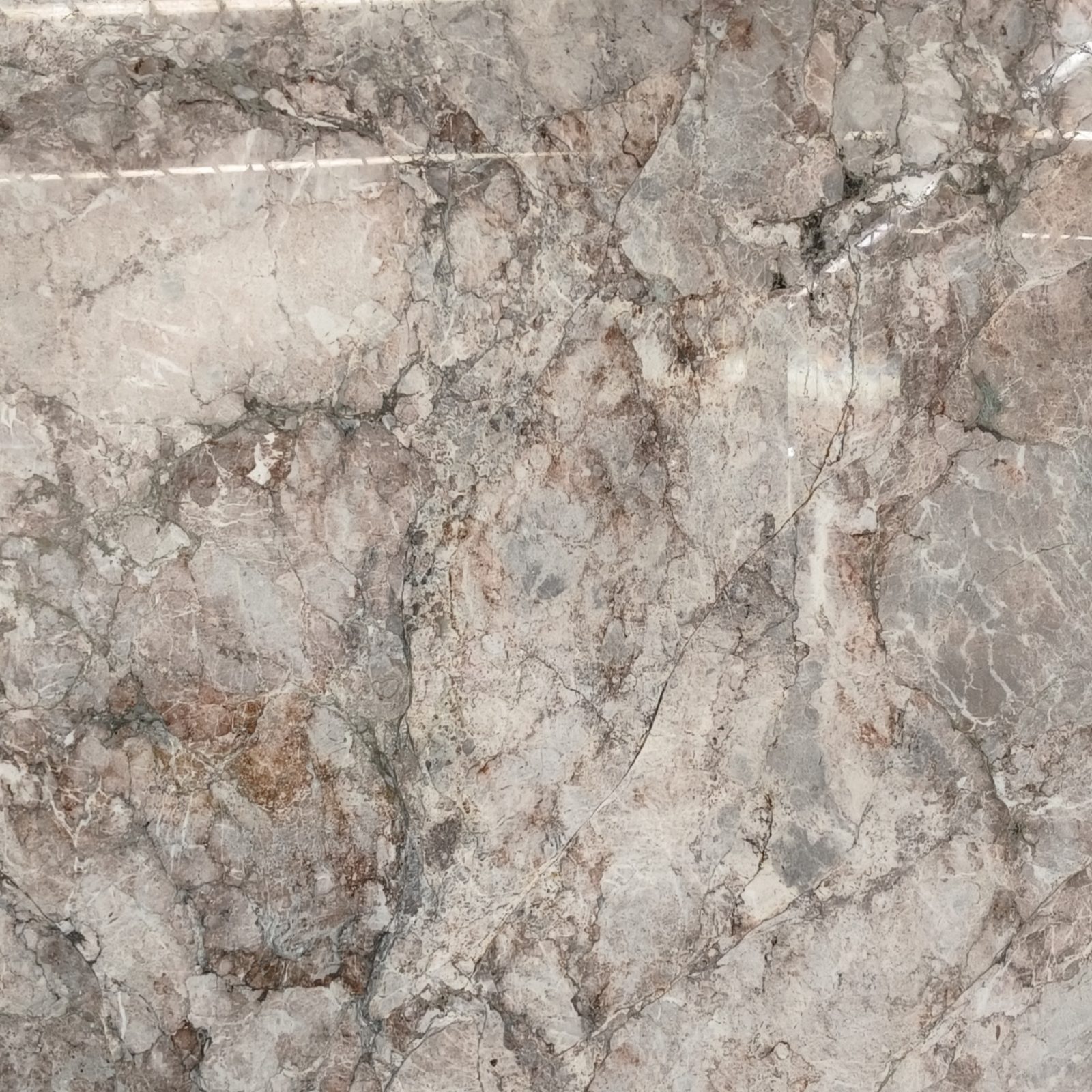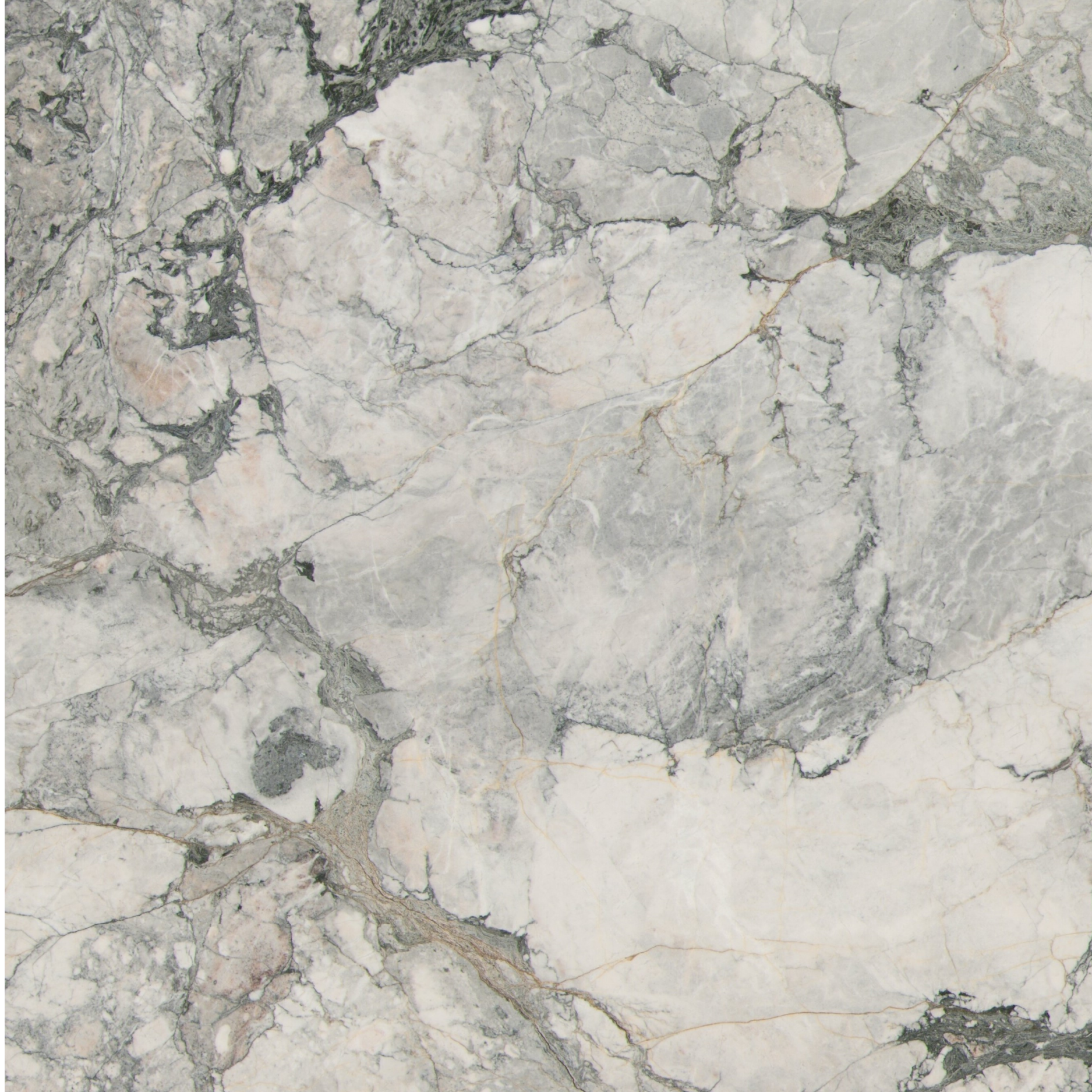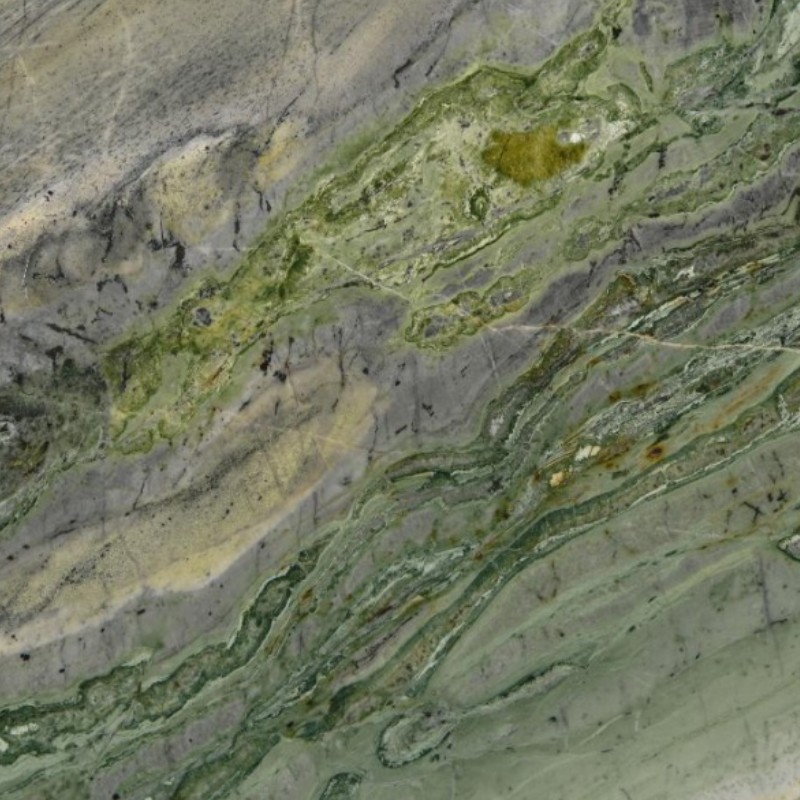
Modern interiors increasingly combine expressive natural materials with precise architectural detailing. Marble contributes mineral depth, distinctive veining, and a sense of permanence, while fluted surfaces introduce a three-dimensional rhythm that changes with the direction and intensity of light. When these characteristics are considered together, Ice Connect Marble can become a striking material option for residential, hospitality, retail, and commercial interiors.
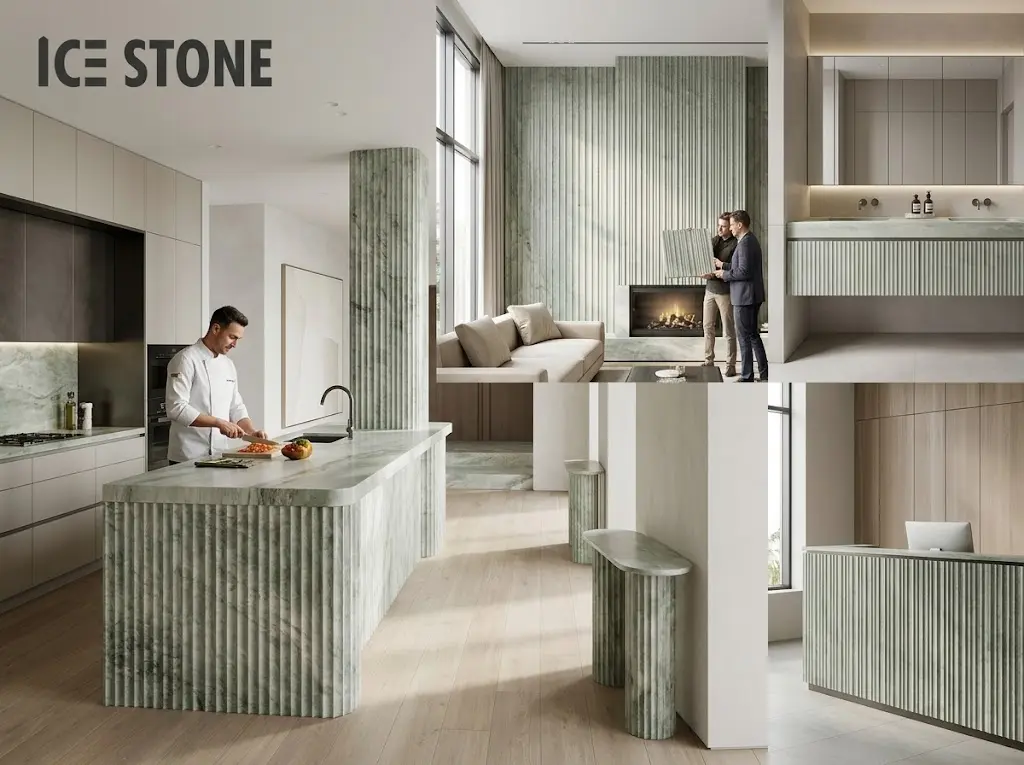
The appeal of fluted Ice Connect Marble designs lies in the relationship between natural pattern and carefully controlled geometry. A smooth slab emphasizes the movement of its veins; a fluted surface creates additional highlights and shadows. The result depends on the selected slab, groove profile, lighting, surrounding materials, and quality of fabrication. This guide examines ten practical design directions, compares relevant materials, explains important technical considerations, and outlines a more informed purchasing process for architects, interior designers, developers, and stone buyers.
ice connect marble fluted interior designs
What Makes Ice Connect Marble Distinctive in Modern Interiors?
Natural Color, Veining, and Visual Character
Ice Connect Marble is associated with a visually distinctive combination of light and green-toned areas with contrasting mineral veining. The appearance of individual slabs can vary, so a general product description should never replace inspection of the actual material intended for a project. Color balance, vein direction, background tone, and the distribution of darker markings can influence the final design more than the product name alone.
For large installations, buyers should review multiple slabs under suitable lighting and plan their sequence before cutting. This is particularly important when a feature wall, reception counter, or kitchen island requires visual continuity across several pieces. Green and white marble can work with warm wood, brushed metal, neutral plaster, and understated cabinetry, but the final combination should be tested using physical samples whenever possible.
Why Fluted Stone Creates Architectural Depth
Fluting refers to a repeated series of grooves that create a sculptural surface. Depending on the profile, the grooves may be rounded, shallow, sharply defined, or widely spaced. Side lighting accentuates the resulting shadows, while more frontal illumination generally produces a softer effect. Vertical fluting can also reinforce the perception of height, although the actual effect depends on the dimensions and proportions of the room.
Unlike a flat polished panel, a fluted surface introduces additional edges that can collect dust and require more detailed cleaning. Designers should therefore balance appearance with maintenance access, particularly in busy hospitality areas or frequently used residential spaces.
Natural Marble Compared with Alternative Materials
Natural marble offers geological variation that is difficult to reproduce exactly. Porcelain slabs and engineered decorative panels may provide more controlled pattern consistency or different maintenance characteristics, depending on their composition. Neither option is automatically superior for every project. The appropriate choice depends on the intended visual effect, structural conditions, budget, installation method, and expected maintenance.
For projects where genuine stone variation is central to the design, buyers can review the available natural marble slabs and compare the actual colors, surface treatments, and dimensions before approving production. Sample approval should cover the finished appearance, not merely a small image of the stone.
Top 10 Fluted Ice Connect Marble Designs for Modern Interiors
1. Fluted Living Room Feature Wall
A fluted marble feature wall can establish a focal point behind a sofa, within a formal sitting area, or beside a carefully planned fireplace. Vertical grooves create changing shadows throughout the day, while the natural veining adds movement across the surface. A restrained palette of cream upholstery, warm timber, and dark metal can help the stone remain visually prominent without overwhelming the room.
For a balanced result, designers should consider the overall wall width, joint placement, groove spacing, and direction of the stone pattern. Lighting should be tested against a sample panel because strong grazing light can emphasize both attractive texture and minor fabrication inconsistencies. Before installation, confirm panel weight, substrate suitability, fixing details, and any relevant fire-safety requirements for adjacent equipment.
2. Sculptural Fluted Marble Kitchen Island
A kitchen island with a fluted marble exterior can create a furniture-like centerpiece. The grooved sides introduce texture, while a smoother countertop offers a practical working surface. Designers may choose a waterfall edge, a contrasting worktop, or a restrained junction between the two finishes. The best solution depends on how the island will be used and how its components can be fabricated and supported.
Natural marble requires informed care in food preparation environments. Acidic ingredients, including lemon juice and vinegar, can react with calcite-bearing stone and cause etching. A penetrating sealer may reduce the absorption of some liquids, but it does not make marble stain-proof or acid-proof. Buyers should establish cleaning expectations, evaluate the intended use, and discuss alternative worktop materials if intensive food preparation is a priority.
3. Contemporary Bathroom Vanity
Fluted stone can add visual structure to a bathroom vanity, especially when combined with a simple basin, concealed storage, and warm lighting. A carefully selected slab can introduce natural color variation without requiring a large number of decorative accessories. For a coordinated interior, the vanity front can repeat a material used on a feature wall or niche.
Bathrooms require particular attention to waterproofing, drainage, sealant compatibility, and access for maintenance. Grooves can retain soap residue and mineral deposits if their profile is difficult to reach. The stone itself should not be treated as a substitute for a complete waterproofing system. Confirm the installation design with qualified professionals and follow the supplier’s recommendations for cleaning and sealing.
4. Hotel Lobby and Reception Desk
A fluted marble reception desk can create a strong first impression in a hotel, office, or premium residential development. The vertical rhythm of the front panel gives the desk a defined architectural presence, while a smoother top can provide a more functional surface for daily operations. The same approach can be adapted to concierge counters, meeting-room credenzas, and selected public-facing interior elements.
Commercial applications require more than visual appeal. Project teams should consider impact exposure, cleaning frequency, accessibility, support structure, replacement options, and the potential consequences of damage to an individual panel. A full-size mock-up can reveal how joints, lighting, corners, and circulation paths work together before the final pieces are produced.
5. Fluted Marble Columns and Architectural Piers
Fluted columns can bring classical rhythm into a contemporary interior when simplified profiles are paired with restrained finishes. They can be used in residential entrances, hotel lounges, galleries, and selected commercial spaces. A light-toned background with distinctive veining may help the columns read as sculptural elements rather than purely structural features.
Curved surfaces and cylindrical forms require careful planning. The designer and fabricator must establish whether the selected stone can achieve the intended radius, how the flutes will align, and where seams will appear. Stone thickness, support, anchoring, and handling requirements should be assessed before fabrication. A technically feasible profile on a drawing does not automatically mean it is suitable for every slab.
6. Fireplace Surround and Media Wall
Combining fluted marble with a fireplace surround or media wall creates a contrast between textured and smooth surfaces. A central panel can be fluted, while adjoining areas remain plain to emphasize the stone’s pattern. Concealed storage and carefully positioned lighting can complete the composition without introducing unnecessary visual clutter.
Heat exposure must be evaluated separately from appearance. The stone, adhesive, backing materials, and installation assembly should be appropriate for the specific fireplace system. Maintain the clearances and follow the requirements specified by the appliance manufacturer and local building authorities. Do not assume that a natural stone surface makes every supporting material suitable for high-temperature conditions.
7. Dining Room Feature Wall and Sideboard
In a dining room, fluted marble can form a background for a sideboard, display cabinet, or sculptural lighting arrangement. Its natural pattern works well with wood, textured fabrics, and muted metal finishes. A partial-height treatment may provide sufficient visual impact without the material and fabrication requirements of a full-height installation.
Because dining areas can be exposed to oil, wine, and acidic food spills, the cleaning plan should be practical rather than purely aesthetic. Keep suitable cleaning products available and remove spills promptly according to the stone supplier’s instructions. A sample should be evaluated under the room’s actual lighting so the selected finish does not create unwanted glare or excessive contrast.
8. Bedroom Headboard and Bedside Feature
A fluted marble headboard wall can introduce a mineral texture into a bedroom without relying on ornate decoration. Used selectively, it can sit behind a bed, frame a recessed niche, or provide a backdrop for integrated bedside lighting. Soft textiles and warm wood help balance the harder visual character of the stone.
Weight and fixing details are important when marble is installed above or beside a bed. The design team should confirm the suitability of the wall structure, anchoring method, panel dimensions, and installation tolerances. For smaller bedrooms, a limited feature panel may be easier to integrate than a full-wall treatment, particularly where access for future maintenance is restricted.
9. Retail Boutique and Luxury Showroom
In a retail boutique or showroom, fluted marble can be used for display plinths, counter fronts, feature walls, and selected product presentation areas. It provides a visually substantial background for merchandise while allowing the display arrangement to remain simple. The material should complement the products on show rather than compete with them for attention.
Retail environments may experience frequent contact, movement of display objects, and repeated cleaning. Protect exposed corners and consider how individual components can be repaired or replaced. The purchase decision should account for fabrication precision, packing, installation, and maintenance—not only the price of the raw slab.
10. Custom Console Tables and Decorative Furniture
Smaller furniture pieces offer another way to introduce fluted marble into an interior. Console tables, side tables, pedestals, and display stands can use grooved stone as a base or exterior surface. This approach is especially effective when the surrounding architecture is relatively restrained and the stone is allowed to act as a sculptural object.
Furniture applications require attention to stability, weight distribution, edge durability, and handling. A thin stone panel may need a suitable support system, and a freestanding piece must be designed to resist tipping under foreseeable use. Before production, approve drawings, edge details, finish samples, and packaging arrangements. A small prototype or sample section can help resolve machining and assembly issues before the full order begins.
For more ideas beyond conventional floor and wall applications, explore creative ways to use Ice Connect Marble beyond floors and walls, including potential decorative and architectural directions that can be adapted to individual projects.
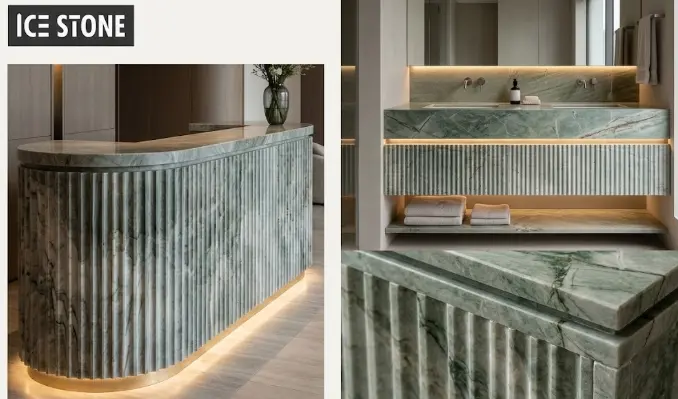
Fluted Ice Connect Marble Designs for Modern Interiors
Technical Characteristics and Material Selection
Slab Variation and Visual Inspection
Natural stone should be assessed as an individual material rather than a perfectly uniform manufactured color. Variations can occur in background tone, mineral distribution, vein direction, and visible features. For a large feature wall or a series of matching panels, the buyer should review enough material to understand the range of variation expected in the shipment.
Before cutting, agree on the required appearance, acceptable natural variation, panel layout, and any bookmatching or vein-alignment expectations. Photographs should show the actual available slabs under reasonably consistent lighting. For high-value projects, a documented selection and approval process can reduce misunderstandings between the buyer, fabricator, and supplier.
Surface Finish and Fluted Profile
Polished surfaces generally emphasize color and reflectivity, while honed finishes tend to provide a more subdued appearance. The final result also depends on the stone’s mineral composition and the processing method. Fluted profiles introduce another variable: narrow or deep grooves can create stronger shadows but may require more detailed cleaning and more demanding fabrication.
The appropriate groove depth, spacing, and edge radius should be determined through drawings and sample approval rather than assumed from a generic design image. A full-size sample section is particularly useful when the surface will be viewed at close range or illuminated from the side.
Scientific and Technical Data to Request
Material properties should be verified for the actual stone or product being purchased. The table below identifies useful tests and procurement checks. It does not assign unverified performance values to Ice Connect Marble.
| Parameter | Why It Matters | Recommended Evidence |
|---|---|---|
| Water absorption | Helps assess moisture-related considerations for the intended application. | Relevant test report, such as ASTM C97/C97M where applicable. |
| Flexural strength | Supports engineering assessment of stone under bending loads. | Test results appropriate to the stone and project specification. |
| Bulk specific gravity | Helps inform material characterization and weight estimates. | Measured data from a suitable test method. |
| Thickness and tolerance | Affects weight, junctions, installation, and fabrication consistency. | Approved drawings and dimensional inspection records. |
| Finish and groove dimensions | Determine appearance, cleanability, and fit between components. | Physical sample, fabrication drawing, and agreed tolerances. |
For context, water absorption and flexural strength are separate measurements and should not be treated as interchangeable indicators of quality. Results are meaningful only when the test method, specimen preparation, and reported units are understood. A single number also cannot establish that a stone is suitable for every installation condition.
Comparing Fluted Marble with Alternative Interior Materials
Natural Marble vs. Porcelain Slabs
Natural marble offers genuine geological variation, whereas porcelain slabs can provide controlled printed patterns and a range of engineered surface characteristics. Their fabrication methods, edge details, weight, and installation requirements can differ significantly. The selection should be based on the desired visual character, available fabrication expertise, maintenance expectations, and the product’s technical documentation.
Fluted Marble vs. Smooth Marble
Fluted marble creates depth through repeated grooves and changing shadows. Smooth marble typically provides a more continuous surface and can be simpler to wipe clean. Fluting may increase machining time and introduce more surfaces that require attention during maintenance. A mixed design—using fluted panels in focal areas and smooth panels elsewhere—can balance visual interest with practical considerations.
Fluted Marble vs. Wood and Decorative Panels
Wood and decorative panels may be lighter or easier to replace in some applications, while stone offers a distinctive mineral appearance and substantial tactile presence. Their moisture response, wear characteristics, and maintenance requirements depend on the specific product and installation. Designers should compare complete assemblies, including support, finish, installation, and expected service conditions, rather than comparing surface appearance alone.
For projects considering a staircase as a major architectural feature, the design team can also review Ice Connect Marble staircase designs for luxury residential projects. Stair applications require project-specific assessment of tread dimensions, slip resistance, edge detailing, structural support, and applicable building codes.
Fabrication, Installation, and Long-Term Maintenance
Custom CNC Grooving and Edge Detailing
Custom fluting requires coordination between the design team and the stone fabricator. The approved drawings should identify groove spacing, depth, profile, edge treatment, panel dimensions, and seam positions. Because the natural stone’s veins may intersect the grooves differently from one piece to another, the final visual effect should be reviewed using the actual material or a representative sample.
Fabrication planning should also account for the remaining stone thickness, the dimensions of the finished components, handling constraints, and the possibility of breakage. Avoid specifying a very deep groove or a narrow remaining section without confirming feasibility with the fabricator.
Substrate, Fixings, and Installation Tolerances
Stone installation requires a suitable support system designed for the size, weight, location, and configuration of the panels. The correct adhesive or mechanical fixing method depends on the substrate, exposure conditions, panel geometry, and local requirements. Large or overhead installations should receive appropriate professional assessment rather than relying on appearance-based decisions.
Installation documents should define alignment tolerances, joint width, movement considerations, edge protection, and inspection responsibilities. A pre-installation review can identify problems before the stone is permanently fixed. For complex projects, a mock-up can help the team verify the relationship between the finished stone, lighting, adjacent materials, and junction details.
Cleaning, Sealing, and Routine Care
Use cleaning products specifically confirmed as suitable for the selected natural stone. Acidic cleaners can etch calcite-bearing marble, and abrasive methods may alter the finish. Grooves should be cleaned with tools that reach their profile without damaging edges. The choice of sealer, if appropriate, should follow the stone supplier’s recommendations and the expected exposure conditions.
Sealing does not eliminate all stains or prevent acid etching. A maintenance plan should specify suitable cleaning products, spill response, inspection intervals, and the process for dealing with damage. For hospitality and retail environments, maintenance practicality should be considered before the finish and groove profile are approved.
Industry Trends in Sculptural Stone Interiors
Tactile Surfaces and Sculptural Details
Interior projects often combine natural materials with simplified geometry, indirect lighting, and selective textural contrast. Fluted stone fits this approach because it can function as both a surface finish and an architectural feature. Rather than covering every wall, designers may concentrate the material on a reception desk, feature wall, or furniture element to establish a clear focal point.
Custom Fabrication and Project-Specific Specifications
Custom stonework requires closer coordination between designers, fabricators, installers, and suppliers. A project may need coordinated slabs, repeatable groove profiles, approved samples, or matching components delivered in sequence. Clear documentation and early material selection can reduce avoidable changes during fabrication and installation.
Lifecycle Value Rather Than Purchase Price Alone
The lowest slab price does not necessarily produce the lowest installed cost. Fabrication, cutting yield, packaging, transport, fixing systems, installation labor, maintenance, and potential replacement all contribute to the project’s total cost. Buyers should compare quotations using the same specification and clarify what each supplier includes.
Safety, Standards, and Responsible Stone Procurement
Documentation and Quality Inspection
Before placing an order, request the information relevant to the project: material identification, dimensions, finish, available test reports, agreed appearance criteria, and packing details. Establish how natural variation will be reviewed and how damaged or nonconforming pieces will be handled. The requirements should be recorded in the purchase specification rather than left to informal conversations.
Building Codes and Workplace Safety
Applicable requirements vary by country, project type, and installation location. Stone cladding, wet-area installations, fireplace surrounds, and overhead components may require different technical reviews. Fabrication can also generate respirable crystalline silica dust. Cutting and finishing operations should use appropriate engineering controls, exposure-management procedures, and applicable occupational-safety practices.
Buyers should ask fabricators how dust exposure is controlled and how workers are protected during cutting and finishing. Compliance should be confirmed against the rules applicable to the facility and jurisdiction. A general article cannot replace project-specific engineering, occupational-safety, or legal advice.
Environmental and Supply-Chain Considerations
Responsible procurement may include reviewing material origin, transport distance, packaging, waste handling, and supplier documentation. The relevant requirements depend on the buyer’s market and project commitments. Avoid assuming that one environmental certificate or declaration establishes compliance with every regional requirement.
How to Choose an Ice Connect Marble Supplier or Manufacturer
Evaluate Slab Quality and Batch Consistency
Ask for photographs of the actual available slabs, clear dimensions, and information about the finish. For projects with several matching panels, review the batch as a whole and agree on the expected variation before production. A professional Ice Connect Marble supplier should be able to explain the selection process and help buyers understand what can realistically be achieved with the material available.
Confirm Custom Fluting and Fabrication Capabilities
Not every supplier offers the same machining services. Confirm whether custom grooves, curved panels, edge details, sample production, and coordinated fabrication are available. Request drawings and a physical sample where the finished profile is central to the design. If the project involves complex geometry, confirm feasibility before approving a final quotation.
Compare Quotations on a Like-for-Like Basis
A useful quotation should distinguish material cost from fabrication, finishing, packing, transport, and any installation-related services. Check whether the quotation specifies dimensions, thickness, finish, tolerances, quantities, and acceptable natural variation. For a wholesale marble slabs order, clarify how slab selection, packing lists, damage claims, and delivery scheduling will be handled.
Buyers evaluating an Ice Connect Marble manufacturer should also review communication quality, technical documentation, production coordination, and the supplier’s ability to respond to specification changes. A transparent process is more useful than a broad quality claim that cannot be verified.
Questions to Ask Before Ordering
- Can you provide photographs or videos of the actual available slabs?
- What thicknesses, finishes, and dimensions can be supplied?
- Can the selected stone achieve the requested groove profile and remaining thickness?
- What inspection criteria and dimensional tolerances will be used?
- How will slabs and finished panels be packed and protected for transport?
- Which test reports or technical documents are available for the intended application?
For project-specific material details, review the Ice Connect Marble slab product details and confirm current availability, finish options, and dimensions with the supplier. The final specification should be based on the material and service actually offered, not solely on a general online description.
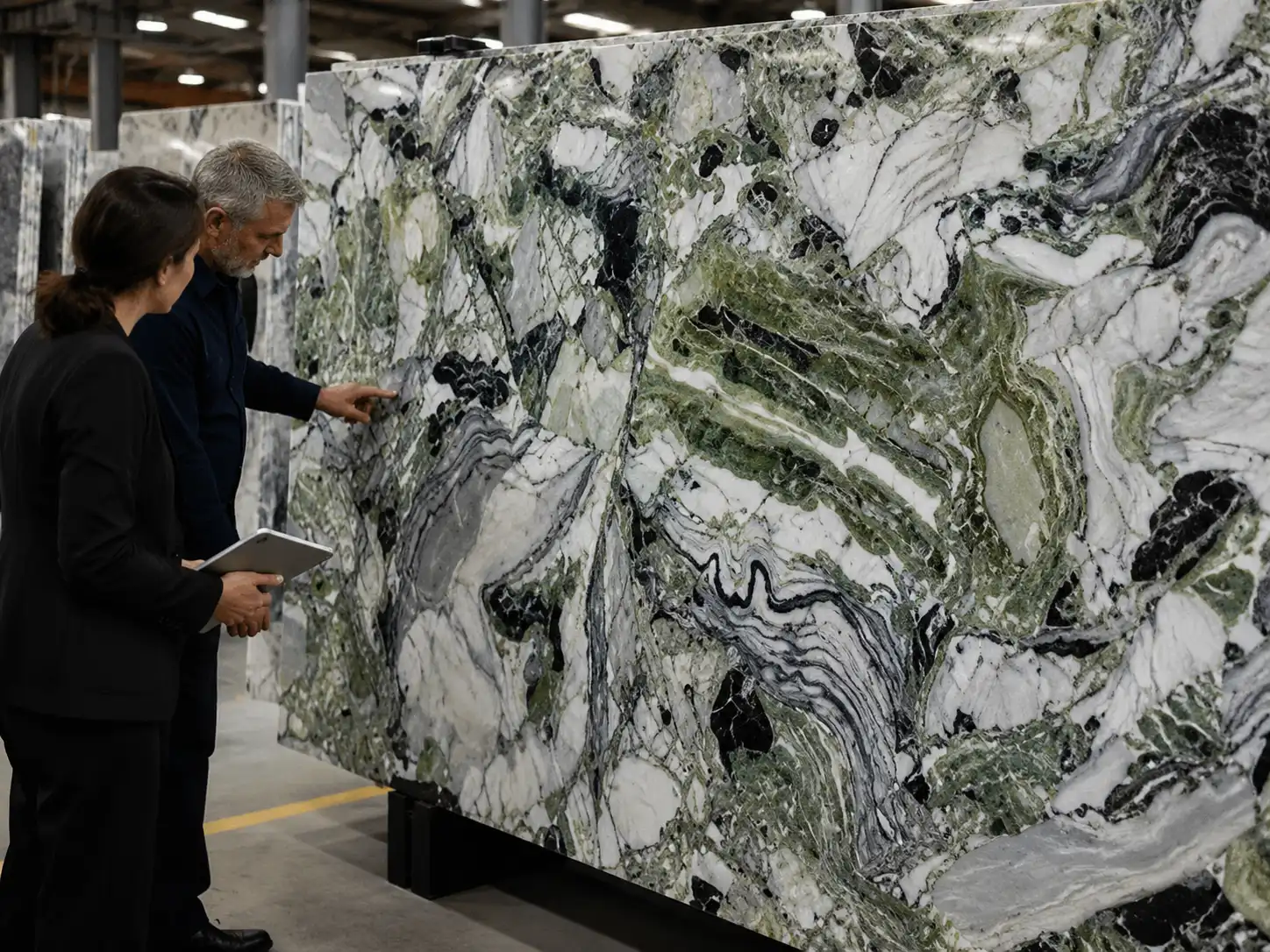
Ice Connect Marble Slabs
Frequently Asked Questions About Ice Connect Marble
1. What is Ice Connect Marble, and what makes it suitable for modern interiors?
Ice Connect Marble is a natural stone option recognized for its distinctive mineral pattern and contrasting color character. Its visual variation can complement contemporary spaces that combine natural materials, restrained palettes, and sculptural details. Suitability depends on the specific slab, finish, fabrication method, installation location, and maintenance expectations. Buyers should inspect the actual material and confirm relevant technical information before specifying it for a project.
2. Is fluted Ice Connect Marble suitable for bathrooms and other humid environments?
It may be suitable for selected bathroom applications when the stone, finish, substrate, waterproofing system, and installation details are appropriate for the exposure. Natural marble can be sensitive to acidic products, and grooves may require more detailed cleaning than smooth surfaces. Confirm the stone’s documented properties and follow qualified installation advice. The presence of marble alone does not provide waterproofing or guarantee resistance to staining and etching.
3. How should fluted marble surfaces be cleaned and maintained?
Use a cleaner confirmed as safe for the specific natural stone and avoid unapproved acidic products or abrasive methods. Clean grooves with suitable non-damaging tools, remove spills promptly, and follow the supplier’s advice on sealing. A sealer may reduce absorption in some circumstances but cannot make marble completely stain-proof or acid-proof. The maintenance plan should reflect the surface finish, groove profile, and frequency of use.
4. Can Ice Connect Marble be customized into fluted wall panels and furniture?
Custom fluted panels and selected furniture components may be possible, subject to the stone’s characteristics, slab dimensions, groove geometry, remaining thickness, and the fabricator’s equipment. Buyers should provide drawings, approve a sample, and confirm tolerances, panel support, edge treatment, and packaging before production. Complex curved or deeply grooved designs require particular care because not every slab or profile is suitable for every fabrication method.
5. What should buyers check before purchasing Ice Connect Marble for a large project?
Review the actual slab selection, dimensions, thickness, surface finish, natural variation, relevant test reports, fabrication scope, and installation requirements. Compare quotations that use the same specification and account for cutting yield, packing, shipping, and potential replacement needs. For large projects, agree on sample approval, inspection criteria, delivery sequencing, and damage procedures in writing. These steps help reduce misunderstandings and support a more reliable procurement decision.
References
- Natural Stone Institute. Dimension Stone Design Manual. Natural Stone Institute.
- Natural Stone Institute. Care and Cleaning of Natural Stone. Natural Stone Institute.
- ASTM International. ASTM C97/C97M: Standard Test Methods for Absorption and Bulk Specific Gravity of Dimension Stone. ASTM International.
- ASTM International. ASTM C880/C880M: Standard Test Method for Flexural Strength of Dimension Stone. ASTM International.
- ASTM International. ASTM C503/C503M: Standard Specification for Marble Dimension Stone. ASTM International.
- Occupational Safety and Health Administration. Respirable Crystalline Silica: Construction and General Industry Guidance. United States Department of Labor.
- National Institute of Standards and Technology. Building Materials and Measurement Science Resources. United States Department of Commerce.
- International Organization for Standardization. ISO 9001: Quality Management Systems — Requirements. International Organization for Standardization.
How to Specify Ice Connect Marble for a Successful Interior Project
How should buyers choose the right fluted marble application?
Start with the intended use, viewing distance, lighting direction, cleaning frequency, and installation conditions. A feature wall may prioritize visual continuity, while a vanity requires additional attention to moisture management and daily cleaning. A reception desk or furniture piece may require stronger protection at exposed edges. The design should be selected only after these functional needs are understood.
Why does the actual slab matter more than a product photograph?
Natural stone varies in color and veining. A photograph may not communicate the full range of variation or how the pattern will appear after grooving and installation. Reviewing the actual slabs, approving a sample, and planning panel placement help the buyer make a more informed decision. For large projects, record the approved appearance and tolerances before production begins.
What should be compared before committing to a supplier?
Compare material availability, slab dimensions, finish, customization capabilities, quality checks, documentation, packaging, delivery schedule, and after-sales arrangements. Request a quotation that separates material and processing costs where possible. Confirm which items are included and which remain the responsibility of the buyer or installer.
Material fit by product direction
The following table is a qualitative suitability guide, not statistical data. The symbols do not represent probabilities, measured performance scores, or guarantees. Actual suitability depends on the selected stone, finish, fabrication details, project conditions, and professional review.
Legend: ●●● = Primary; ●●○ = Strong Option; ●○○ = Depends on Workflow; — = Usually Not First Choice.
| Product Direction | Qualitative Fit | Main Consideration |
|---|---|---|
| Decorative interior wall panels | ●●● | Slab selection, lighting, panel weight, and secure fixing. |
| Reception desks and feature counters | ●●○ | Edge protection, support, cleaning, and replacement planning. |
| Custom columns and sculptural elements | ●○○ | Groove geometry, curvature, remaining thickness, and fabrication capability. |
| Bathroom vanity fronts and selected wall areas | ●○○ | Waterproofing, maintenance access, cleaning, and finish selection. |
| High-use food-preparation worktops | — | Evaluate acid sensitivity, staining expectations, cleaning routines, and alternative surfaces. |
Which risks should be addressed before ordering?
Common risks include choosing from photographs alone, assuming every slab has identical veining, approving a groove profile without checking feasibility, underestimating installation weight, and comparing quotations with different scopes. These risks can be reduced by documenting the specification, reviewing actual material, confirming fabrication details, and agreeing on inspection and delivery procedures.
What is the most practical next step?
Prepare a brief containing the intended application, approximate dimensions, preferred finish, groove profile, quantity, destination, and required delivery schedule. Ask the supplier to confirm current material availability, fabrication options, and the technical documentation relevant to the project. If the design is complex, begin with a sample or mock-up before approving the full production run.
For project-specific planning, buyers can review the Ice Connect Marble slab product details and confirm current specifications with the supplier. A well-defined brief and a transparent approval process help align the design vision with material availability, fabrication feasibility, and long-term maintenance requirements.
Discover Ice Connect Marble for Your Next Project
Successful stone projects begin with a clear understanding of the material, the design intent, and the requirements of the finished space. Ice Connect Marble can provide a distinctive natural focal point in selected interiors, while fluted detailing adds sculptural depth when its profile, lighting, and maintenance demands are carefully considered.
For information about the company’s background and capabilities, visit the marble company’s profile and background. Buyers can then discuss material availability, specifications, and project requirements directly through the Ice Connect Marble supplier contact page. Share your intended application, approximate quantities, preferred finish, and drawings to help the team assess the most suitable next steps.