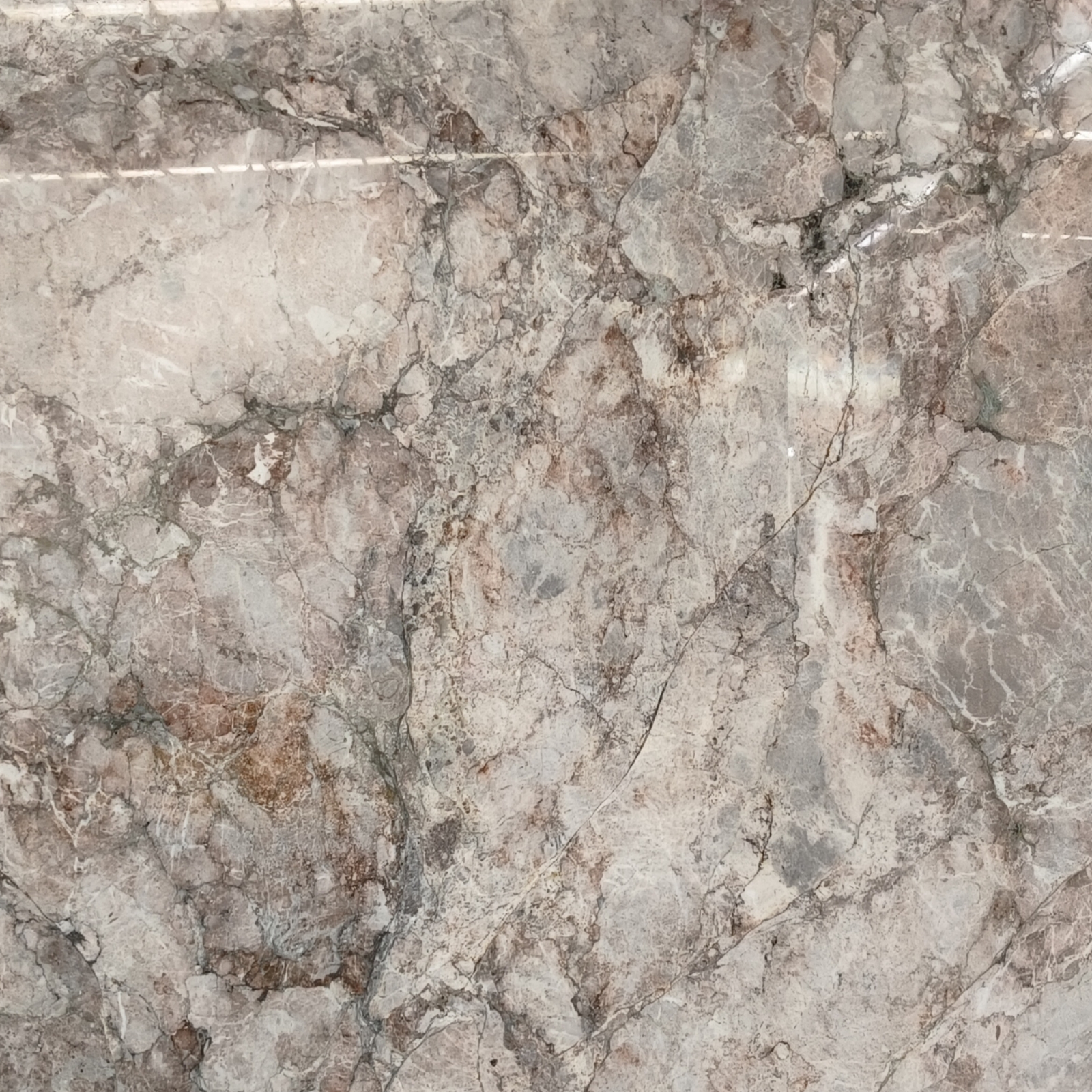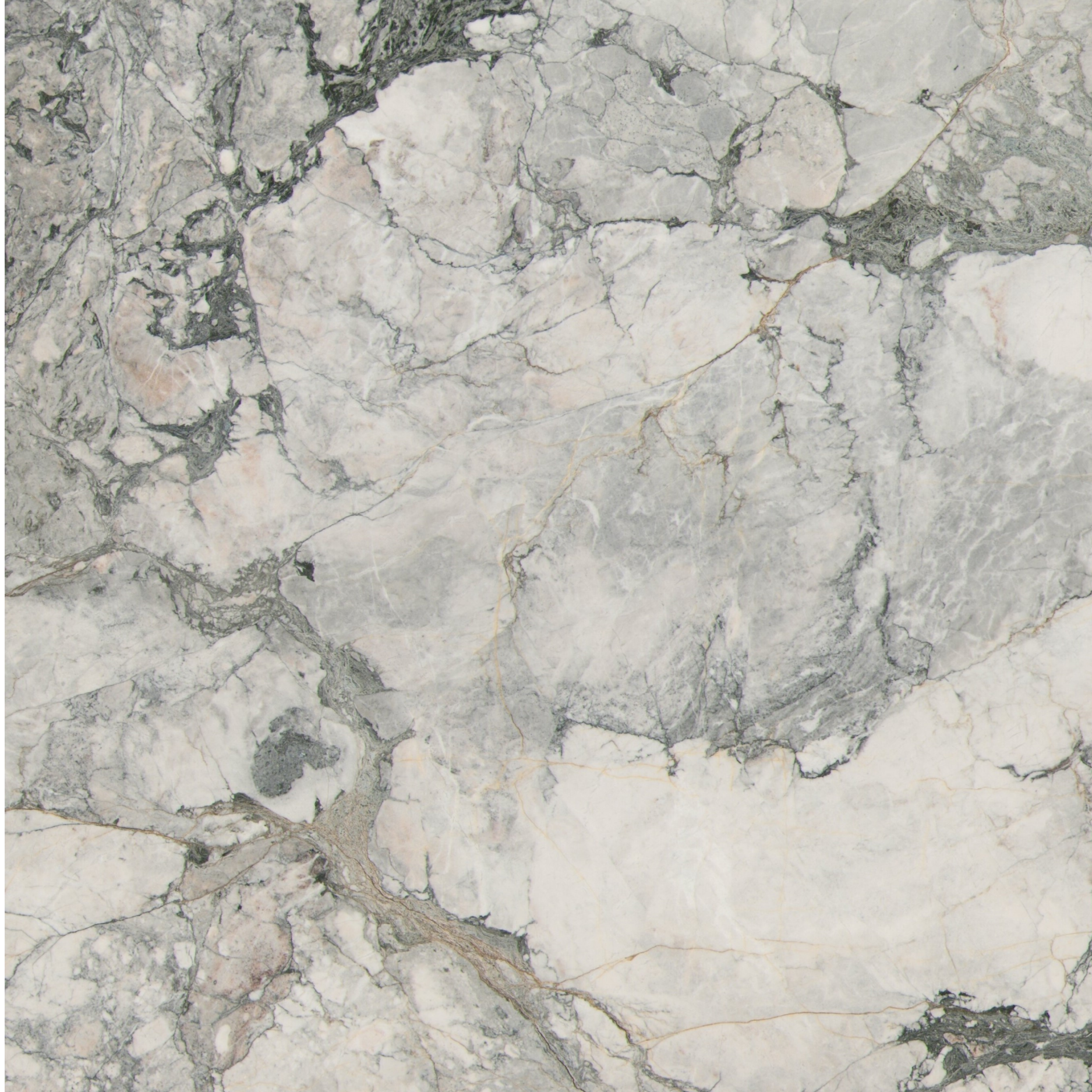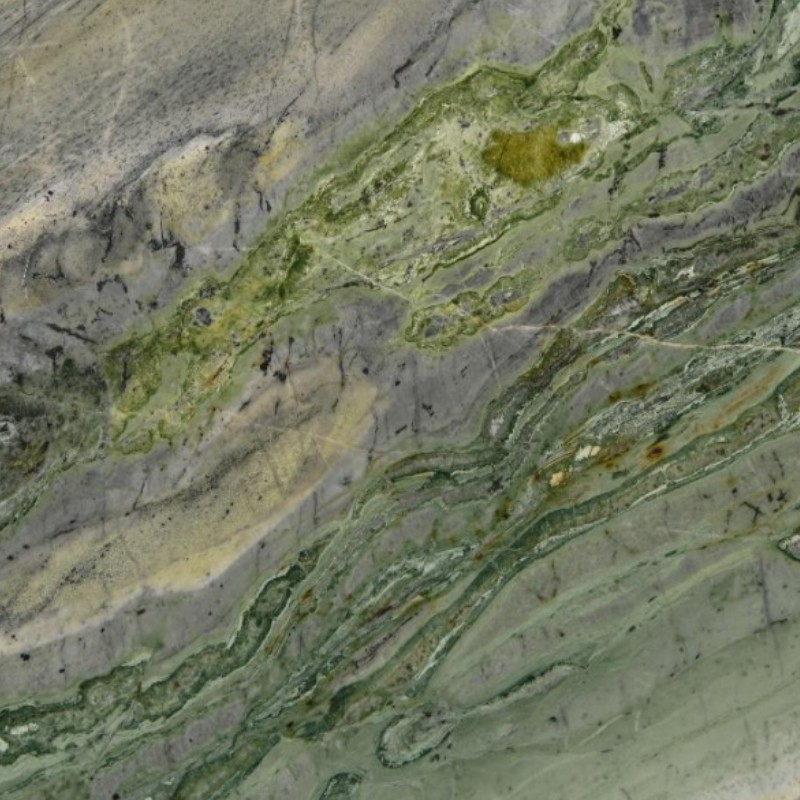
Few natural stones behave like a quiet background and a statement artwork at the same time. Ice Connect Marble sits firmly in the second category. Its combination of pale crystalline areas, jade-green movement, grey transitions and dark mineral lines makes it suitable for interiors where the stone is expected to become part of the visual identity of the project rather than simply cover a surface.
That visual strength is also the reason buyers need to source it differently from a highly uniform commercial stone. One slab may contain a broad white field crossed by a dramatic green vein. Another may contain much more dark mineral movement. A third may be ideal for bookmatching but inefficient for a countertop with several sink cutouts. The commercial name alone cannot tell a project buyer which slab is correct.
Before a large order is confirmed, designers, fabricators and procurement teams should align drawings, full-slab photos, finish, thickness, sequence and intended cutting. Buyers with active architectural requirements can also contact a natural stone supplier with panel dimensions, quantity, destination, finish and visual preferences so available bundles can be reviewed against the project rather than quoted only by square meter.
Ice Connect Marble
What Is Ice Connect Marble?
Ice Connect Marble is a decorative natural marble quarried in China and commonly traded under names that may include Ice Connect, White Beauty and Ice Jade Marble. Commercial naming can vary between suppliers, so the safest way to confirm material identity is through current full-slab images, block or bundle references, physical samples and approved project documentation.
Its defining characteristic is not one fixed color ratio. Instead, buyers may see a mixture of white, green, grey and black movement in different proportions. Some slabs appear predominantly white with selective green passages. Others become much more expressive, with broad dark or emerald areas crossing the surface.
For context, it is useful to compare Ice Connect with broader natural marble slabs. A restrained beige or white marble may be selected mainly for background continuity; Ice Connect is often selected because the slab itself becomes the design feature. This makes slab selection more important because natural variation is not a defect to eliminate—it is a characteristic that must be placed deliberately.
Ice Connect Marble Is a Natural Material, Not a Printed Pattern
Engineered surfaces can repeat a controlled digital design. Natural marble cannot. Every block contains geological variation, and each sequential slice changes the visible mineral composition slightly. That is why two installations using the same commercial stone name can look noticeably different.
This difference matters most when a designer has built the project around one photographed slab. The exact balance of white, green and black visible in that image may not exist in another bundle months later. Procurement therefore needs to convert a general aesthetic request into measurable approval criteria: preferred dominant color, vein density, acceptable dark zones, panel orientation and whether sequential slabs are required.
Buyers planning larger schemes should review a wider premium marble slab collection before locking the material. This comparison helps determine whether Ice Connect is genuinely appropriate for the room or whether a calmer marble would produce a more controlled result. Strong material personality is an advantage only when the architecture has enough visual space to support it.
What Does Ice Connect Marble Look Like in a Real Interior?
White Crystalline Areas
Pale zones create visual breathing space. In a large feature wall, these areas can prevent the composition from becoming too dark or visually dense. In bathrooms and villas, they can coordinate well with pale timber, brushed metal, white sanitary ware and neutral cabinetry.
Green Mineral Movement
Green is what gives Ice Connect much of its identity. Depending on the slab, the movement may appear olive, jade-like, emerald or muted grey-green. Highly saturated zones can create dramatic focal points, while lighter green movement works more easily across larger areas.
Grey and Dark Mineral Lines
Dark passages increase contrast and can make a slab look almost graphical. They can be visually powerful on reception walls or bars, but they need careful positioning on smaller vanity tops or floors where a single dominant dark line may control the entire composition.
A dedicated Ice Connect Marble slab reference shows the material used for countertops, vanity tops, mosaics, stairs, wall cladding and floor tiles. Published product information also lists large slab and custom-size options, which reinforces the need to select the actual stone form around the finished application rather than assuming one slab format suits every project.
Full-Slab Approval Is More Important Than a 100 mm Sample
A small sample can answer several useful questions. It can confirm general color family, polish quality, basic mineral character and approximate texture. What it cannot show is how a three-meter wall panel will look once the stone’s full-scale movement appears.
Imagine approving a 100 × 100 mm sample taken from a pale white zone. The actual slab may contain a dark green passage covering one-third of the surface. Neither piece is “wrong,” but the sample did not communicate the composition of the complete slab.
This is one of the core checks covered in Ice Connect Marble sourcing benchmarks: buyers need to evaluate vein distribution, slab dimensions, usable yield, thickness control, fissures, reinforcement and sequence—not only visual color.
For high-value projects, request front-facing slab photos in neutral light, close-up images of important areas, slab numbers, actual dimensions and video where possible. If bookmatching is planned, request the complete sequential group rather than separate images photographed at different scales.
From Beautiful Slab to Successful Project: Think About Yield
Purchasing stone by square meter is not the same as purchasing usable project area. A 5 m² slab does not automatically produce 5 m² of finished pieces. Sink cutouts, veins, fissures, edge allowances, blade kerfs, panel orientation and defects can reduce practical yield.
Suppose a project needs a 2,700 × 1,050 mm island. A slab that is technically large enough may still have an unstable repaired zone exactly where the sink opening must be cut, or a dark vein may cross the island in a way the designer dislikes. The fabricator may therefore shift the cutting template, reducing yield and requiring an additional slab.
The more complete Ice Connect Marble sourcing guide highlights why global projects need to connect block selection, slab sequence, reinforcement, cutting, finishing and export packing. In practical purchasing terms, the cheapest square-meter price can become expensive if the selected bundle produces poor cutting yield.
Published Slab and Tile Formats: What Should Buyers Confirm?
Published product information provides a useful starting point, but actual available dimensions depend on the block, slab sequence and current inventory. The table below should therefore be treated as a purchasing reference rather than a guarantee that every dimension is available in every bundle.
| Product Form | Published Reference Size | Buyer Consideration |
|---|---|---|
| Collage / large slab format | Approx. 2700 × 1700 × 18/20 mm | Useful for large walls, vanities and architectural panels |
| Alternative large slab format | Approx. 3020 × 1650 × 18/20 mm | Potentially useful for longer countertop or wall layouts |
| Natural slab | Approx. 1600–2200 × 1000–1700 × 18 mm | Actual dimensions depend on block geometry |
| Mosaic / tile reference | 300 × 300 × 8 mm | Suitable for smaller decorative areas |
| Mosaic / tile reference | 457 × 457 × 8 mm | Check calibration and joint layout |
| Tile reference | 600 × 600 × 10 mm | Useful for modular floor or wall layouts |
| Custom size | Project dependent | Confirm tolerance, finish, edge and packing before production |
Which Thickness Should You Choose?
Natural stone thickness should follow application, panel size, support condition, fabrication method, local installation practice and engineering requirements. There is no single Ice Connect Marble thickness that is correct for every project.
Supplier guidance for project stone commonly references 15 mm, 18 mm, 20 mm and 30 mm directions, with custom thicknesses possible depending on production. Those numbers are useful for discussion, not universal prescriptions.
18–20 mm Slabs
These thicknesses are commonly encountered for wall panels, vanity tops, decorative surfaces and many interior fabrication programs. Large unsupported spans still need proper substrate or structural support.
Thicker Stone
Stairs, heavy architectural pieces and certain countertop edge strategies may require greater thickness or laminated edge construction. Increasing thickness also increases weight, handling demands and shipping cost.
Thin Panels and Veneers
Thin stone can reduce dead load, but it may require backing systems, reinforcement, specialty fabrication or engineered support. The stone should not simply be made thinner without reconsidering the whole assembly.
Polished vs Honed Ice Connect Marble
Polished Finish
Polishing intensifies color and contrast. White crystalline areas become brighter, green zones appear richer and dark mineral lines become more defined. For feature walls, furniture tops and low-abrasion statement surfaces, this finish can maximize the material’s visual drama.
The trade-off is that polished marble can reveal scratches, etching and traffic wear more visibly. Reflective floors also need appropriate slip-resistance assessment for the actual environment.
Honed Finish
Honing reduces reflection and softens visual contrast. This can create a more architectural, contemporary appearance and may make minor wear less visually obvious than on a highly reflective polish.
For flooring, wet zones and commercial use, surface selection should be based on project-specific slip, maintenance and cleaning requirements rather than aesthetics alone.
Can Ice Connect Marble Be Used for Feature Walls?
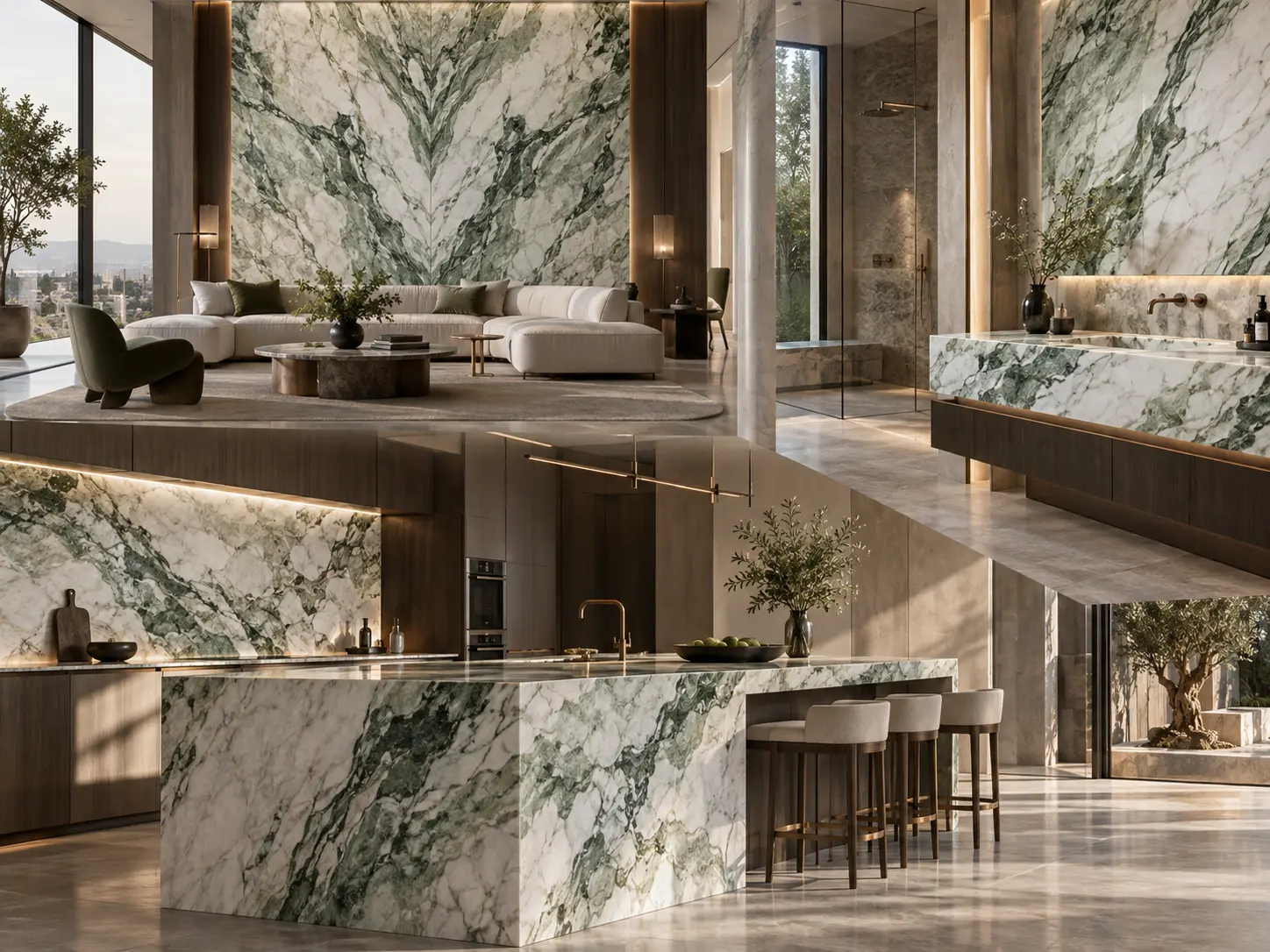
Feature walls are one of the strongest applications for Ice Connect Marble because the stone can be viewed as a complete composition rather than broken into many small pieces. Large panels allow the white, green and dark mineral movement to remain legible.
Bookmatching
Sequential slabs can be opened like pages in a book so the veins mirror one another. This creates a symmetrical composition that works particularly well behind reception desks, fireplaces, hotel lobby seating areas, luxury bathrooms and private villa living rooms.
Successful bookmatching depends on more than owning two slabs from the same block. The slabs need to be sequential, photographed consistently, cut in the correct orientation and numbered clearly before installation.
Four-Slab Composition
For wider walls, four sequential slabs can create a larger mirrored pattern. However, dark or green zones become even more visually dominant at this scale. Digital layout approval before fabrication is strongly recommended.
Can Ice Connect Marble Be Used in Bathrooms?
Yes, but “suitable for a bathroom” does not mean every bathroom surface should use the same finish or installation detail.
Vanity tops, wall panels, bathtub surrounds and decorative niches can showcase the material effectively. Wet floors and shower environments require additional consideration of slip resistance, waterproofing, joints, substrate, sealant compatibility and maintenance.
Marble is a calcareous stone. Calcium-carbonate-rich surfaces are sensitive to acidic products. Bathroom cleaners containing strong acids should therefore be avoided unless specifically approved for natural marble.
An impregnating sealer can help reduce the rate at which certain liquids penetrate the stone, but sealing does not make marble completely stain-proof or acid-proof. The final maintenance plan should reflect the specific finish and environment.
Is Ice Connect Marble Suitable for Countertops?
It can be used for kitchen islands, vanity tops, reception counters, bars and furniture surfaces, but buyers need to understand the difference between visual suitability and maintenance tolerance.
Marble can etch when exposed to acids such as lemon juice, vinegar, wine or certain household cleaners. A polished surface may show these marks more visibly than a honed surface. A user who expects the surface to remain completely unchanged under everyday acidic food contact may be better served by another material.
For a luxury kitchen where the owner understands natural patina and accepts professional maintenance, Ice Connect Marble can create an extraordinary statement island. For a heavily used commercial food-preparation area where low-maintenance chemical resistance is the priority, another surface may be more practical.
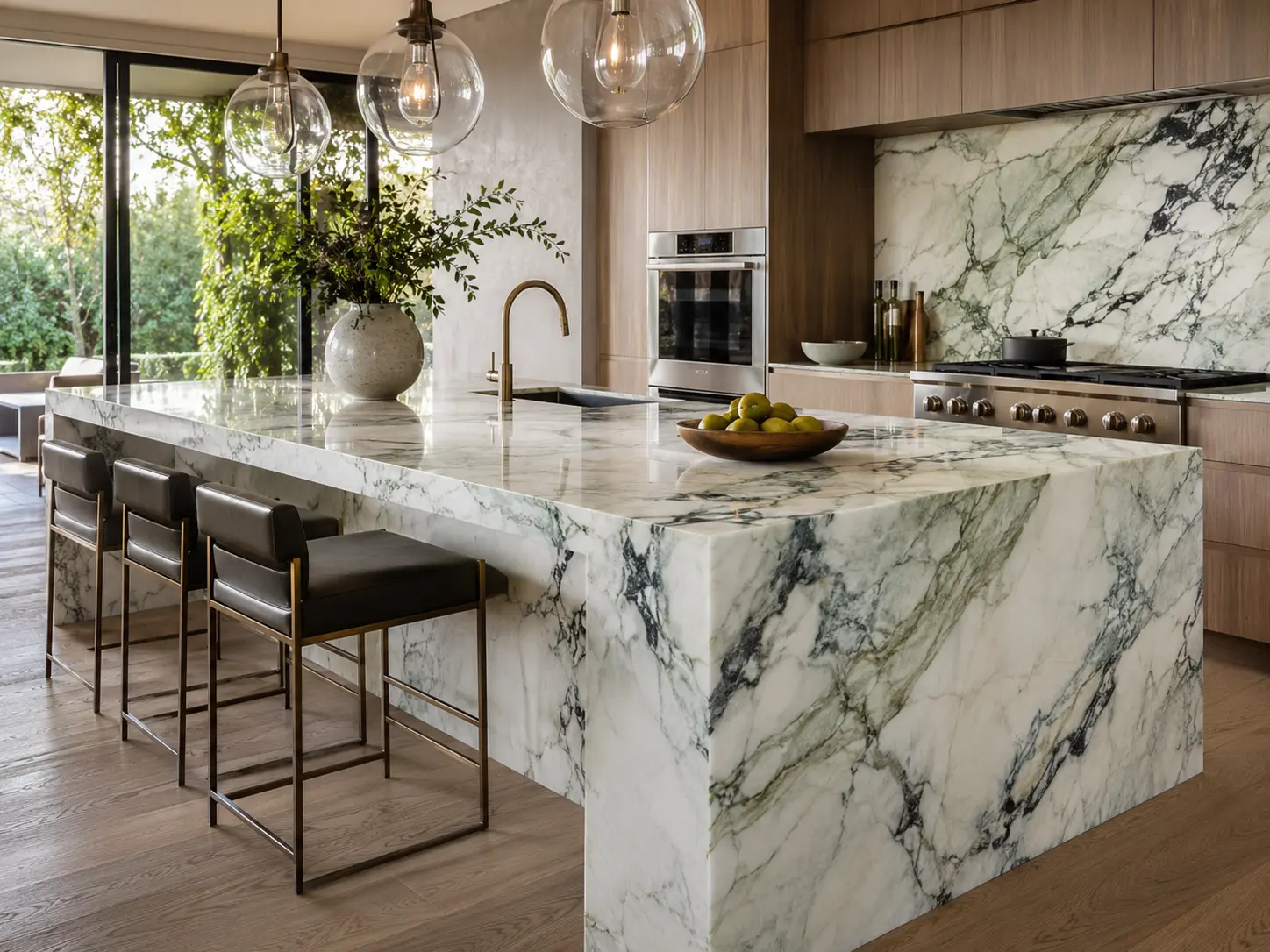
Ice Connect Marble for Luxury Kitchen Islands
What About Floors and Stairs?
Ice Connect Marble can be fabricated into floor tiles, stair treads and risers, but flooring requires a different decision process from walls.
Traffic Level
A private villa bathroom has a very different wear pattern from a hotel lobby. The higher the traffic, the more attention should be given to finish, abrasion, replacement strategy and maintenance.
Slip Resistance
Do not assume a highly polished stone floor is appropriate simply because it looks luxurious. Wet and high-traffic environments require the project team to evaluate the chosen finish against applicable local slip-resistance requirements.
Thickness and Calibration
Floor tiles and stair pieces need consistent thickness to reduce installation adjustment. Large thickness variation can create lippage, uneven joints and additional site work.

Ice Connect Marble Stairs
How to Select Ice Connect Marble for a Luxury Hotel
Hotel projects expose natural stone to several conditions simultaneously: long viewing distances, warm artificial lighting, heavy traffic, repeated cleaning and strict replacement expectations.
For lobby feature walls, the stone may be selected primarily for visual identity. For reception counters, edge details and hand contact become more important. For bathroom floors, maintenance and slip strategy move to the top of the list.
A hotel project should therefore not approve the whole material package from one small sample. Divide the specification by application and select slabs, tiles, finish and reinforcement accordingly.
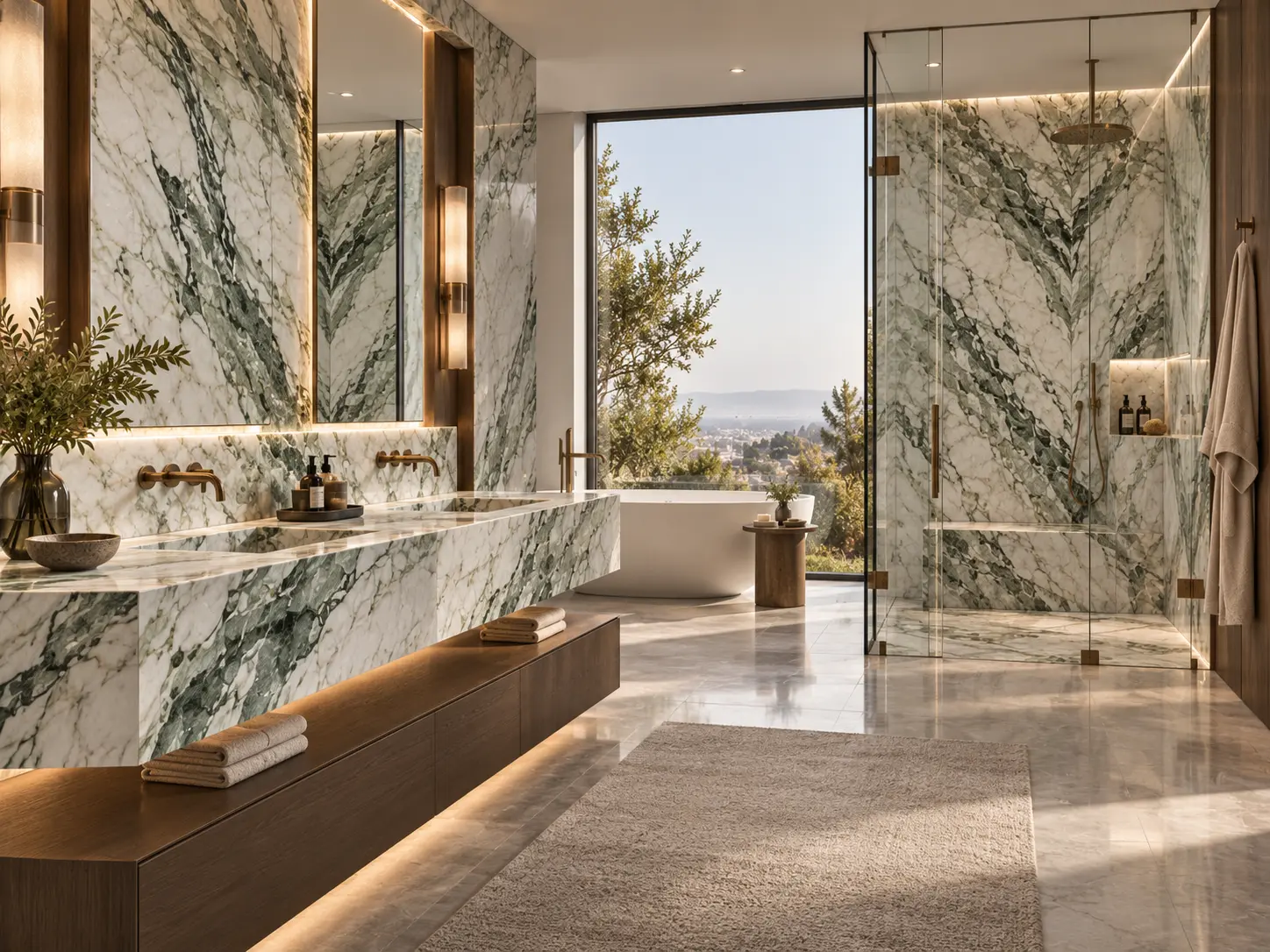
Ice Connect Marble for Bathroom Projects
How to Select Ice Connect Marble for Villas and Residences
Residential interiors offer more freedom because the owner may intentionally select a highly individual slab. The challenge is coordination across rooms.
If a dramatic green slab becomes the kitchen island, quieter pieces may work better in adjoining flooring. If a bookmatched wall dominates the living room, cabinetry and furniture may need to become visually calmer. Material selection should therefore consider the whole interior palette, not the marble in isolation.
How to Plan a Bookmatched Wall Before Cutting
Step 1: Confirm Finished Wall Dimensions
Do not begin from slab dimensions. Begin from the architectural elevation.
Step 2: Confirm Joint Strategy
Decide where vertical and horizontal joints can occur without interrupting the most important veins.
Step 3: Select Sequential Slabs
Identify slab numbers and sequence before cutting.
Step 4: Create a Digital Layout
Place the wall-panel outlines over slab photographs and review the finished composition.
Step 5: Approve Before Fabrication
Get written approval for layout, orientation and important visual areas before CNC or bridge-saw cutting begins.
How to Calculate Real Slab Yield
Yield is where visual selection and purchasing economics meet. A high-priced slab with excellent usable area can sometimes cost less per finished panel than a discounted slab that requires large sections to be rejected.
Consider an illustrative case. A slab measures 3.0 × 1.65 m, giving 4.95 m² of gross surface area. If the cutting layout, natural fissures and edge allowance mean only 4.0 m² can be converted into approved pieces, the usable yield is approximately 80.8%.
This is not a standard yield rate; it is simply an example showing why buyers should calculate from finished pieces rather than gross slab area.
| Yield Variable | Potential Impact | Buyer Action |
|---|---|---|
| Sink cutout | Removes usable surface | Overlay template before slab approval |
| Strong dark vein | May affect visual acceptance | Place intentionally |
| Natural fissure | Can restrict cutting zone | Inspect before fabrication |
| Bookmatch sequence | Limits panel rotation | Reserve sequential slabs |
| Edge allowance | Reduces usable dimensions | Include in cutting layout |
| Spare requirement | Increases order quantity | Reserve project-matched replacement pieces |
Natural Fissure or Structural Crack?
Expressive marble frequently contains geological features. The challenge is distinguishing natural character from an unstable defect.
A natural vein or healed fissure can be part of the stone’s appearance. An open crack, unstable corner, poorly filled fracture or weak repaired zone near a cutout creates a different level of risk.
Buyers should inspect:
- open fissures;
- resin-filled areas;
- chips and damaged corners;
- mesh reinforcement condition;
- visible glue lines;
- weak zones near future cutouts;
- surface holes;
- repairs located in highly visible project areas.
A repaired slab is not automatically a poor-quality slab. Many expressive natural stones require resin and mesh stabilization. The question is whether the repair is technically appropriate, visually acceptable and compatible with the intended fabrication.
Which Tests Should Project Buyers Request?
Performance values should come from current product or batch documentation, not be copied blindly from another quarry, another marble or an old marketing article.
| Property | Common Reference Method | Why It Matters |
|---|---|---|
| Water absorption | ASTM C97/C97M | Helps compare moisture uptake between dimension stones |
| Bulk specific gravity / density | ASTM C97/C97M | Useful for material comparison and weight planning |
| Compressive strength | ASTM C170/C170M | Provides crushing-strength reference |
| Flexural strength | ASTM C880/C880M | Relevant to bending performance of stone specimens |
| Modulus of rupture | ASTM C99/C99M | Another bending-strength reference used for dimension stone |
| Anchorage / attachment system | Project engineering / applicable stone standards | Important for large wall panels and mechanically fixed cladding |
The testing method is only one part of the evaluation. Buyers should confirm test date, laboratory, specimen orientation, finish, thickness and whether the report actually represents the stone being proposed for the project.
Quality Control Before Shipment
Confirm Slab Numbers
Approved photos should correspond to identifiable slabs or bundles.
Check Dimensions and Thickness
Measure actual size and critical thickness points with appropriate equipment.
Review Surface Finish
Check polish consistency, scratches, resin residue, pits and visual differences between panels.
Inspect Corners and Edges
Damage near corners can expand during handling or fabrication.
Review Repairs
Important repaired areas should be photographed and approved where they affect visible surfaces.
Dry-Lay Project Pieces
For numbered tiles, walls or cut-to-size panels, dry-lay photography can reveal mismatched veins, orientation errors or sequence problems before packing.
Why Packaging Matters More With High-Value Natural Marble
A visually perfect slab has no commercial value if it arrives broken. Expressive natural stones can contain mineral boundaries and fissures that require careful stabilization and handling.
Slabs are commonly transported in reinforced bundles or A-frame systems, while finished tiles and cut-to-size pieces may require lined wooden crates, foam separation, edge protection and piece numbering.
International wood packaging should also be reviewed for applicable phytosanitary requirements such as ISPM 15 where required by the destination market.
Common Buyer Mistakes
Mistake 1: Approving a Small Sample as the Entire Color Standard
The consequence is surprise when the full slab contains far more green, grey or dark movement.
Mistake 2: Buying Only by Square-Meter Price
Cheap gross area can become expensive finished area when usable yield is poor.
Mistake 3: Ignoring Slab Sequence
Bookmatching becomes difficult if sequential pieces are sold separately before the project is confirmed.
Mistake 4: Cutting Before Digital Layout Approval
Once the strongest vein has been cut through the wrong panel, design intent cannot be restored.
Mistake 5: Treating Every Fissure as a Defect
Natural stone contains geological variation; the correct question is whether a feature is stable and acceptable for the intended use.
Mistake 6: Treating Every Repair as Acceptable
Poorly placed or unstable repairs can create fabrication and appearance problems.
Mistake 7: Assuming Sealer Makes Marble Acid-Proof
Impregnating treatments can improve stain resistance but do not prevent acid etching of calcium-carbonate-rich marble.
Mistake 8: Ordering the Exact Net Quantity
Projects often need spare material for cutting loss, breakage, future repairs or replacement.
Quick Decision Guide: If X, Choose Y
| If Your Project Is… | Consider… | Why |
|---|---|---|
| Luxury lobby feature wall | Sequential large slabs + digital bookmatch layout | Maximizes visual continuity |
| Statement kitchen island | Large slab with carefully positioned veining | Controls sink, edge and focal-vein placement |
| Luxury bathroom wall | Polished or honed large panels | Creates fewer joints and stronger visual effect |
| Bathroom floor | Project-approved lower-gloss / suitable finish | Requires slip and maintenance review |
| Commercial floor | Honed or project-specific finish | Better suited to wear/slip evaluation than appearance alone |
| Bookmatched fireplace | Sequential slabs | Allows mirrored composition |
| Stairs | Calibrated cut-to-size pieces | Thickness consistency is important for installation |
| Large international project | Bundle approval + QC + spare strategy | Reduces batch and replacement risk |
How Much Ice Connect Marble Should You Order?
The answer should come from the cutting list, not a generic percentage added automatically to every project.
Simple rectangular wall panels can achieve relatively efficient slab yield. A complex kitchen with several cutouts, curves and specific vein-placement requirements may need substantially more gross slab area. Bookmatched designs also limit the ability to rotate pieces for maximum yield.
A good procurement process separates:
- net finished area;
- cutting loss;
- visual-selection loss;
- breakage allowance;
- installation spare pieces;
- future replacement reserve.
For long-term hotel, retail or residential developments, storing a few matched replacement pieces can be more valuable than trying to source the same visual character several years later.
What Should Be Included in an RFQ?
A strong request for quotation should contain enough information for the supplier to evaluate the actual project instead of guessing.
- application;
- finished piece dimensions;
- total area;
- preferred visual direction;
- slab or tile format;
- thickness;
- finish;
- bookmatch requirement;
- edge profile;
- cutouts;
- drawing files;
- destination;
- packing requirement;
- target delivery date;
- required technical reports;
- spare-material strategy.
Material and Finish Fit by Product Direction
The following matrix is an application-fit indicator only. It is not statistical performance data, a probability model, or a guarantee of suitability. Final specification depends on the exact slab, structural design, substrate, finish, traffic, wet-use conditions, engineering, maintenance requirements and applicable local standards.
●●● = Primary
●●○ = Strong Option
●○○ = Depends on Workflow
— = Usually Not First Choice
| Existing Product Direction | Polished Slab | Honed Slab | Cut-to-Size Tile | Sequential / Bookmatched Slab | Typical Selection Logic |
|---|---|---|---|---|---|
| Ice Connect Marble Feature Wall Product page entry: Ice Connect Marble White Beauty Ice Jade Marble Slab |
●●● | ●●○ | ●○○ | ●●● | Large sequential slabs retain the strongest natural pattern continuity. |
| Luxury Bathroom Wall Product page entry: Ice Connect Marble Slabs |
●●● | ●●● | ●●○ | ●●○ | Finish depends on desired reflectivity, maintenance and wet-area detailing. |
| Interior Flooring Product page entry: Marble Slabs & Tiles |
●○○ | ●●● | ●●● | — | Tile calibration, wear, slip assessment and maintenance matter more than maximum gloss. |
| Statement Countertop / Island Product page entry: Ice Connect Marble |
●●● | ●●○ | ●○○ | ●●○ | Full-slab selection helps position dramatic veins around edges and cutouts. |
| Stair Treads & Risers Product page entry: Custom Cut-to-Size Marble |
●○○ | ●●● | ●●● | — | Thickness, calibration and finish should follow traffic and installation requirements. |
| Hotel Lobby Bookmatch Wall Product page entry: Ice Connect Marble Project Supply |
●●● | ●●○ | — | ●●● | Sequential slabs and dry-layout approval are especially important. |
Ice Connect Marble Decision Insight: From Slab Selection to Installed Result
What Makes Ice Connect Marble Different From a Conventional White Marble?
Its value comes from contrast and natural movement rather than uniformity. White crystalline zones can sit next to green, grey and dark mineral features, creating a composition that changes visibly from slab to slab. That makes Ice Connect Marble especially strong for statement interiors, but it also means procurement needs more visual control than a highly repetitive stone.
Why Is Full-Slab Approval So Important?
A small sample confirms material character but cannot communicate complete vein distribution, large dark zones, bookmatch potential or usable cutting yield. For high-value walls, counters and islands, the buyer should approve the actual slab or bundle whenever practical.
How Should Buyers Choose Between Slabs and Tiles?
Choose large slabs when pattern continuity is a major design objective. Choose cut-to-size tiles where modular installation, repeated dimensions or floor layout are more important. A project can also combine both: a bookmatched feature wall may use large sequential slabs while adjoining floors use calibrated tiles.
Option: When Does Bookmatching Add Real Value?
Bookmatching works best when the stone is viewed from enough distance for the full composition to be understood. Hotel lobbies, fireplaces, villa living rooms, large bathrooms and reception walls are strong candidates. Small surfaces may not justify the extra sequence control and fabrication effort.
Consideration: What Is the Biggest Purchasing Risk?
The biggest risk is assuming that the commercial material name guarantees visual uniformity. Natural stone is not produced from one digital file. A buyer who approves “Ice Connect Marble” without approving the actual slab appearance can receive technically correct material that does not match the intended interior.
What About Countertops?
Ice Connect Marble can create a spectacular countertop, but it should be selected by users who understand natural marble. Acidic foods and cleaners can etch calcareous stone, and a sealer improves stain resistance rather than creating absolute chemical immunity. If low maintenance is the first priority, another surface may be more appropriate.
What Is the Better Long-Term Buying Strategy?
For large projects, buy around usable yield, visual consistency and future replacement rather than lowest gross slab price. Reserve sequential slabs for bookmatching, number finished panels, photograph dry layouts and retain project-matched spare material where practical.
How Should a Buyer Move From Inquiry to Shipment?
A robust workflow is:
Project drawing → application review → available slab selection → full-slab approval → digital cutting layout → technical-document review → fabrication → dry-lay/QC → piece numbering → protected export packing → installation.
Each stage closes a different risk. The earlier the visual and technical decisions are resolved, the less expensive corrections become.
Choose the Slab for the Project, Not the Project for the Slab
Ice Connect Marble is at its best when the buyer accepts what makes natural stone valuable: every slab has character. The goal is not to force the material into artificial uniformity. The goal is to select the right variation for the right architectural purpose.
If your project needs a dramatic reception wall, prioritize sequence and bookmatching. If you need flooring, prioritize finish, calibration and traffic conditions. If you need a kitchen island, position the strongest veins around the cutting template before fabrication. If you need hundreds of square meters for a hotel, think about bundle consistency and replacement material before the first container leaves the factory.
A strong Ice Connect Marble purchase therefore begins long before the final price negotiation. It begins with drawings, slab selection, usable yield and a clear understanding of how the stone will be cut, installed, viewed and maintained.
Planning an Ice Connect Marble Project?
Prepare your drawings, required slab or tile dimensions, finish, total quantity, bookmatch requirements, visual preferences, destination and delivery schedule before requesting a quotation. The more accurately the supplier understands the finished interior, the easier it becomes to recommend suitable slabs, estimate usable yield, reserve matching material and plan safe project packing.

Ice Connect Marble for Feature Walls
Frequently Asked Questions About Ice Connect Marble
1. What is Ice Connect Marble and where does it come from?
Ice Connect Marble is a decorative natural marble quarried in China and recognized for a distinctive combination of pale crystalline areas with green, grey and dark mineral movement. It may also be encountered commercially under names such as White Beauty or Ice Jade Marble. Because these are commercial stone names rather than standardized color codes, buyers should verify the actual slab or bundle instead of assuming every supplier or quarry block will show the same white-to-green balance. Full-slab photographs, slab numbers, physical samples and project-specific approval are especially important for high-value interiors.
2. Is Ice Connect Marble suitable for kitchen countertops?
Ice Connect Marble can be used for luxury kitchen islands and countertops, especially where the stone is intended to be a strong visual feature. However, it is natural marble and should not be treated like engineered quartz or porcelain. Marble is generally calcareous and can be etched by acidic substances such as lemon juice, vinegar and wine. An impregnating treatment may help improve stain resistance but does not make the stone acid-proof. Buyers should choose this material when they value natural variation and are comfortable with appropriate maintenance and the possibility of developing a natural patina over time.
3. What is the best finish for Ice Connect Marble?
There is no single best finish for every application. A polished finish increases reflectivity and intensifies the contrast between white, green and dark mineral areas, which can be effective on feature walls, vanity tops and statement furniture. A honed finish creates a softer, lower-reflection appearance and may make everyday wear less visually obvious. For floors, stairs, wet areas and high-traffic commercial environments, finish selection should also consider slip resistance, abrasion, maintenance and local project requirements rather than visual appearance alone.
4. How should buyers select Ice Connect Marble slabs for bookmatching?
Bookmatching should start with sequential slabs from the same block or bundle. The supplier should provide slab numbers and consistent full-slab photographs so the designer can evaluate how the vein pattern mirrors when adjoining slabs are opened in sequence. Before cutting, the finished wall dimensions and joint positions should be overlaid onto the slab images to create a digital layout. Buyers should then approve the composition, orientation and panel numbering before fabrication. Selecting two visually similar but non-sequential slabs may not create the symmetrical effect expected from a true bookmatched installation.
5. What should I check before ordering Ice Connect Marble slabs or tiles?
Before ordering, check the actual slab color balance, vein direction, usable dimensions, thickness, flatness, finish, natural fissures, repairs, reinforcement, slab sequence, cutting yield and packing method. For project work, also confirm finished panel sizes, bookmatch requirements, cutouts, edge profiles, quantity, spare material and delivery schedule. Technical properties such as absorption, density, compressive strength and flexural strength should be supported by current test documentation for the proposed material where required. The most important rule is to approve the actual project material rather than purchasing from a small sample or commercial stone name alone.
References
- ASTM C97/C97M — Standard Test Methods for Absorption and Bulk Specific Gravity of Dimension Stone — ASTM Committee C18 — ASTM International — Dimension Stone Testing Standard.
- ASTM C170/C170M — Standard Test Method for Compressive Strength of Dimension Stone — ASTM Committee C18 — ASTM International — Dimension Stone Testing Standard.
- ASTM C880/C880M — Standard Test Method for Flexural Strength of Dimension Stone — ASTM Committee C18 — ASTM International — Dimension Stone Testing Standard.
- ASTM C503/C503M — Standard Specification for Marble Dimension Stone — ASTM Committee C18 — ASTM International — Marble Dimension Stone Specification.
- Dimension Stone Design Manual — Natural Stone Institute Technical Committee — Natural Stone Institute — Natural Stone Design and Installation Reference.
- Care & Cleaning of Natural Stone — Natural Stone Institute — Natural Stone Institute — Consumer and Professional Stone Maintenance Guidance.
- A Homeowner’s Guide to Natural Stone Countertop Installation — Marble Institute of America / Natural Stone Institute — Natural Stone Institute — Natural Stone Countertop Reference.
- ISPM 15 — Regulation of Wood Packaging Material in International Trade — International Plant Protection Convention Secretariat — Food and Agriculture Organization of the United Nations — International Phytosanitary Standard.