Explore the 2026 comparison of Four Season Green Marble vs. Calacatta Viola. Expert insights on durability, technical specs, and luxury sourcing for architects.
The global landscape of luxury interior design is currently undergoing a “Hero Stone” revolution. For years, the market was dominated by sterile, muted whites and grays, but the 2026 aesthetic shift has moved decisively toward high-chroma, narrative-driven natural stones. In this arena, two titans have emerged as the primary contenders for high-end residential and commercial tenders: the lush, multi-tonal Four Season Green Marble and the regal, wine-soaked Calacatta Viola Marble.
Selecting a statement stone is no longer just an aesthetic choice; it is a strategic decision involving a luxury marble slabs manufacturer who can guarantee consistency across large-scale installations. These materials represent the pinnacle of geological art, offering architects and designers a way to anchor a room with a single, unrepeatable masterpiece. Whether you are specifying for a boutique hotel lobby or a bespoke residential kitchen, understanding the nuances between these two materials is critical for project success and long-term durability.
Four Season Green Marble vs. Calacatta Viola Marble
Color Palette Breakdown: Deep Greens vs. Rich Purples
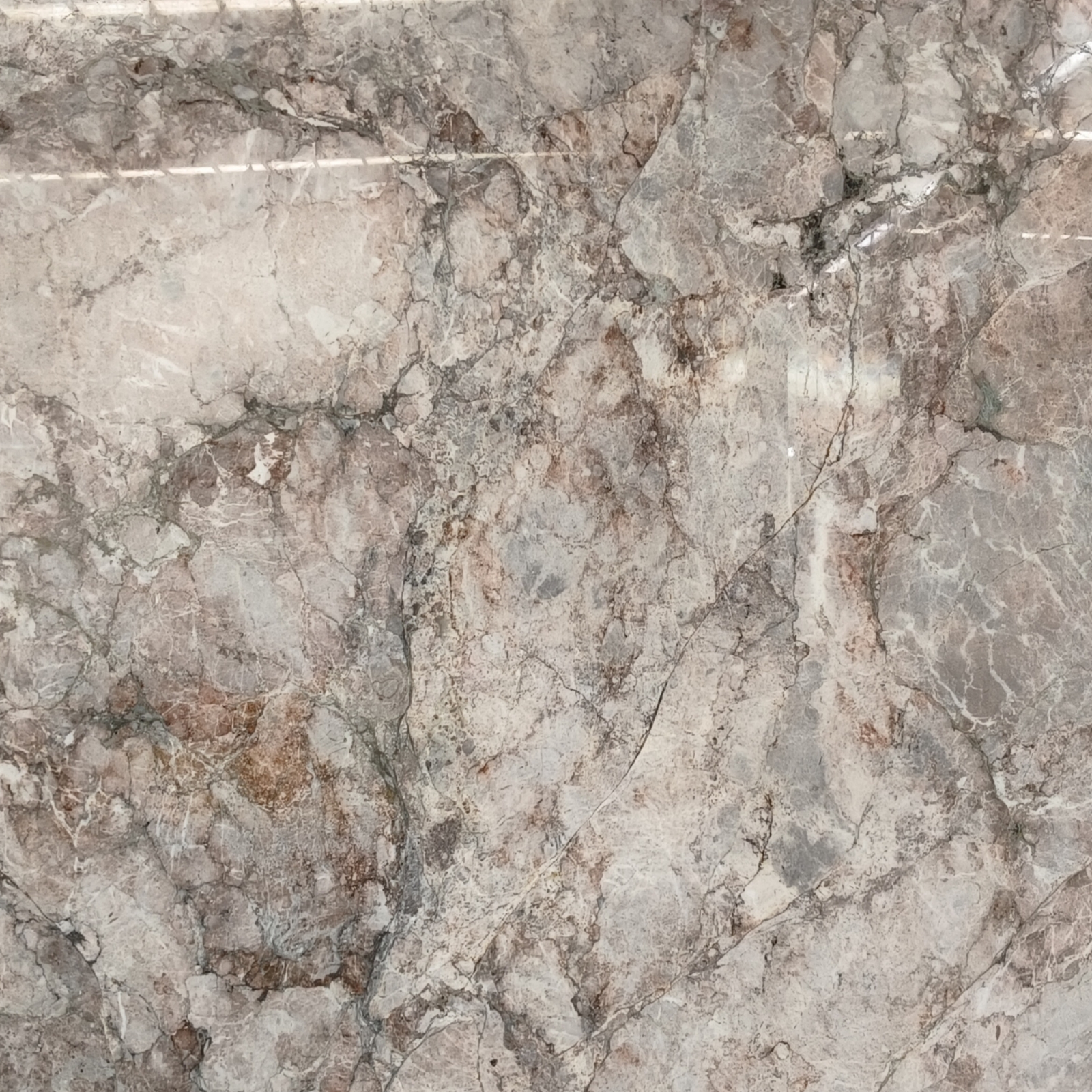
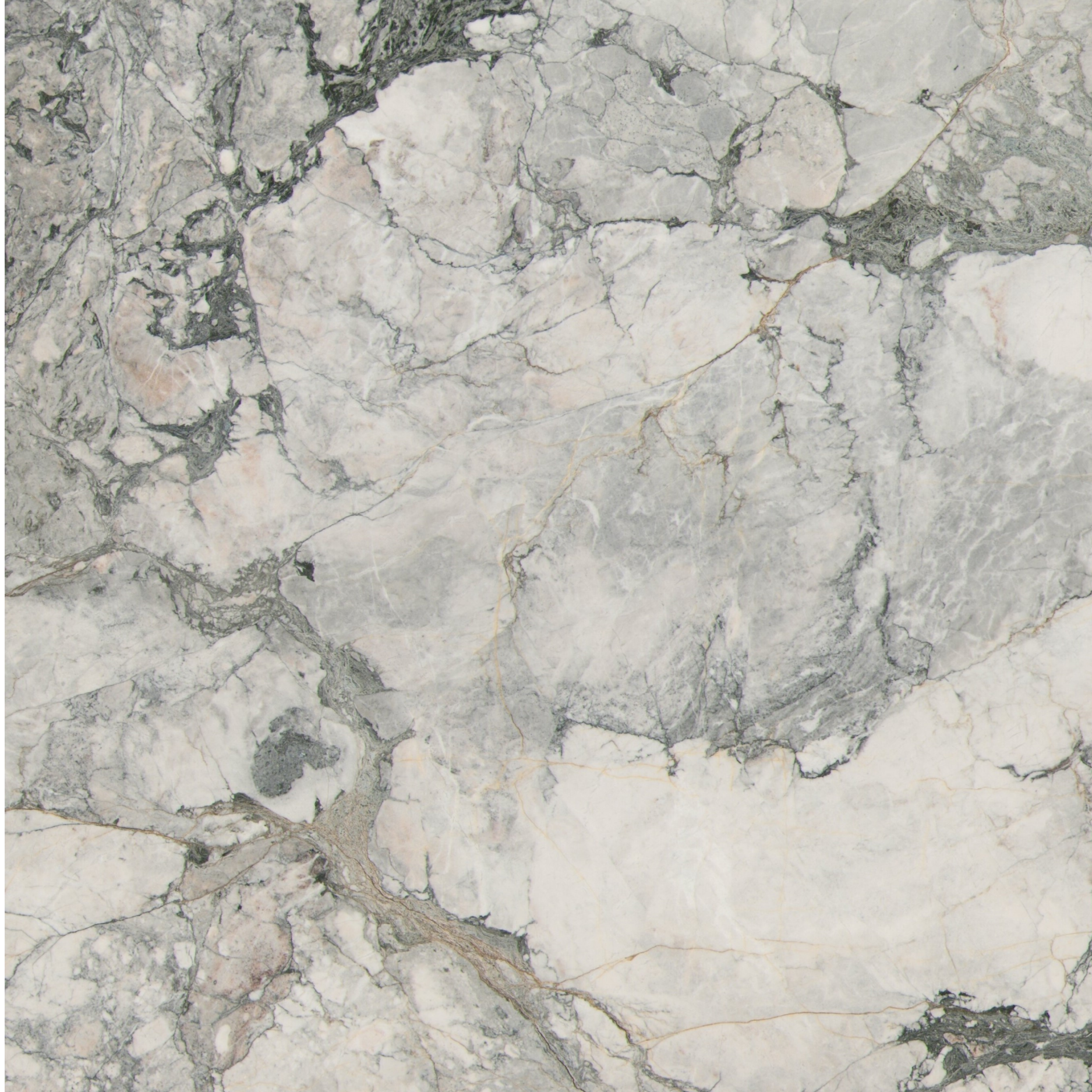
The visual identity of Calacatta Viola is inextricably linked to its dramatic brecciated structure. Unlike traditional Calacatta varieties that feature soft grey or gold veining, Viola is characterized by its bold, cabernet-colored streaks that tear across a creamy white background. This luxury purple Calacatta Viola marble provides a sense of historic Roman opulence, making it a favorite for “old money” aesthetics and modern maximalist bars. The contrast is sharp and unforgiving, requiring a high level of expertise during the book-matching process to ensure the veins flow seamlessly across vertical and horizontal transitions.
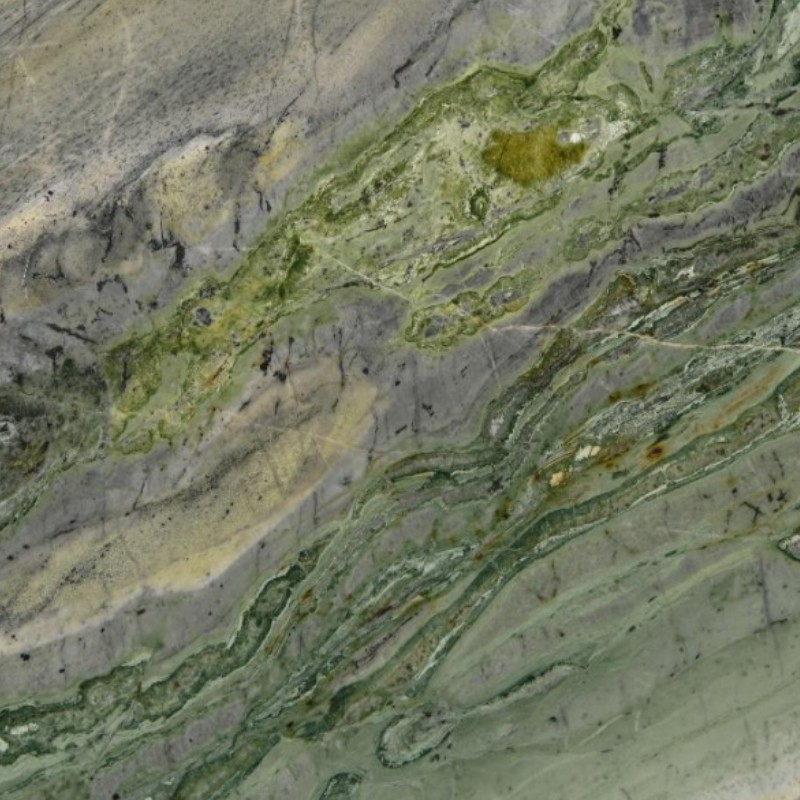
In contrast, Four Season Green Marble (often referred to as Printemps) offers a completely different atmospheric energy. It is a symphony of verdant textures, ranging from deep forest greens to vibrant lime accents, interspersed with veins of white, black, and occasionally subtle pink. This stone captures the essence of a living landscape, making it ideal for biophilic design projects that seek to bring the outdoors in. While Viola relies on high-contrast drama, Four Season Green offers complexity and depth, appearing almost like an impressionist painting when viewed in large format slabs.
For designers looking for a more muted application of these tones, incorporating white marble tiles with Viola accents can provide a balanced approach without overwhelming smaller spaces. The choice between green and purple often boils down to the “emotional temperature” of the room: green fosters tranquility and growth, while purple/burgundy evokes power, passion, and heritage.
Geological DNA: How Nature Crafts These Masterpieces
The unique appearance of Caracata Viola marble is the result of millions of years of intense geological pressure that has broken existing marble into fragments (breccia). which were then cemented back together by mineral-rich sediments containing iron oxides. This process creates the “splattered” vein effect that has made it a staple of Italian architecture for centuries. When sourcing this material, architects often review an Icestone company profile to ensure the factory has direct access to premium blocks from the Breccia Medicea quarries, as the intensity of the purple veining can vary wildly between different layers of the mountain.
Four Season Green Marble, while equally prestigious, often originates from specialized quarries that yield a complex mineral mix of chlorite, epidote, and calcite. The green coloration is primarily due to the presence of chlorite minerals, which were folded into the limestone during metamorphic stages. This stone is technically a “polychrome” marble, meaning it contains multiple distinct mineral colors that crystallized at different temperatures. Because of this complexity, the stone often features micro-fissures that are stabilized at the factory with high-grade epoxy resins—a standard industry practice that enhances the stone’s structural integrity without compromising its natural beauty.
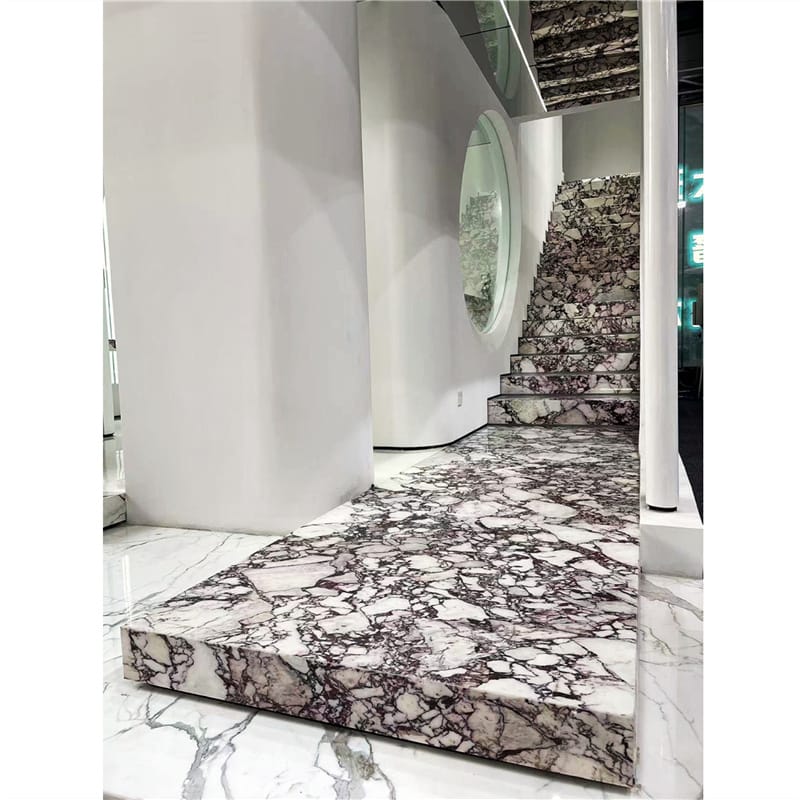
Calacatta Viola Stair
Technical Specification Comparison for Luxury Tenders
When selecting between these materials for a commercial tender, aesthetic appeal must be validated by hard data. The following table provides a comparative analysis of the physical properties of these two stones based on average ASTM testing results.
| Property | Calacatta Viola Marble | Four Season Green Marble |
| Bulk Density ($kg/m^3$) | 2,720 | 2,810 |
| Water Absorption (%) | 0.12 – 0.18 | 0.15 – 0.22 |
| Compressive Strength (MPa) | 105 | 118 |
| Flexural Strength (MPa) | 12.5 | 14.2 |
| Mohs Hardness | 3 – 3.5 | 3.5 – 4 |
As shown in the data, Four Season Green tends to be slightly denser and offers higher compressive strength, which may make it marginally more resilient in high-traffic flooring applications. However, both stones are classified as “soft” stones in the context of Mohs hardness compared to granite or quartzite. This means they are susceptible to scratching and acid etching. If you are a procurement officer looking for specific test reports or certification documents for a large-scale project, we encourage you to contact us to speak with our technical engineering team for customized data modules.
Durability and Maintenance Comparison for Kitchen Islands
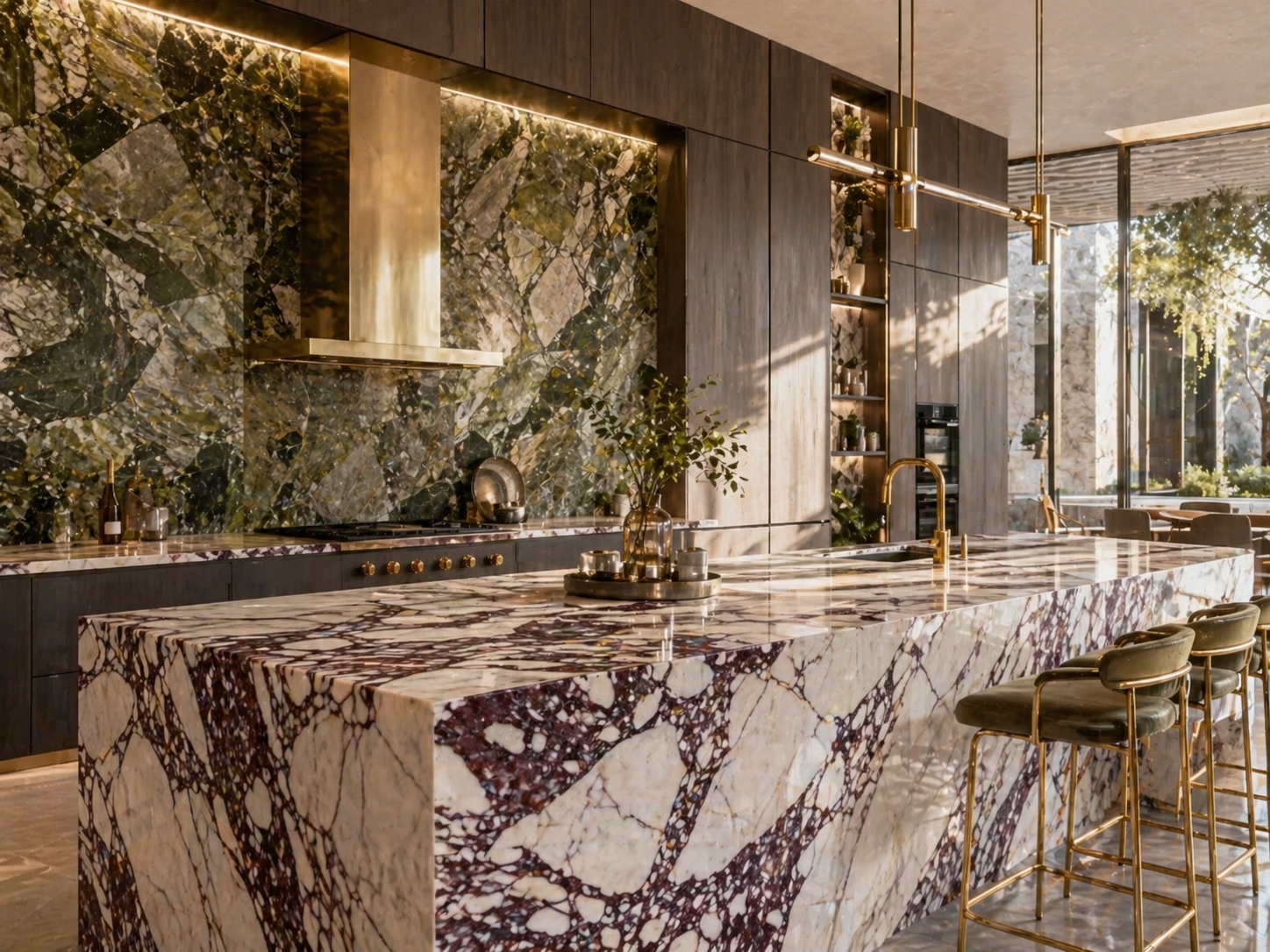
The kitchen island is the ultimate testing ground for natural stone. Both Four Season Green and Calacatta Viola are calcite-based marbles, meaning they will react with acidic substances like lemon juice, vinegar, or wine. This reaction causes “etching,” a dulling of the surface finish. For B2B buyers, the decision often rests on which stone “hides” use-wear more effectively. Viola’s busy brecciated pattern and dark veins are excellent at masking minor etches, whereas the lighter white backgrounds can highlight stains if not properly sealed.
Four Season Green, with its intricate mossy textures, is also remarkably forgiving. The variation in color provides a natural camouflage for the daily realities of a working kitchen. When procuring marble slabs, designers should always specify a premium impregnating sealer. In high-use commercial hospitality settings, a “leathered” or “honed” finish is often recommended over a high-polish finish, as these textures do not show etches as clearly under direct lighting, significantly reducing long-term maintenance costs for the end-user.
Rarity and Market Value Analysis for Luxury Tenders
The market value of these stones is driven by “yield” and “grading.” Calacatta Viola is a finite resource with a global demand that often exceeds the output of high-quality blocks. Sourcing from a wholesale Calacatta Viola marble supplier requires advance planning, as “Extra” grade slabs—those with the perfect balance of white background and vivid purple veining—command a significant premium in the luxury market.
Four Season Green Marble has seen a meteoric rise in value over the last 24 months. Once considered a niche “designer” stone, it is now being specified for multi-unit luxury developments from Dubai to New York. Its price point is generally comparable to mid-to-high-tier Calacattas, but its “visual ROI” is often higher because of its unique, forest-like appearance. For developers, the goal is to secure “factory direct” pricing to remain competitive in luxury tenders, where the cost of stone can account for 5-10% of the total interior budget.
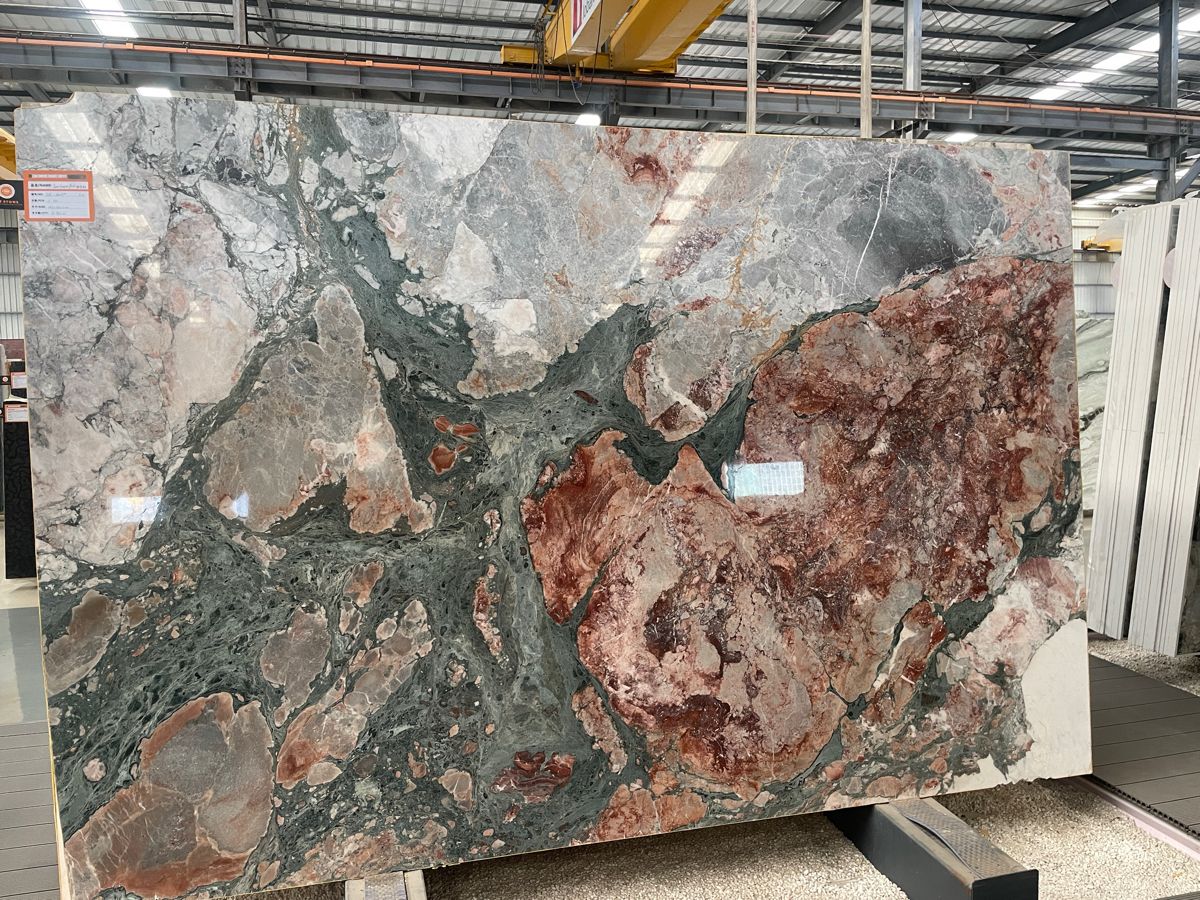
Four Season Green Marble Supplier
Buying Guide: How to Inspect and Procure Premium Slabs
Procuring statement marble involves more than just selecting a sample. The “Slab View” is essential. For Four Season Green, the distribution of pink and white veins can completely change the look of a room. A 2026 ultimate guide to Four Season Green Marble would emphasize the importance of “sequence cutting.” When buying in bulk, ensure that the slabs are numbered in the order they were cut from the block to allow for perfect book-matching.
For Calacatta Viola, the primary risk is “dead spots”—large areas of plain white or muddy grey that lack the characteristic purple veining. A professional dry-lay inspection at the factory floor is non-negotiable for B2B transactions. This allows the buyer to verify the vein flow and identify any structural anomalies before the crates are sealed for international shipping. Relying on a trusted partner for wholesale marble slabs ensures that the grading you pay for is exactly what arrives on the job site, mitigating the risk of expensive project delays or material rejections.
Sustainability and Regulatory Standards in Stone Sourcing
As ESG (Environmental, Social, and Governance) criteria become standard in architectural tenders, the origin of your marble matters. Natural stone has a significantly lower carbon footprint over its lifecycle compared to synthetic materials like quartz or large-format porcelain, which require massive energy inputs for resin production and kiln firing. However, the transport of heavy slabs contributes to the “embodied carbon” of a project.
Leading manufacturers are now adopting water-recycling systems in their fabrication facilities and prioritizing quarries that utilize diamond-wire cutting rather than outdated blasting methods. The 2026 trend of Four Season Green Marble reflects a broader move toward “Biophilic Luxury,” where the sustainability of the material is just as important as its aesthetic. Architects looking for LEED certification should request “Material Ingredient Reporting” to confirm that the resins and sealers used in the factory meet low-VOC emission standards.
The Verdict: Which Stone Wins?
In the battle between Four Season Green Marble and Calacatta Viola, the winner is determined by the project’s “narrative.” If the goal is to create a space of vibrant, organic energy that feels like a permanent spring, Four Season Green is the undisputed champion. It is a stone of life, growth, and complexity.
However, if the project demands a sense of timeless power, historical weight, and high-fashion drama, Calacatta Viola remains the gold standard. Its purple veins are a signature of luxury that is recognized globally. For B2B buyers, the key is to work with a factory direct partner who can provide the technical support, dry-lay inspections, and logistics expertise required to bring these geological masterpieces from the quarry to the final installation with zero compromise on quality.
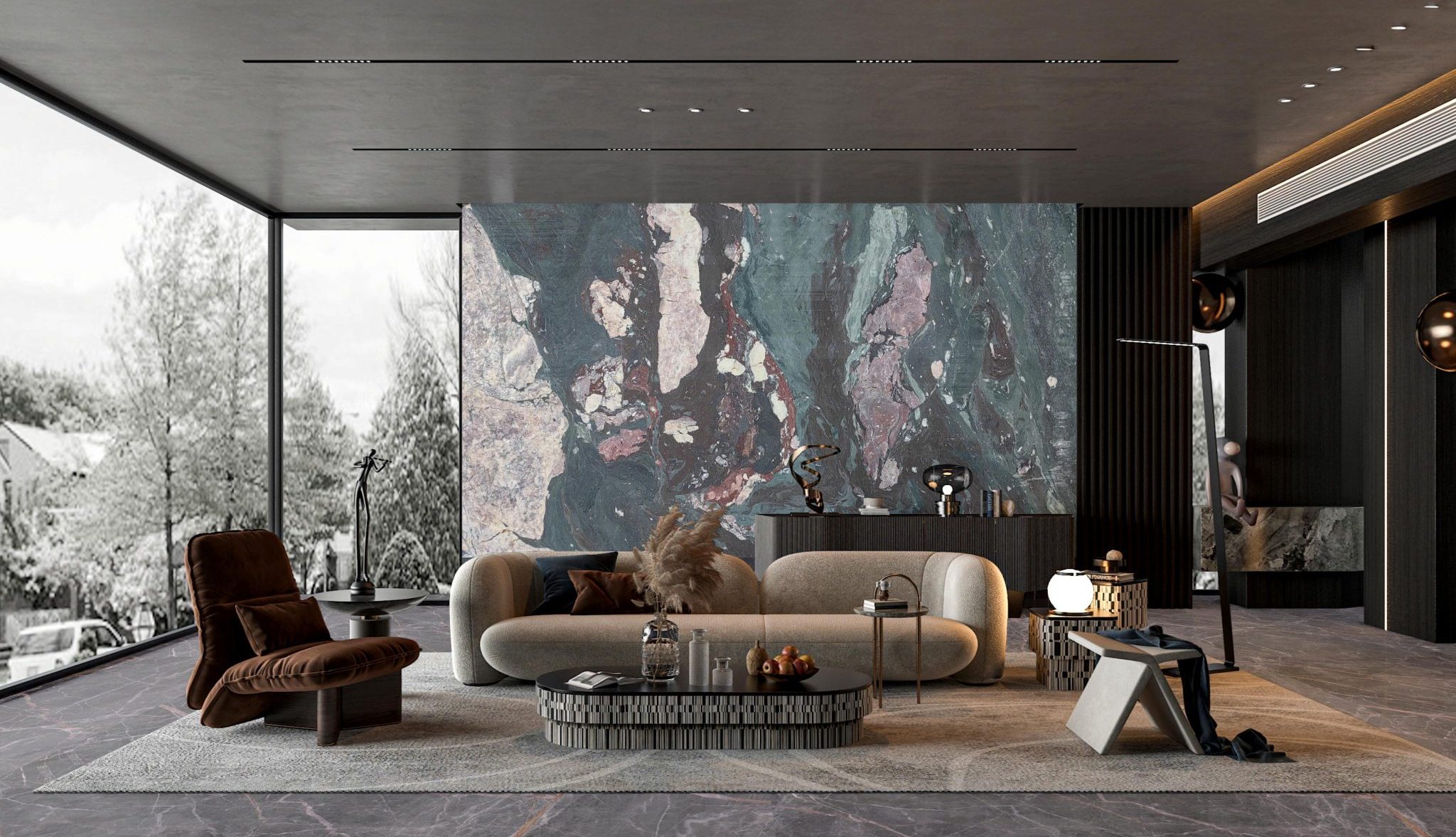
Four Seasons Green Marble Background Wall
FAQ
1. How does the price of Four Season Green Marble compare to Calacatta Viola?
In the 2026 luxury market, Calacatta Viola “Extra” grade generally commands a higher price point due to its historic Italian pedigree and restricted quarry output. However, Four Season Green Marble is rapidly closing the gap. While Viola is priced based on the clarity of its white background and the intensity of its burgundy breccia, Four Season Green is valued for its complex mineral diversity. For B2B procurement, sourcing factory direct can mitigate the “rarity premium,” but both stones remain in the top-tier price bracket for luxury tenders.
2. Is Calacatta Viola or Four Season Green more durable for high-traffic kitchen islands?
Both materials are calcitic marbles with similar technical profiles. Four Season Green Marble technically offers a slightly higher compressive strength and density ($2,810 kg/m^3$), making it marginally more resistant to mechanical impact. However, both will etch when exposed to acids. For kitchen applications, the choice depends on use-wear camouflage; the busy, fractured pattern of Calacatta Viola is exceptionally effective at hiding minor surface etches, while the deep greens of Four Season Green mask organic stains more effectively than pure white marbles.
3. What are the specific sealing requirements for these luxury marble slabs?
To maintain E-E-A-T (Experience, Expertise, Authoritativeness, and Trustworthiness) in stone maintenance, a premium impregnating sealer is non-negotiable. For wholesale natural marble, we recommend a solvent-based penetrating sealer applied every 6 months in high-use commercial zones. Unlike topical sealers that sit on top, these penetrate the pores to provide a hydrophobic barrier against wine, oils, and coffee, which is critical for protecting the delicate white backgrounds of Calacatta Viola and the chlorite-rich veins of Four Season Green.
4. Can I source wholesale marble slabs directly from a manufacturer for a single project?
Yes, reputable manufacturers like Icestone offer B2B procurement models that allow developers and architects to source factory direct for specific large-scale residential projects. This model is preferred because it allows for “Single Block” sourcing, ensuring that all slabs used in a project—such as book-matched feature walls and kitchen waterfalls—originate from the same geological layer, guaranteeing a level of color and vein consistency that boutique local showrooms cannot always provide.
5. Why is a dry-lay inspection critical before international shipping?
A dry-lay inspection is the most effective risk-mitigation tool in B2B stone procurement. It involves laying out every cut-to-size piece or full slab on the factory floor to simulate the final installation. This process allows the buyer to verify vein continuity across joints, identify any “dead spots” or undesirable mineral inclusions, and ensure that the book-matching meets the architectural vision. For intercontinental projects, this step is essential to prevent the massive costs and delays associated with replacing rejected materials after they have already arrived on-site.
References
-
ASTM C503/C503M: Standard Specification for Marble Dimension Stone, ASTM International Standards Research.
-
Natural Stone Institute (NSI): Dimension Stone Design Manual: Selection and Technical Data for Calcitic Marbles, 2026 Edition.
-
Institute of Geosciences (IGG): Geological Formation of Tuscan Breccias and the Mineralogy of Calacatta Varieties, National Research Council of Italy.
-
Journal of Metamorphic Geology: The Role of Chlorite and Epidote in the Pigmentation of Polychrome Green Marbles, Global Geological Society.
-
Marmomac Industry Report: Global Luxury Stone Trends: The Rise of High-Chroma Statement Slabs in Modern Architecture, Verona Exhibition Center.
-
U.S. Green Building Council (USGBC): LEED v5 Sustainability Requirements for Natural Stone in Commercial Construction.
-
Stone Care Professionals Association (SCPA): Comparative Study on Acid Etching and Stain Resistance in Calcite-Based Stones, Technical Bulletin 2025-B.
-
International Journal of Architectural Heritage: Historical Significance of Breccia Medicea and Viola Marble in Roman and Renaissance Architecture.
Strategic Marble Selection Insight: From Design Vision to Procurement Execution
What defines the real difference between Four Season Green Marble and Calacatta Viola Marble?
At a surface level, the distinction appears purely visual—green versus purple. However, in high-end architectural practice, the decision extends into supply chain reliability, slab consistency, installation complexity, and long-term performance. Four Season Green Marble represents organic continuity and natural layering, while Calacatta Viola Marble delivers high-contrast drama rooted in classical European stone heritage.
Why are these stones considered “Hero Materials” in 2026 luxury projects?
The global shift toward narrative-driven interiors has elevated marble from a background finish to a primary design anchor. Architects now specify statement slabs to define spatial identity, especially in hotel lobbies, branded residences, and bespoke villas. This trend aligns with the increasing demand for high-end marble for luxury projects and visually distinctive materials that enhance property value and brand perception.
How should buyers evaluate risk when sourcing these materials?
The most common procurement risks include slab inconsistency, vein mismatch, and unexpected structural imperfections. For Calacatta Viola Marble, the risk lies in uneven purple distribution or “dead zones.” For Four Season Green Marble, excessive variation in mineral composition can affect visual harmony. This is why working with a verified natural stone factory wholesale marble supplier and conducting a full dry-lay inspection is essential for quality assurance.
What are the best application strategies for each stone?
Four Season Green Marble performs best in spaces requiring warmth and depth—such as spa environments, living rooms, and biophilic interiors. Calacatta Viola Marble is ideal for high-impact installations like kitchen islands, bar counters, and feature walls where contrast and visual drama are desired. In commercial design, combining both materials in separate zones can create a layered luxury experience.
Key considerations before final selection:
- Lighting conditions: Natural vs artificial lighting dramatically affects color perception
- Application type: Flooring, vertical walls, or countertop surfaces require different performance levels
- Maintenance expectations: Both stones require sealing and pH-neutral care routines
- Slab origin: Single-block sourcing ensures visual consistency across large installations
- Fabrication capability: Precision cutting and bookmatching define final visual success
Market trend insight:
The rise of green marble reflects a broader shift toward sustainability and biophilic design, while purple-toned stones like Calacatta Viola align with luxury branding and high-fashion interiors. This dual trend indicates that future projects will increasingly combine emotional storytelling with material performance.
Final decision logic for B2B buyers:
If your project prioritizes calm, natural luxury with flexible design integration, Four Season Green Marble offers long-term versatility. If your goal is to create a bold, iconic visual identity with immediate impact, Calacatta Viola Marble provides unmatched statement value. The ultimate success of either choice depends not only on the material itself, but on selecting the right marble slabs manufacturer who can deliver consistency, technical support, and global logistics reliability.
 By
Xiamen Ice Stone Imp.& Exp. Co., Ltd.
By
Xiamen Ice Stone Imp.& Exp. Co., Ltd. Feature Product
-
 Sakura Marble: A Timeless Beauty and Elegant fo...
Why Choose Cambodian Sakura Marble? 1. Unmat...
-
Morse Code Natural Marble Slabs and Tiles
Dimensions and Specifications Morse Code...
-
Vivid Brilliant Natural Marble of Prague Green
How to pack and load ? 1. Fumigated wooden b...