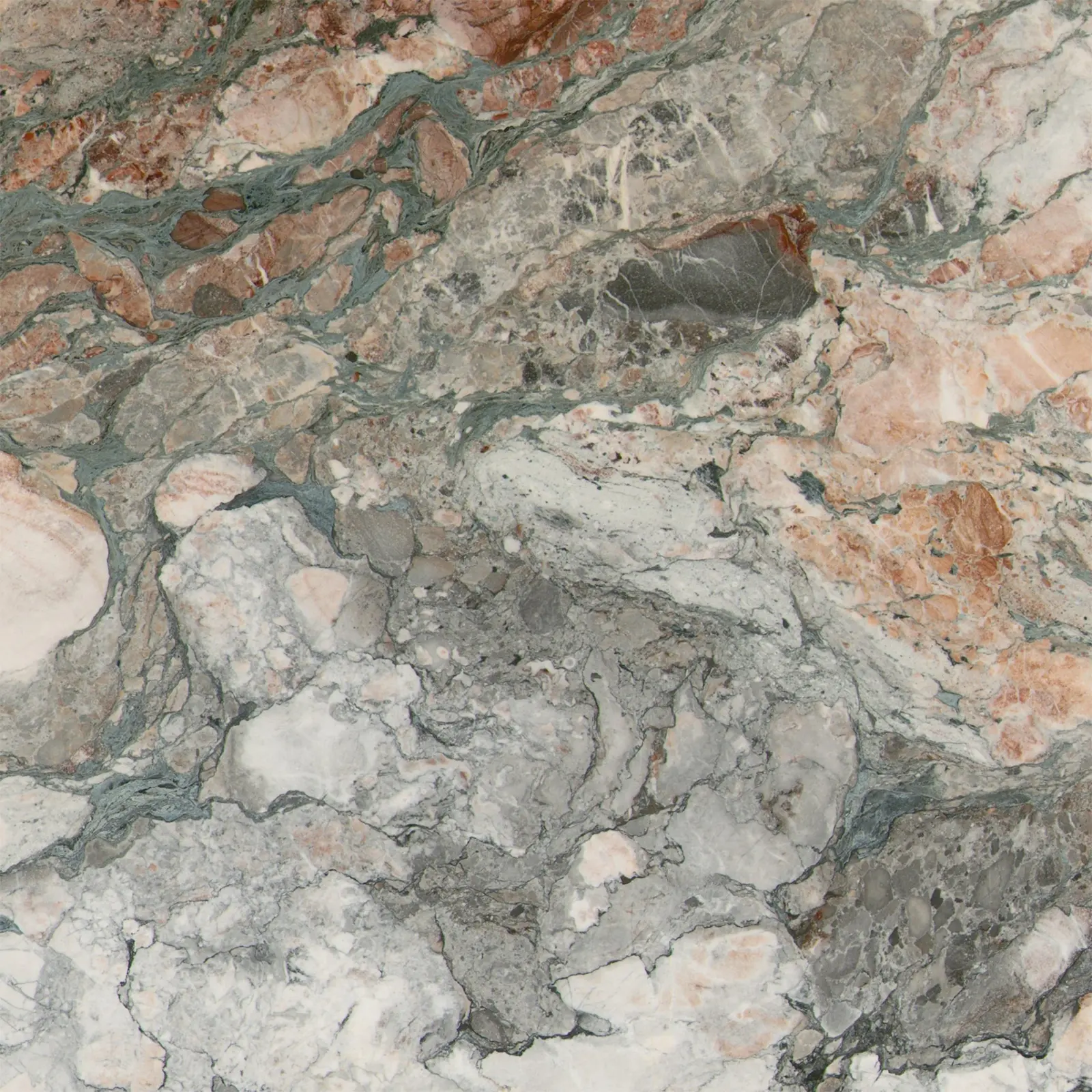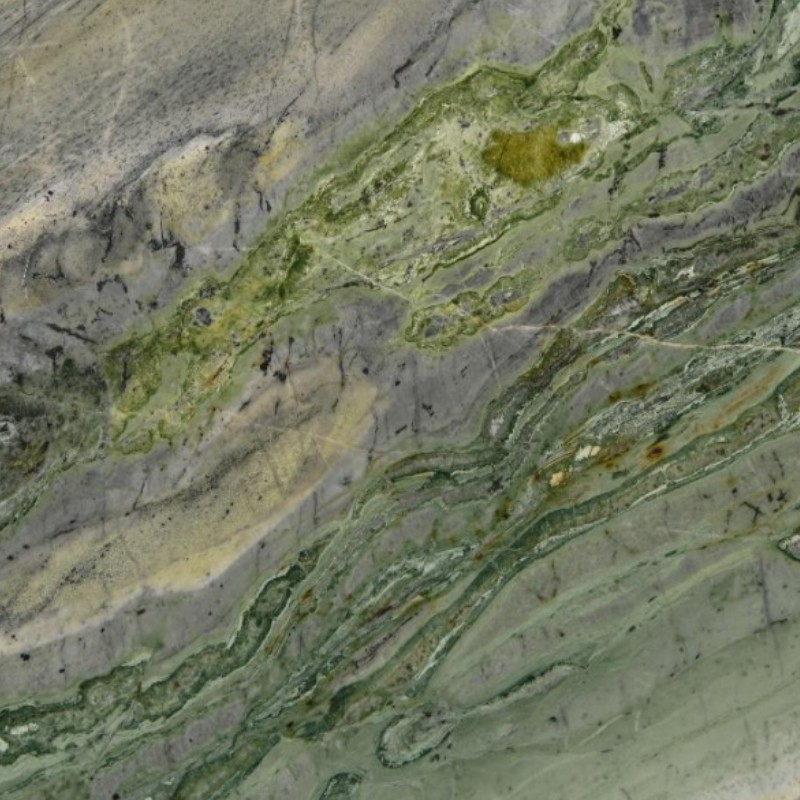
What Really Defines a Premium Green Marble Floor
“Everyone on the project loves the mood board,” the architect told the owner.
“But the real question is: which green marble floor will still look calm, luxurious, and stable after ten years of guests, luggage trolleys, and cleaning machines?”
That is where most buyers start to feel uneasy. The samples on the table all look beautiful. The supplier brochures sound similar. Online photos are heavily edited. And yet you have to sign off on a stone that will define the lobby, living area, or gallery for decades.
This guide is written to bridge that gap. It combines project experience, industry research, and case studies from icestone’s supply network to show you how to choose a truly premium green marble floor—one that performs as well as it photographs.
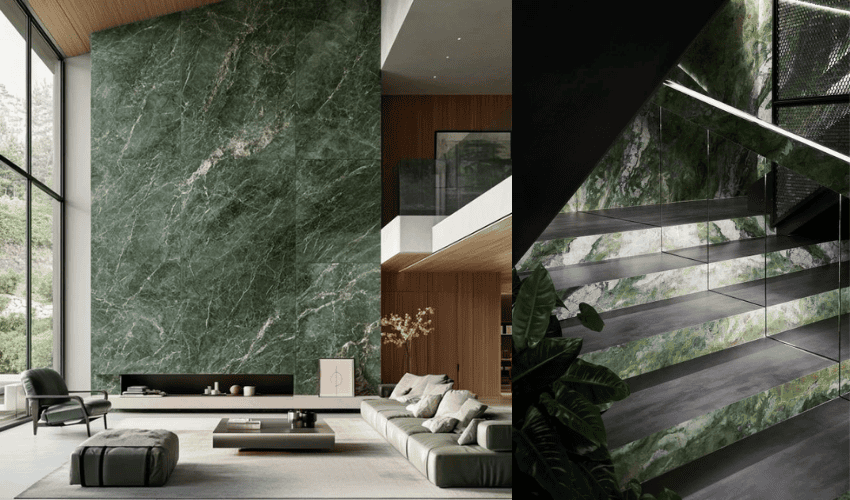 Four Season Green Marble Flooring |
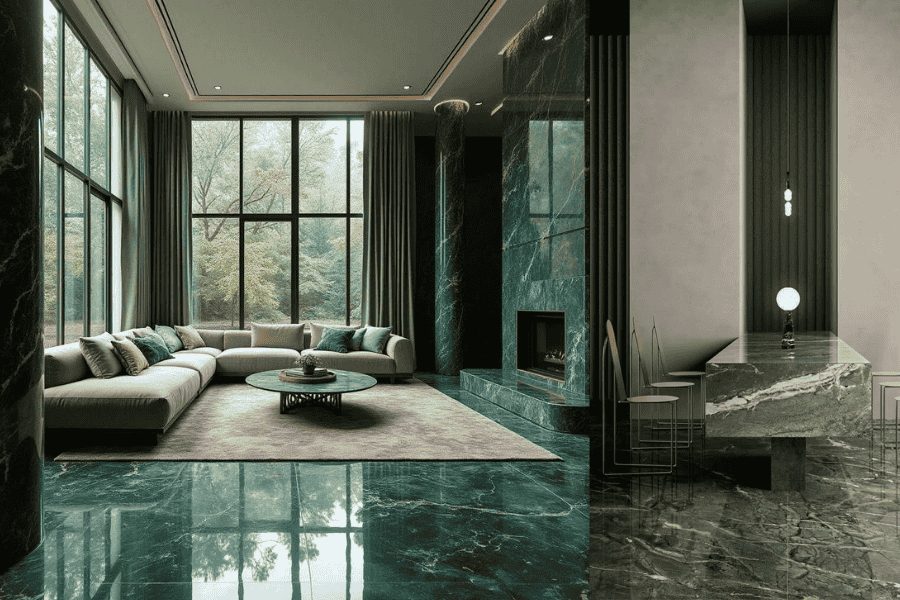 Green Marble Flooring |
Why Green Marble Floors Are Back On Designers’ Shortlists
Green marble went through a quiet period in mainstream interiors, but it never disappeared from high-end hospitality and bespoke residential work. Over the last five years, design trend reports and online search data show a steady rise in queries related to “green marble flooring”, “jade-inspired interiors”, and “biophilic luxury finishes”.
Why the comeback?
-
Green connects strongly to nature, calm, and spa-like wellbeing.
-
It pairs easily with warm metals, oak, walnut, and off-whites.
-
In large surfaces, it delivers drama without the harshness of pure black or very cold greys.
However, not all green stones behave the same way. Mineral composition, grain tightness, and veining intensity all affect durability and visual stability. For example, a refined, balanced stone such as Ming Green marble offers a different performance and mood compared with heavily banded or brecciated greens. Understanding those differences is the first step to specifying a floor that will age gracefully instead of becoming a maintenance headache.
Understand Your Green Marble Options, Not Just Their Names
In many showrooms, buyers are shown a board of green samples with romantic names and little technical context. Yet the differences between them are crucial when you’re covering hundreds of square metres.
Some key families you’ll encounter:
-
Cool, light-toned greens with fine grain and gentle movement. These are ideal when you want a calm, spa-like green marble floor that does not dominate the room.
-
Deep emerald and forest greens with stronger veining. These bring drama and contrast but require careful layout and lighting.
-
Translucent stones and onyx-like materials that can be backlit for feature areas.
Those last options are particularly powerful when you want the floor to flow into dramatic walls, counters, or bar fronts. Translucent materials similar to backlit green onyx slabs can be used for focal points, stair fronts, or reception desks that visually connect with a quieter green marble floor in adjacent spaces.
When reviewing options, always ask your supplier for:
-
Typical variation ranges across slabs, not just “best case” photos.
-
Recommended thickness for flooring in commercial settings.
-
Absorption and hardness values compared with common benchmarks.
That information matters more than the marketing name on the sticker.
Performance, Maintenance, and Real-World Durability
Beautiful samples are easy. Long-term performance is harder. Independent flooring surveys in hotels and public buildings often find that over 60% of complaints about natural stone floors relate to:
-
Visible etching and staining.
-
Uneven gloss after repeated cleaning.
-
Slipperiness in wet or transitional zones.
The stone itself is rarely the only culprit. Poor sealer choice, incorrect cleaning chemicals, and aggressive pads or brushes all play a part. But some stones cope better than others. Denser, more compact Marble Slabs with balanced mineral content tend to resist staining and mechanical wear more effectively.
Colour trends also influence perceived performance. In recent years, industry news and design coverage have highlighted bold tones such as those discussed in icestone’s feature on red marble as a new colour trend. Yet many experienced buyers still choose green for floors because slight wear and patina are less visually aggressive over time than on colder whites or very dark blacks.
From a maintenance perspective, ask your supplier to provide:
-
Recommended sealers and test data for common staining agents.
-
Slip-resistance values for the actual finish (honed, brushed, leathered, etc.).
-
A cleaning protocol that your facilities team can realistically follow.
If a supplier cannot provide this information, think carefully before trusting them with a major green marble floor installation.
Matching Stone to Space: Where Each Green Marble Works Best
The same stone that looks perfect in a boutique bathroom might be a poor choice for an airport concourse. Good specification work starts by matching green marble floor options to the real stresses of each space.
High-Traffic Public Areas
For lobbies, corridors, and retail environments, you need tight-grained, mechanically strong stones with moderate patterning. Subtle movement hides day-to-day wear without making repairs obvious. Stones with a classic, slightly historical feel—such as Antique Green marble (Raggio Verde)—can work beautifully here when cut and finished correctly.
Residential and Boutique Hospitality
In apartments, villas, or small boutique hotels, you can take more risks with veining and bold bookmatching. Complex greens can become the hero of an entrance hall or open-plan living area, especially when paired with simple walls and furnishings.
Wet Zones and Transition Areas
For bathrooms, pool decks, or entrances exposed to rain, texture becomes just as important as colour. A finely brushed or lightly flamed finish often strikes the best balance between safety and cleanability. Avoid mirror-polished floors close to exterior doors unless you are willing to invest heavily in matting and maintenance.
ESTA case notes on stone flooring in European transport hubs repeatedly show the same pattern: projects that carefully matched stone type and finish to zone function had significantly fewer incidents and lower long-term maintenance costs than those that specified one finish everywhere.
Design and Layout Decisions That Make or Break a Green Marble Floor
Even the best stone can be compromised by poor layout. Buyers should review not only the material choice but also how it will be cut and assembled.
Key decisions to discuss with your designer and supplier:
-
Tile or slab size: Larger formats reduce joints and look more luxurious, but they demand flatter substrates and more careful handling.
-
Vein direction: Consistent direction creates calm; random orientation adds energy but can feel chaotic in big areas.
-
Border and rug patterns: Using a calm field with stronger borders can give structure to open spaces.
To see how these principles translate into real projects, it’s worth studying curated idea collections like icestone’s feature on green marble flooring ideas for modern and traditional homes. You’ll notice that the most successful rooms control three things carefully: the amount of visible pattern per square metre, the relationship between floor and wall colours, and how natural light moves across the surface during the day.
In ESTA’s technical briefings on natural stone interiors, the projects that receive praise nearly always show this level of discipline. They are not just about the stone itself, but about how cuts, joints, and lighting bring out the best qualities of each slab.
Why Buyer–Supplier Collaboration Matters More Than Ever
Once you understand which green marble floor style suits your project, the next challenge is sourcing. Inconsistent quarrying, rushed processing, and inadequate quality control are still the biggest risks for large orders. Colour shifts between batches or subtle thickness variations can turn installation into a costly puzzle.
This is where experienced networks make a real difference. icestone’s export partners, such as Sunhing Stones, specialise in bridging the gap between overseas quarries and on-site installation teams. Their role typically includes:
-
Pre-selecting bundles that match agreed colour and pattern ranges.
-
Dry-laying slabs to check vein flow before cutting them into floor formats.
-
Coordinating packaging, crate sizes, and labeling so installers can follow the intended layout easily.
Recent ESTA news bulletins have highlighted projects where this kind of collaboration—quarry, processor, exporter, and local installer working as one team—reduced on-site waste by more than 20% while improving visual consistency. icestone’s name appears regularly in those case studies, especially on complex hospitality and residential projects where green marble is a key design element.
For buyers, the takeaway is simple: do not treat your stone supplier as a commodity vendor. Treat them as part of the design team. Share plans, 3D views, and lighting concepts early. Ask for mock-ups. And when you are ready to move forward with a premium green marble floor, take the time to contact Sunhing Stones or your chosen partner for a realistic discussion about quarry capacity, lead times, and quality expectations.
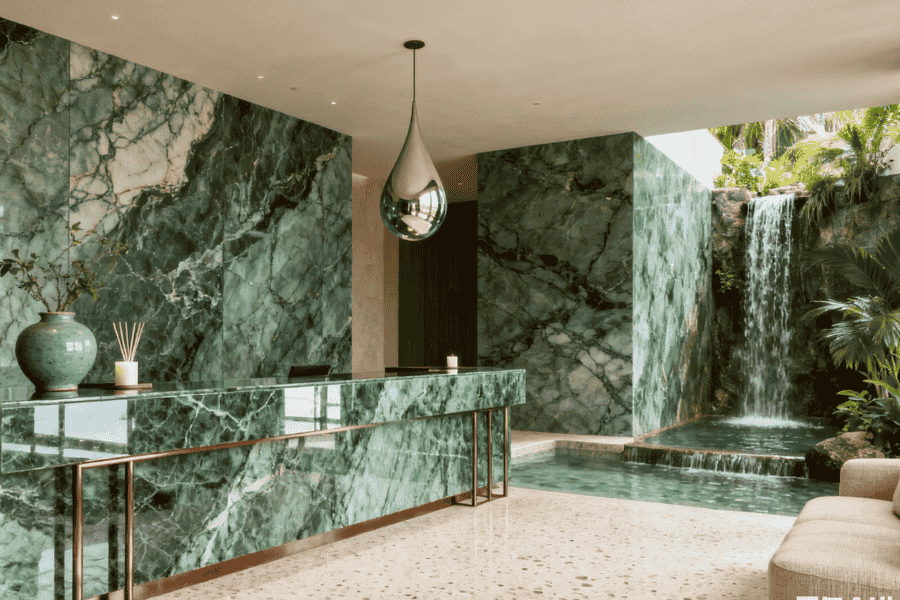
Green Marble for Hotel Lobby
FAQ: Buying a Premium Green Marble Floor
1. Is green marble suitable for high-traffic flooring?
Yes—if you choose the right stone and finish. Dense, compact Marble Slabs with balanced veining and a honed or lightly brushed finish perform well in hotels, offices, and upscale retail. Polished surfaces can still be used in drier, controlled areas, but they require stricter maintenance and good entrance matting.
2. How do I check if a green marble is too “soft” for my project?
Ask your supplier for test data on compressive strength, flexural strength, and water absorption. Compare those values with commonly used marbles in similar projects. You can also request small off-cuts for trial: spill coffee, oil, and mild acid on sealed samples and check how they react after cleaning.
3. Will a green marble floor make my space look dark?
Not necessarily. Many green stones have light backgrounds or subtle white veining that reflect light well. Pairing your green marble floor with warm white walls, good indirect lighting, and light-toned ceilings usually results in a fresh, “garden-inspired” atmosphere rather than a dark one.
4. How much natural variation should I expect in a green marble floor?
All natural stone varies, but a reputable supplier will show you the typical range before you commit. Expect some shift in tone and vein intensity from tile to tile. The goal is to keep that variation within a controlled, harmonious band so the floor reads as intentional design rather than random patchwork.
5. What is the most common mistake buyers make with green marble floors?
The biggest mistake is choosing purely from small samples without seeing full slabs or at least good slab photos. A stone that looks subtle on a 10×10 cm piece can feel very busy across 80 m². Always review larger pieces, mock-up photos, or a small test area on site before final approval.
Turning a Mood Board Into a Long-Life Green Marble Floor
A mood board can capture the feeling you want—calm, luxurious, nature-inspired—but only informed decisions will turn that vision into a green marble floor that performs year after year. The most successful projects do three things consistently:
-
They understand the technical differences between green stones, instead of treating them as interchangeable colours.
-
They design the layout, finish, and maintenance plan around real-world use, not just photo shoots.
-
They work with experienced partners like icestone and its export network to translate design intentions into carefully sourced and processed Marble Slabs.
When you approach buying in this way, a premium green marble floor stops being a risk and becomes an asset. It anchors the space, supports the architecture, and tells a story that still feels fresh a decade later—long after trend hashtags have moved on.
Designing or selecting a green marble floor is no longer just an aesthetic decision—it is a technical and strategic one. As Dr. Elena Marković, a materials specialist referenced in several ESTA training papers, explains: “Natural stone succeeds when its mineral structure, finish, load conditions, and installation logic are treated as one integrated system.” Her statement mirrors what icestone’s global project experience consistently demonstrates: the stones that age gracefully are those chosen through disciplined evaluation rather than visual preference alone.Across hospitality, commercial, and high-end residential work, long-term success correlates strongly with three factors: choosing stones with predictable variation ranges, controlling slab layout and finish selection, and partnering with suppliers who manage quarry consistency and pre-layout matching. These principles are visible in icestone’s case studies, where stable color families and correctly balanced veining create floors that retain their elegance years after installation.
Ultimately, a premium green marble floor is both a design statement and a performance commitment. When buyers combine scientific criteria, supplier transparency, and thoughtful layout planning, the result is a surface that not only enhances architecture on day one but continues to express calm luxury long into the future.