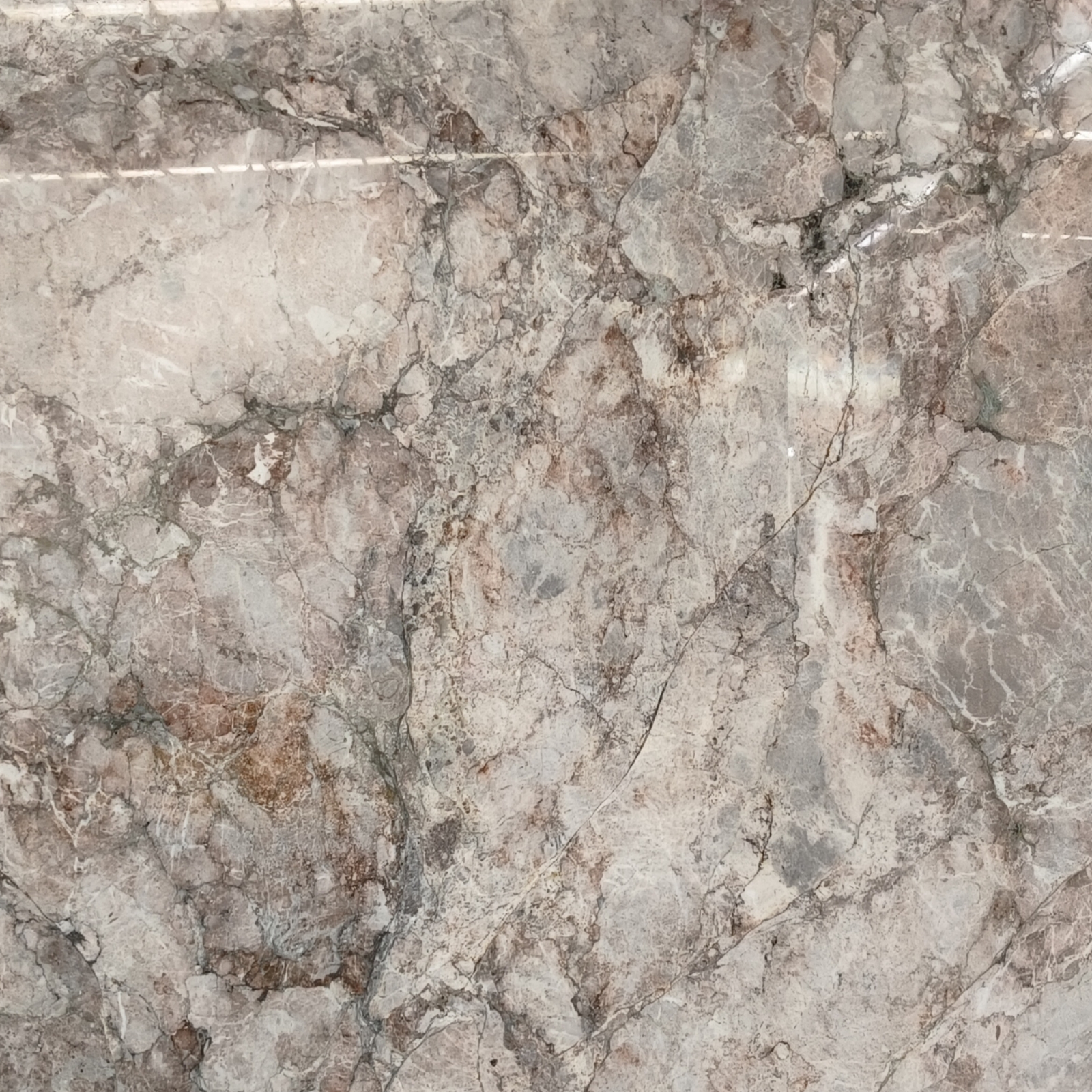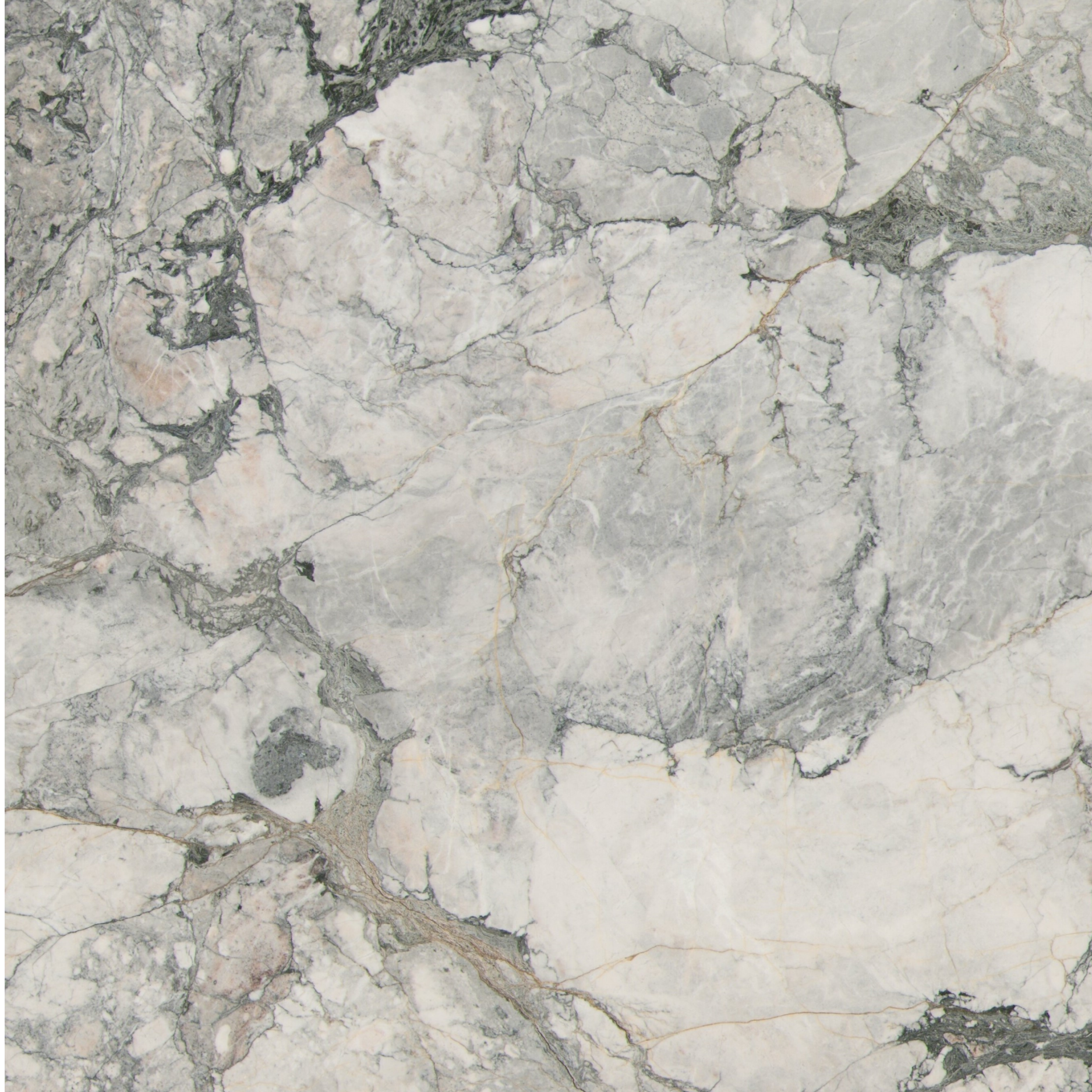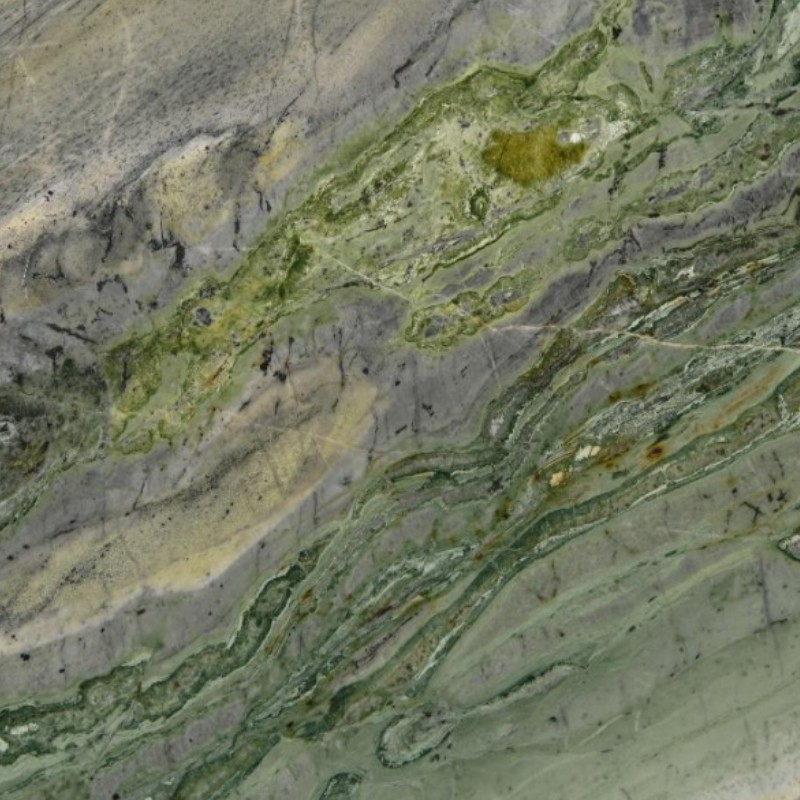
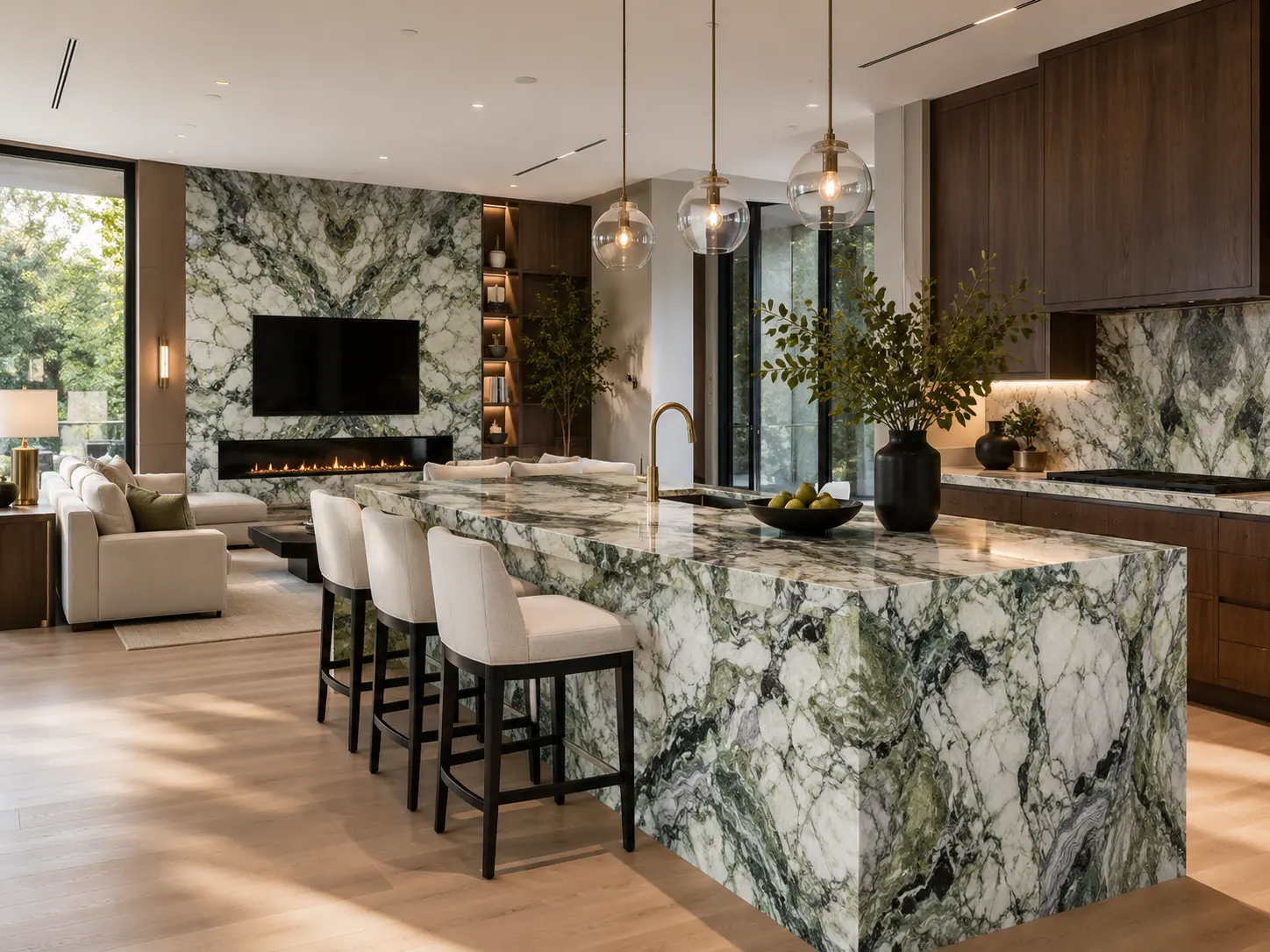
Few natural stones create the same immediate visual reaction as Ice Connect Marble. Instead of the relatively predictable background and veins associated with conventional white marble, this material can combine bright white fields with emerald-green movement, grey transitions and dramatic black lines. The result is expressive rather than quiet, which explains why designers often consider it for luxury kitchen islands, bookmatched walls, reception counters, bathrooms, fireplaces and custom furniture.
That beauty, however, creates a procurement challenge. Ice Connect Marble is not a printed surface with repeatable graphics. It is natural stone. Two slabs from different blocks can communicate very different design moods, even when both are commercially sold under the same material name. A small sample therefore cannot tell a buyer everything about vein direction, color concentration, repaired areas or cutting yield.
Buyers beginning with the material itself can review a current Ice Connect Marble slab reference to understand its characteristic white, green, grey and black movement, typical slab formats and common design uses before moving into detailed project selection.
This distinction matters for architects, stone distributors, importers and contractors. A hotel feature wall may require sequential slabs with strong symmetry. A kitchen island may need one exceptionally clean slab with enough usable area for the entire layout. A distributor may instead prioritize commercially attractive patterns across several bundles. In each case, the best slab is not automatically the slab with the strongest veins. It is the slab that matches the application, cutting plan, design intent and acceptable level of natural variation.
Supplier capability also becomes important when the order moves beyond simple slab purchasing. Buyers sourcing internationally may need block selection, slab photography, quality classification, resin treatment information, polishing, dry lay, cut-to-size fabrication, crate numbering and export packing. Reviewing the background and operating capability of an established natural stone supplier can therefore be useful when comparing who is equipped to manage high-value marble rather than merely quote a price per square meter.
The objective of this guide is not to tell every buyer that Ice Connect Marble is the right material. It is to show where the material performs visually, where maintenance requires greater attention, what buyers should inspect and when another stone may be a more rational choice. That decision-first approach becomes especially important because visually dramatic natural marble can become expensive if the wrong slabs are selected before fabrication.
Before requesting pricing, prepare the approximate quantity, destination, required slab or finished dimensions, thickness, application, finish and reference images. Project drawings are even better. Buyers ready to compare availability can use a marble sourcing consultation to communicate these requirements instead of asking only, “How much is Ice Connect Marble?” A precise RFQ usually produces a far more meaningful answer.
Ice Connect Marble
What Is Ice Connect Marble?
Ice Connect Marble is a decorative natural marble quarried in China and commonly associated with striking combinations of white, green, grey and black. It is also encountered in the market under names such as White Beauty or Ice Jade Marble. These commercial names may vary by supplier, which makes slab photographs and physical approval more important than relying entirely on the trade name.
For buyers comparing this material with other natural stones, it helps to browse broader marble slab collections. Doing so provides context: Ice Connect Marble generally sits toward the dramatic, statement-oriented end of the spectrum rather than the calm and repetitive end. That characteristic explains both its design value and its sourcing risk.
Natural Color and Vein Characteristics
The strongest visual characteristic of Ice Connect Marble is its multi-directional mineral movement. Some slabs show large green areas floating through a pale background. Others may contain heavier black lines or grey clouds. White areas can range from bright and clean to more mineral-rich or translucent-looking sections depending on the block.
Because this variation is natural, “premium grade” should not simply mean “the slab with the most color.” The better question is whether the slab suits the buyer’s design and fabrication plan. For a fireplace wall, bold movement may be desirable. For several identical hotel bathrooms, excessive variation can make room-to-room consistency difficult.
A practical purchasing system should therefore combine visual grading with fabrication criteria. Buyers managing larger orders can use a structured Ice Connect Marble quality benchmark covering pattern, slab integrity, usable area, treatment, finish, dimensions and selection consistency rather than evaluating material from one attractive photograph.
Why Every Ice Connect Marble Slab Looks Different
Natural marble develops through geological processes rather than industrial printing. Mineral composition, pressure, heat and geological movement influence color and pattern. When a block is sliced into sequential slabs, the pattern changes gradually through the block. Slabs cut from another block may have noticeably different vein density, background color and direction.
This is why full-slab approval matters. A 100 × 100 mm sample can confirm basic material identity and finish, but it cannot show whether a three-meter island will cross a dark vein, whether a repaired fissure sits inside a sink cutout or whether two panels will create an attractive bookmatch.
What Does Ice Connect Marble Look Like?
White, Green, Grey and Black Movement
Ice Connect Marble is frequently described through four dominant visual elements: white background, emerald or jade-like green areas, grey transitions and black mineral lines. Their proportions are not fixed. One slab may appear predominantly white with green movement, while another may be significantly darker and more dramatic.
This variation gives designers considerable freedom. Light slabs can work in modern kitchens where the stone should remain sophisticated without overpowering cabinetry. Green-dominant slabs are better suited to dramatic feature walls, bars, boutique hospitality spaces or statement furniture where the stone is intentionally the visual focal point.
How Lighting Changes the Appearance
Natural stone should ideally be evaluated under lighting conditions similar to the finished project. Warm interior lighting can soften white backgrounds and make green areas appear richer. Cool daylight can increase contrast. Highly polished surfaces also reflect surrounding colors, furniture and windows.
For high-value projects, buyers should request slab photos in neutral lighting, close-up images and preferably video. Marketing images with strong color grading are useful for inspiration but should not be used as the only approval document.
Ice Connect Marble Slab Sizes and Thickness
Typical Slab Formats
There is no universal Ice Connect Marble slab size because natural block dimensions vary. Market examples include natural slabs in approximately 160–220 cm lengths and 100–170 cm widths, while processed or combined slabs may reach larger nominal dimensions. These figures should be treated as examples of available production rather than guaranteed dimensions for every batch.
The more important buying metric is usable slab area. A nominally large slab can deliver poor fabrication yield if a major fissure, repaired zone, edge crack or unwanted vein passes through the planned component.
Common Thickness Options
Thickness depends on supplier stock, market convention and application. Common natural marble slab thicknesses include approximately 18 mm, 20 mm and 30 mm. Custom fabrication may involve different finished thicknesses or laminated edge construction.
| Thickness Direction | Typical Application | Buyer Advantage | Buyer Consideration |
|---|---|---|---|
| 18 mm | Wall panels, furniture, selected vanities | Lower weight and material consumption | Requires appropriate support and handling |
| 20 mm | Countertops, walls, vanities, project fabrication | Common balance of weight and fabrication flexibility | Large cutouts still require structural planning |
| 30 mm | Premium islands, stairs, substantial edge details | Stronger visual mass and thicker finished appearance | Higher material weight and freight cost |
| Custom | Furniture, panels, architectural components | Can match specific engineering requirements | May require additional processing and lead time |
Best Applications for Ice Connect Marble
Bookmatched Feature Walls
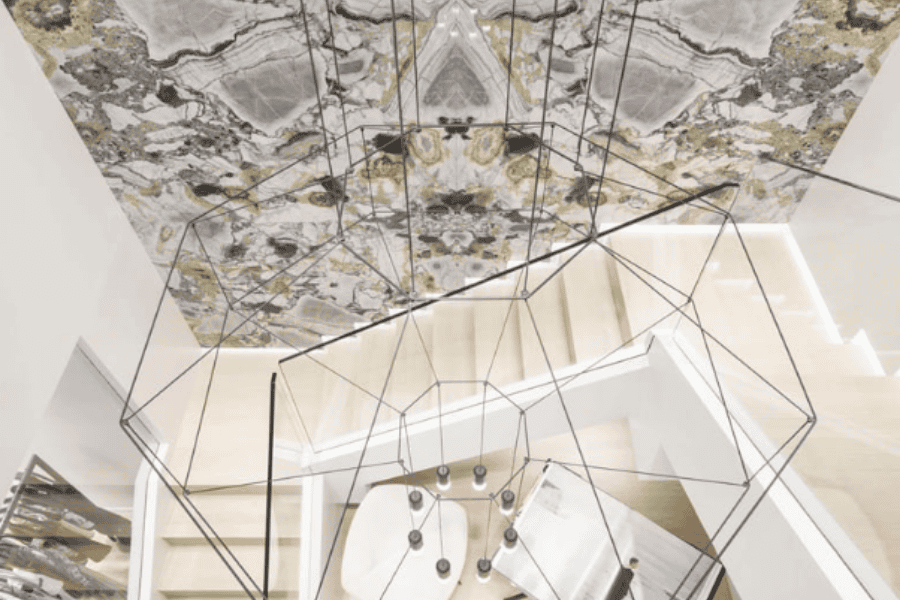
Bookmatching is one of the strongest applications for Ice Connect Marble because the stone already contains broad, expressive movement. Sequential slabs can be opened like pages of a book to create mirrored patterns across a wall. When successful, the effect can resemble an abstract natural painting.
This technique works particularly well for hotel lobbies, luxury villas, reception walls, fireplaces, private clubs and high-end retail interiors. It also requires more planning than simply installing random slabs. Buyers should confirm slab sequence, orientation, panel dimensions, joint position and dry-lay arrangement before cutting.
If the project depends on visual symmetry → choose sequential slabs and approve a dry lay before fabrication.
Kitchen Countertops and Islands
Ice Connect Marble kitchen countertops can create exceptional visual impact, especially on large islands where the pattern has room to develop. Waterfall ends can continue the stone movement from the horizontal surface down to the floor, while mitered construction can create the appearance of a thicker block.
However, marble is not the lowest-maintenance kitchen material. Calcareous stone can react to acidic substances such as lemon juice, vinegar and some wines. This can produce etching, particularly on polished surfaces. Sealing can help reduce staining risk but does not eliminate acid sensitivity.
If the client values natural beauty and accepts maintenance → Ice Connect Marble can be an excellent statement island.
If the client expects near-zero maintenance and frequent exposure to acids → quartzite, granite or another more chemically resistant surface may be more appropriate.
Bathroom Walls and Vanity Areas
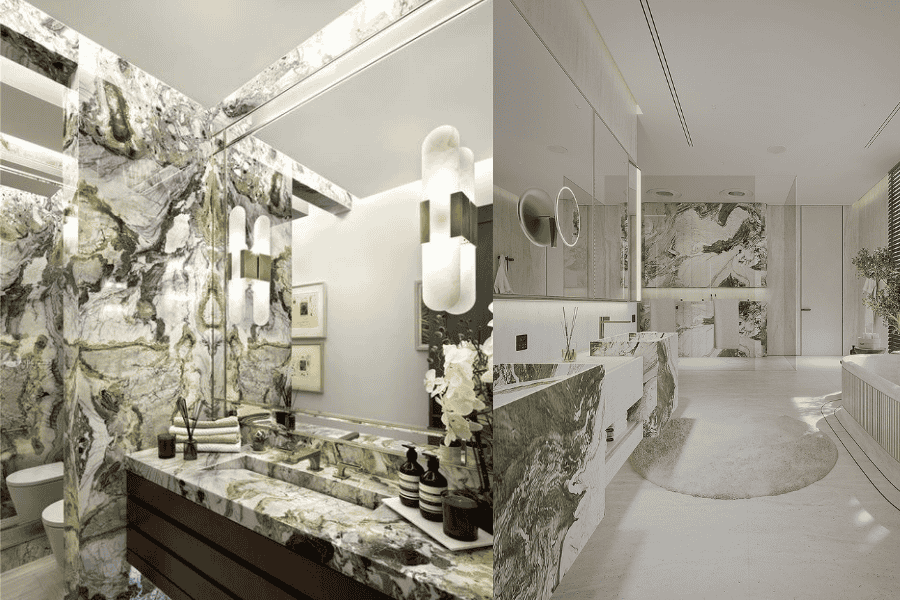
Bathrooms allow dramatic marble to be used with less cooking-related acid exposure. Ice Connect Marble can be applied to vanity tops, tub surrounds, large wall panels, shower walls and decorative niches.
Wet areas still require correct substrate preparation, waterproofing, compatible adhesives, sealing strategy and appropriate joint design. The appearance of polished marble can be particularly luxurious on vertical surfaces, while honed finishes may suit projects seeking a softer contemporary atmosphere.
Flooring and Staircases
Ice Connect Marble may be used for interior flooring and stairs when the specific stone, finish and traffic conditions are appropriate. Buyers should not assume that every visually attractive slab is suitable for every floor. Abrasion, slip resistance, moisture, surface finish and local project requirements should be evaluated.
For large flooring projects, consistency becomes another issue. Strongly varied slabs may create an intentionally artistic floor, but they can also appear mismatched if the installation layout is not planned.
Furniture and Decorative Objects
Statement stone furniture is another strong application. Dining tables, coffee tables, consoles, reception desks, shelving, side tables and custom objects allow dramatic marble to function almost like artwork.
For furniture, vein placement matters more than simple slab grade. A strategically placed green or black movement can make a table memorable, while a poorly placed natural fissure near a narrow edge can increase fabrication risk.
Ice Connect Marble Finishes
Polished Finish
A polished finish increases color depth and creates stronger reflection. It is often the first choice when the design goal is to emphasize the contrast between white, green and dark mineral movement. Polished Ice Connect Marble is particularly effective for wall panels, reception counters, vanities and statement furniture.
The trade-off is visibility. Etching, fingerprints, fine scratches and changes in gloss may be more noticeable on highly polished marble than on some matte surfaces.
Honed Finish
Honed marble has a lower-sheen appearance. It can make dramatic stone feel calmer and more architectural while reducing mirror-like reflection. Designers may prefer it for contemporary bathrooms, walls and selected floors.
Honing does not change the underlying chemistry of marble. Acid sensitivity still exists, even though etching may visually blend more easily with a matte surface.
Satin and Patinated Finishes
Satin, brushed or patinated treatments can create additional tactile character. These finishes may work well for decorative walls, hospitality interiors and furniture where the designer wants the stone to feel less formal than conventional high-polish marble.
Textured Finishes
Bush-hammered, water-treated or other textured finishes may be considered for specialized applications. Because texture changes both appearance and cleanability, finish selection should be connected to the actual project rather than chosen from a sample board alone.
| Finish | Visual Effect | Best Application Direction | Buyer Consideration |
|---|---|---|---|
| Polished | Deep color, strong reflection | Walls, islands, vanities, furniture | Etching and scratches may be more visible |
| Honed | Soft, matte appearance | Bathrooms, walls, selected flooring | Needs appropriate sealing and cleaning |
| Satin / Patinated | Tactile, decorative appearance | Hospitality and custom interiors | Confirm physical sample before bulk production |
| Textured | Stronger surface relief | Special architectural applications | Cleaning and slip characteristics should be reviewed |
Is Ice Connect Marble Suitable for Kitchens?
The answer is yes, but not for every buyer.
Ice Connect Marble can produce a spectacular kitchen island or countertop because the material has the visual depth and uniqueness that engineered surfaces attempt to imitate. Every installation can be different. This exclusivity is exactly what attracts luxury residential clients.
The practical limitation is maintenance. Marble is generally calcareous and can be affected by acids. A polished countertop can develop etched areas if acidic liquids remain on the surface. Oil, wine, coffee and strongly colored liquids can also create staining concerns if spills are not cleaned promptly or the stone is insufficiently protected.
Sealing should be understood correctly: a penetrating sealer can reduce liquid absorption and provide more reaction time, but it does not convert marble into an acid-proof surface.
Choose Ice Connect Marble for a Kitchen If:
- The client prioritizes natural stone character over absolute uniformity.
- The island is intended to be a major visual centerpiece.
- The user accepts normal natural-stone maintenance.
- The slab can be approved before fabrication.
- The fabricator understands fissures, reinforcement and vein-sensitive cutting.
Consider Another Material If:
- The user expects an almost maintenance-free surface.
- The kitchen experiences heavy commercial food preparation.
- Acid exposure is frequent.
- Uniform repetition is more important than natural variation.
Ice Connect Marble vs Other Natural Stone Options
| Material Direction | Main Visual Character | Variation | Maintenance Direction | Best Buying Scenario |
|---|---|---|---|---|
| Ice Connect Marble | White, green, grey and black dramatic movement | High | Requires marble-aware care | Statement interiors and feature surfaces |
| Calacatta-style Marble | White background with grey or gold veins | Medium to high | Requires marble-aware care | Classic luxury interiors |
| Green Marble | Predominantly green with lighter or darker veins | Medium to high | Depends on geological composition | Boutique hospitality and dramatic interiors |
| Granite | Granular natural pattern | Medium | Generally easier in heavy-use settings | High-use counters and floors |
| Quartzite | Natural flowing or crystalline pattern | High | Generally stronger acid resistance than marble | Luxury kitchens requiring higher performance |
The comparison should not be reduced to “which stone is better.” Each material solves a different design and maintenance problem. Ice Connect Marble wins when exclusivity and dramatic color movement are the dominant priorities.
How to Check Ice Connect Marble Quality Before Buying
Approve Actual Slab Photos
Never approve a major Ice Connect Marble order from a small sample alone. Request full-slab images showing slab numbers and dimensions. For high-value selections, obtain close-up photos of repaired areas, fissures, corners and any unusual mineral zones.
Check Vein Direction and Slab Sequence
For bookmatched walls, fireplaces and waterfall islands, slab sequence can be as important as slab quality. Sequential slabs allow designers to continue or mirror natural movement. Random slabs may still be beautiful individually but fail to create a coherent installation.
Review Natural Fissures and Resin Treatment
Natural fissures do not automatically mean defective marble. Many decorative stones require resin treatment, mesh reinforcement or localized repair during processing. Buyers should distinguish between expected geological characteristics, professionally treated areas and structural defects that may reduce fabrication reliability.
The most important question is whether the treatment is appropriate, stable and disclosed.
Check Thickness and Flatness
Thickness variation and warping can create problems during countertop fabrication, wall installation or flooring. For commercial projects, define measurement tolerances in purchase specifications instead of assuming that a nominal thickness guarantees perfect uniformity.
Calculate Usable Cutting Yield
This is one of the most overlooked purchasing metrics.
Suppose two slabs cost the same per square meter. Slab A has 90% usable area for the required parts. Slab B has only 70% because the designer rejects a dark section and the sink cutout intersects an unsuitable fissure. Slab B may therefore be significantly more expensive in real project terms.
Effective Material Cost = Total Purchased Material Cost ÷ Usable Yield
| Quality Check | What to Inspect | Why It Matters |
|---|---|---|
| Color | White/green balance, grey areas, black movement | Determines design compatibility |
| Veining | Direction, density, continuation | Critical for bookmatching and waterfalls |
| Fissures | Location, treatment, structural implication | Influences fabrication yield |
| Resin / Mesh | Repair quality and reinforcement | Supports processing stability |
| Thickness | Nominal thickness and tolerance | Affects fabrication and installation |
| Flatness | Warping or deformation | Important for large panels |
| Finish | Gloss, scratches, pinholes, consistency | Controls final appearance |
| Usable Area | Actual fabrication zones | Determines real project cost |
Bookmatched Ice Connect Marble
Bookmatched Ice Connect Marble is created by arranging sequential slabs so adjacent faces mirror one another. Because Ice Connect Marble often contains sweeping green and dark movements, a successful bookmatch can create dramatic symmetrical compositions.
Bookmatching requires coordination at several stages:
- Blocks or slabs must be available in an appropriate sequence.
- The designer should determine the centerline and panel orientation.
- Slabs should be photographed or dry-laid before cutting.
- Panel dimensions and joints need approval.
- Each finished piece should be numbered.
- Packing should follow installation sequence where practical.
A common mistake is approving the stone but not the layout. Two excellent slabs can produce a disappointing feature wall if the cut positions destroy the strongest part of the mirrored pattern.
Ice Connect Marble Price: What Affects the Cost?
There is no responsible universal answer to “How much does Ice Connect Marble cost?” because natural stone pricing varies by block selection, slab quality, dimensions, thickness, finish, usable yield, quantity, processing and logistics.
| Cost Driver | How It Affects Price | Buyer Decision |
|---|---|---|
| Pattern Quality | Highly desirable visual movement may command a premium | Pay more only when pattern supports the project |
| Slab Size | Larger usable slabs can be more valuable | Compare with required cutting layout |
| Thickness | Thicker material uses more stone and adds freight weight | Choose based on design and structure |
| Bookmatching | Sequential slabs may require selective purchasing | Necessary for symmetrical feature walls |
| Finish | Custom finishing adds processing | Approve finish samples first |
| Fabrication | Cutouts, edges, CNC and dry lay increase cost | Can reduce onsite fabrication risk |
| Packing | Heavy-duty export packing adds cost | Cheaper packing can increase breakage risk |
| Inspection | Detailed QC requires additional management | Useful for remote and project purchasing |
Do Not Compare Price Per Square Meter Alone
A lower quoted slab price can become a higher project cost if the material provides poor cutting yield, inconsistent appearance or higher breakage risk.
Professional buyers should compare:
- Purchase price
- Usable yield
- Required overage
- Fabrication cost
- Packing cost
- Shipping and handling
- Potential replacement risk
- Installation consequences
This is particularly important for natural decorative marble because replacing one slab after installation may be difficult if the original block is no longer available.
Ice Connect Marble supplier
Ice Connect Marble Wholesale Buying Guide
What Importers Should Confirm
Importers, distributors and project contractors should request more than a price sheet. A professional Ice Connect Marble RFQ should ideally include:
| RFQ Information | Why It Matters |
|---|---|
| Application | Helps determine suitable slab selection and finish |
| Required quantity | Determines stock and block availability |
| Slab or finished size | Allows usable yield evaluation |
| Thickness | Affects stock, fabrication and freight |
| Finish | Changes appearance and processing |
| Reference images | Communicates preferred pattern direction |
| Drawings | Necessary for accurate cut-to-size planning |
| Destination | Supports packing and shipping planning |
| Inspection requirement | Defines QC documentation expectations |
Slabs vs Cut-to-Size Supply
Buy full slabs when the importer has an experienced local fabricator, wants flexibility and can inspect material after arrival.
Choose cut-to-size fabrication when the project has approved drawings, repeating dimensions, bookmatched wall panels or a need to reduce complex onsite cutting.
Neither route is universally better. The decision depends on fabrication capability, project complexity, shipping efficiency and tolerance control.
Common Mistakes When Buying Ice Connect Marble
1. Buying From a Small Sample Only
A sample cannot represent the complete pattern. Use it to confirm general color and finish, then approve actual slabs.
2. Assuming Every Slab Should Look the Same
Variation is part of the value of natural stone. If the project demands strong repetition, establish a range approval system before purchasing.
3. Ignoring Usable Slab Area
Nominal square meters and usable square meters are not the same. A cheaper slab with poor yield can be more expensive than a cleaner premium slab.
4. Cutting Before Dry-Lay Approval
This is particularly dangerous for feature walls. Once panels are cut, the original full-slab composition cannot be recovered.
5. Treating Sealer as Acid Protection
Sealer primarily helps manage absorption. It should not be marketed as a guarantee against etching from acidic substances.
6. Choosing Only by Unit Price
Stone quality, yield, packing, communication, slab sequence and replacement support can all matter more than a small difference in quoted price.
If This Is Your Project, Choose This Ice Connect Marble Direction
| If You Need | Choose This Direction | Why |
|---|---|---|
| Luxury feature wall | Sequential bookmatched slabs | Creates controlled visual symmetry |
| Kitchen island | Large slab approved against cutting layout | Improves pattern placement and reduces unnecessary joints |
| Waterfall island | Sequential pieces with vein continuation | Maintains visual movement across edges |
| Hotel lobby | Same-block or controlled-range selection | Improves visual consistency |
| Bathroom feature wall | Polished or honed slab based on design mood | Provides strong natural focal point |
| Custom furniture | Slabs selected specifically for component layout | Places the best pattern where users see it |
| Wholesale inventory | Commercially balanced slab selection | Improves resale flexibility |
| Repeated commercial rooms | Controlled color-range slabs | Reduces excessive room-to-room variation |
Standards, Testing and Safety Considerations
Dimension Stone Testing
Commercial marble projects may require physical-property documentation depending on the application and specification. ASTM C503/C503M addresses marble dimension stone and identifies physical performance categories including absorption, density, compressive strength, modulus of rupture, abrasion resistance and flexural strength.
Not every residential installation requires a complete laboratory testing program. However, large commercial floors, public interiors, stairs, exterior conditions or engineered cladding systems should not rely solely on visual appearance.
Silica Exposure During Fabrication
Cutting, grinding and polishing stone can generate respirable crystalline silica-containing dust. This issue concerns fabrication and installation workers rather than normal use of an installed surface. Fabricators should follow applicable occupational safety rules and use appropriate engineering controls such as wet processing, local exhaust ventilation and suitable respiratory protection where required.
Local Installation Requirements
Stone suppliers can provide material information, but final installation must comply with project-specific engineering, waterproofing, adhesive, slip-resistance, structural and local building requirements. Buyers should avoid assuming that a decorative marble recommendation automatically constitutes engineering approval.
Ice Connect Marble Care and Maintenance
Routine care is straightforward when users understand that marble is a natural calcareous stone.
- Use pH-neutral or stone-appropriate cleaners.
- Wipe spills promptly.
- Avoid acidic household cleaners.
- Use coasters and protective mats where appropriate.
- Follow professional sealing recommendations based on the actual stone and application.
- Do not assume sealing makes marble stain-proof or acid-proof.
For hospitality or residential handover, maintenance instructions should be provided to the end user. Many complaints attributed to “poor marble” are actually the result of unrealistic expectations about acid sensitivity or cleaning practices.
Buying Recommendation: When Ice Connect Marble Makes Sense
Ice Connect Marble makes the strongest case when the project needs a natural surface that behaves visually like a piece of artwork. It is particularly suited to buyers who accept variation and are willing to select actual slabs rather than order by color name alone.
It is less suitable when the project demands extremely repetitive appearance, very low maintenance or environments where acid exposure and intensive abuse are expected.
The buying decision can therefore be simplified:
If visual individuality is the priority → choose carefully selected Ice Connect Marble.
If bookmatched drama is the priority → select sequential slabs and approve dry lay before cutting.
If kitchen performance is more important than natural marble character → compare quartzite or granite before committing.
If wholesale resale flexibility is the priority → choose commercially balanced slabs rather than only the most dramatic pieces.
If project risk is the priority → approve slabs, cutting drawings, QC records and packing before shipment.
Ice Connect Marble Wall
Frequently Asked Questions About Ice Connect Marble
1. What colors are found in Ice Connect Marble?
Ice Connect Marble is best known for a dramatic combination of white, emerald or jade-like green, grey and black natural movement. The proportion and direction of these colors vary from slab to slab because the material is natural rather than printed. Some slabs may have a cleaner white background with controlled green veins, while others contain larger green areas and stronger dark mineral lines. Buyers should therefore approve actual full-slab photos instead of relying only on a small sample or catalogue image, especially for kitchen islands, bookmatched walls and luxury commercial projects.
2. Is Ice Connect Marble suitable for kitchen countertops and islands?
Yes, Ice Connect Marble can be used for kitchen countertops and islands when the buyer understands the maintenance characteristics of natural marble. Its dramatic veining makes it especially attractive for large statement islands and waterfall details. However, marble is generally sensitive to acidic substances, so lemon juice, vinegar, wine and acidic cleaners can cause etching. Sealing can help reduce staining risk but does not make marble acid-proof. Buyers who prioritize natural beauty and accept routine care may choose Ice Connect Marble, while users demanding very low maintenance should also compare granite, quartzite or engineered alternatives.
3. Can Ice Connect Marble slabs be bookmatched?
Yes. Bookmatching is one of the most visually powerful uses of Ice Connect Marble because its large green, white and dark movements can create mirrored compositions when sequential slabs are opened and installed next to each other. For successful bookmatching, buyers should confirm that sequential slabs are available, approve slab orientation, review a dry-lay arrangement and define panel sizes before fabrication. Finished panels should also be numbered according to the approved layout. Ordering attractive slabs without controlling sequence and cutting positions can result in a feature wall that loses the intended symmetry.
4. What thickness should buyers choose for Ice Connect Marble slabs?
The correct Ice Connect Marble thickness depends on the application, structural support, fabrication method and local market practice. Approximately 18 mm or 20 mm slabs may be suitable for wall panels, vanities, furniture and many countertop applications when properly supported. A 30 mm slab can provide greater visual mass for premium countertops, stair treads or thicker edge designs but increases weight and shipping cost. Buyers should not select thickness only by appearance; long spans, sink cutouts, mitered edges, wall fixing systems and transportation conditions should all be reviewed before production.
5. What should importers check before buying Ice Connect Marble wholesale?
Importers should check actual slab photos, slab numbers, available quantity, dimensions, thickness, finish, color range, vein direction, natural fissures, resin or mesh treatment, flatness, usable cutting area, slab sequence, packing method and lead time. For bookmatched or cut-to-size projects, dry-lay photos and approved fabrication drawings are also important. The lowest price per square meter is not always the lowest project cost because poor cutting yield, inconsistent selection or shipping damage can create expensive replacements. Professional buyers should compare usable yield, supplier quality control, packing reliability and after-sales support together with unit price.
References
- “ASTM C503/C503M Standard Specification for Marble Dimension Stone” — ASTM International Committee C18 — ASTM International.
- “ASTM C97/C97M Standard Test Methods for Absorption and Bulk Specific Gravity of Dimension Stone” — ASTM International Committee C18 — ASTM International.
- “ASTM C170/C170M Standard Test Method for Compressive Strength of Dimension Stone” — ASTM International Committee C18 — ASTM International.
- “ASTM C880/C880M Standard Test Method for Flexural Strength of Dimension Stone” — ASTM International Committee C18 — ASTM International.
- “Dimension Stone Design Manual” — Natural Stone Institute Technical Committee — Natural Stone Institute.
- “Care & Cleaning of Natural Stone” — Natural Stone Institute — Natural Stone Institute Consumer Resources.
- “Worker Exposure to Silica During Countertop Manufacturing, Finishing and Installation” — OSHA and NIOSH — Occupational Safety and Health Administration / National Institute for Occupational Safety and Health.
- “Natural Stone Institute Safety Resources: Silica and Stone Fabrication” — Natural Stone Institute Technical and Safety Committees — Natural Stone Institute.
Ice Connect Marble Selection: Final Decision Framework
What Makes Ice Connect Marble Different?
Ice Connect Marble is not valuable because it simply belongs to the marble category. Its value comes from the interaction of white background areas, emerald-green movement, grey transitions and strong dark mineral lines. This can turn a wall, island, fireplace or furniture surface into the visual focus of a project. Because that appearance is naturally variable, the correct purchasing method is full-slab selection rather than color-name selection alone.
Why Does Full-Slab Approval Matter?
A small sample communicates general color and surface finish but cannot show vein direction, usable cutting area, natural fissures or how the stone will appear across a large installation. Full-slab approval allows designers and fabricators to position major veins deliberately and avoid cutting important components through undesirable areas. For bookmatched projects, sequential slab approval is even more important because the final composition depends on how adjacent slabs relate to one another.
How Should Buyers Evaluate Quality?
Quality should be assessed as a combination of visual suitability and fabrication suitability. Buyers should inspect color range, vein direction, fissures, resin treatment, reinforcement, thickness, flatness, finish consistency and usable area. Commercial projects may additionally require recognized dimension-stone test data. A visually spectacular slab is not automatically a good purchase if its usable yield is poor for the required drawing.
Option Logic: Which Direction Should You Choose?
| Project Priority | Recommended Direction | Reasoning |
|---|---|---|
| Maximum visual impact | Select dramatic Ice Connect Marble slabs individually | Natural variation becomes part of the design rather than a defect |
| Bookmatched feature wall | Choose sequential slabs with approved dry lay | Preserves symmetry and controlled vein continuation |
| Luxury kitchen island | Approve slab against final cutting drawing | Ensures major veins, cutouts and waterfall edges work together |
| Low-maintenance kitchen | Compare quartzite or granite before selecting marble | Marble requires greater awareness of acid sensitivity |
| Repeated hotel rooms | Define an acceptable color and pattern range | Reduces uncontrolled room-to-room variation |
| Wholesale slab inventory | Select commercially balanced patterns and usable dimensions | Improves resale flexibility across different customer projects |
| Cut-to-size project | Approve drawings, slab layout and panel numbering before production | Reduces installation errors and replacement risk |
Consideration: What Risks Matter Most?
The major risk is not that Ice Connect Marble is “too natural.” The risk is buying natural variation without controlling it. Poor slab approval can lead to unexpected color differences. Ignoring usable area can increase material consumption. Cutting before dry-lay confirmation can ruin bookmatched compositions. Weak packing can create breakage, while incorrect expectations about marble maintenance can result in complaints after installation.
These risks are manageable when the order includes actual slab approval, documented slab numbers, suitable fabrication drawings, QC inspection and application-specific maintenance guidance.
Why Does Total Project Cost Matter More Than Slab Price?
Natural stone procurement should be evaluated through usable yield and project risk rather than unit price alone. A slightly more expensive slab that allows all required components to be cut cleanly may cost less overall than a cheaper slab requiring additional material. The same logic applies to packing and inspection: reducing upfront quality-control costs can create much larger replacement costs after international shipping or installation.
What Market Direction Should Buyers Expect?
Luxury interiors increasingly use expressive natural stones as focal materials rather than covering every surface with the same finish. This favors distinctive marble such as Ice Connect Marble for islands, fireplaces, reception areas, bathrooms, furniture and selected feature walls. At the same time, professional buyers are demanding more transparent slab photography, digital selection, dry-lay documentation, fabrication drawings and QC records because remote international purchasing requires better visual control.
How Should a Buyer Make the Final Decision?
Start with application and user expectations. Then select the actual slab, not simply the material name. Confirm thickness and finish, calculate usable yield, understand natural fissures and treatment, approve dry lay where required, coordinate fabrication drawings and review packing before shipment. If these controls are in place, Ice Connect Marble can provide something standardized surfaces cannot easily reproduce: a genuinely individual natural composition with high architectural impact.
Recommendation: For luxury walls, islands, furniture and hospitality interiors where visual individuality matters, Ice Connect Marble is a strong candidate. For highly repetitive or extremely low-maintenance environments, compare alternative materials before final specification.
Before placing a bulk or project order, prepare your preferred slab appearance, dimensions, thickness, application, quantity, drawings and destination so the supplier can recommend available slabs and an appropriate fabrication and packing plan.