When a Single Stone Decides the Entire Bathroom’s Personality
“Is this too much?”
The homeowner in Vancouver was looking at the rendering: concrete-look tiles, a simple walk-in shower, matte black fixtures—and one dramatic Green Marble feature wall behind the vanity.
“It’s only ‘too much’ if we add more noise around it,” the designer replied. “If we let the stone speak, everything else needs to whisper.”
That’s the challenge with Green Marble in bathrooms—especially in North American concrete and precast buildings. Used well, it turns a standard ensuite into a gallery-like retreat. Used badly, it becomes visual chaos, hard to maintain, and expensive to fix. This guest post looks at how to let Green Marble be the hero material in your bathroom while still meeting performance, maintenance, and construction realities.
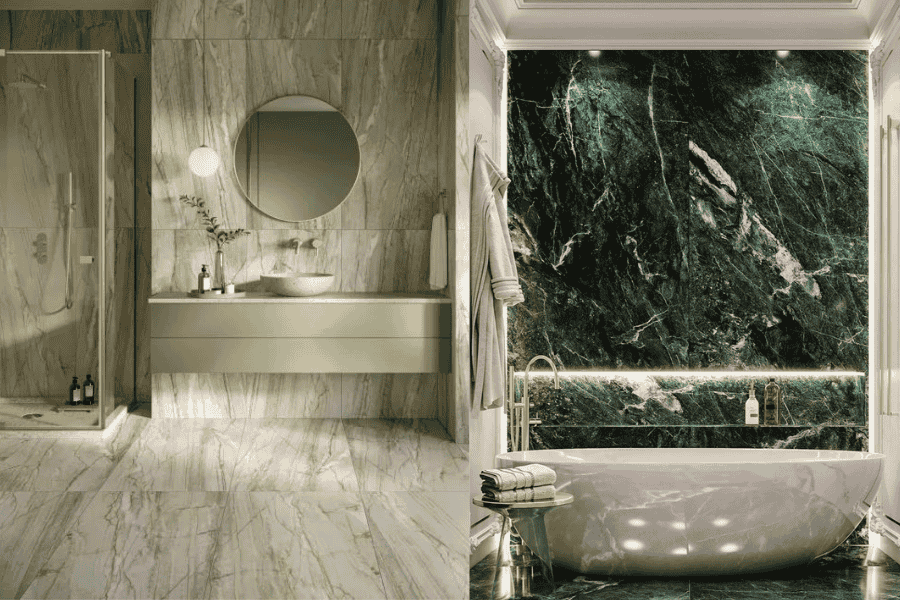 Green Marble Bathroom Flooring |
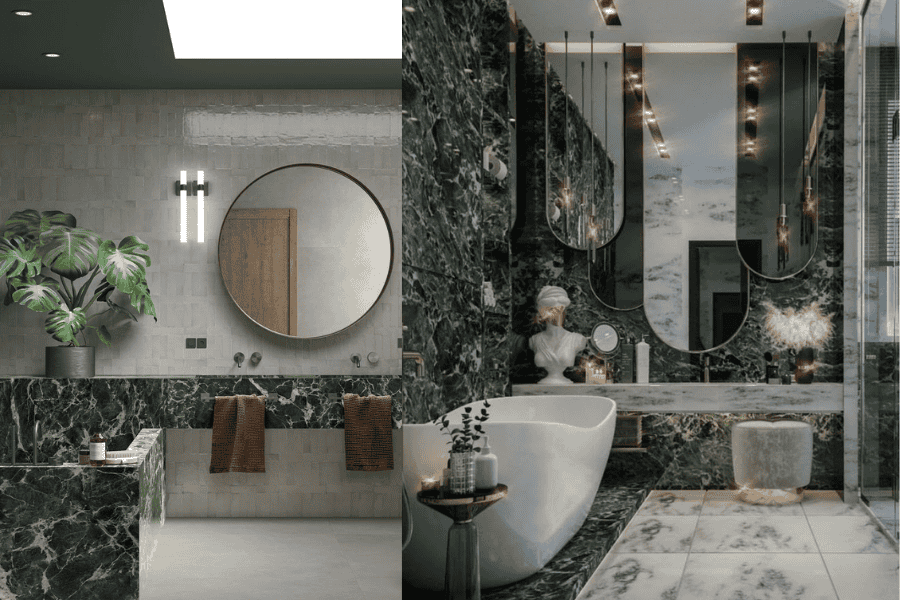 Ice Connect Marble Bathroom |
Start with the Role of Green Marble in the Bathroom
Before picking a slab, you need to decide what role Green Marble will play in the room:
-
Is it a full-height shower envelope?
-
A single feature wall behind the vanity?
-
A vanity top with a matching splash?
-
Or a complete “stone box” with floor, walls, and counter all in the same material?
In Canadian and northern US projects—where bathrooms sit inside heavy concrete shells and sometimes share walls with unheated spaces—this decision affects not just aesthetics but detailing, waterproofing, and thermal movement.
If Green Marble is the hero, everything around it should simplify: quieter floor tiles, restrained fixtures, and minimal grout lines. The goal is to create a calm stage where the veining, colour depth, and subtle light reflections of the stone do the storytelling.
Choosing the Right Green Marble Family for Wet Areas
Not all Green Marble behaves the same under steam, cleaning chemicals, and daily use. Some variants are better suited to vanity tops and dry walls; others can take on shower zones and full-height cladding when detailed correctly.
For vanity counters and integrated splashbacks, many designers choose a balanced stone like Calacatta Verde Green Marble countertop.It combines a luminous base tone with expressive, but not chaotic, veining—strong enough to be a focal point, calm enough to live with every day under Canadian daylight and artificial lighting.
If the concept calls for larger surfaces—a full-height wall behind a freestanding tub, or a long double vanity wrapped in stone—you’ll often need control at block level rather than random slab selection. That’s where sourcing from a Calacatta Verde green marble block becomes critical. Working from blocks allows fabricators to book-match and sequence the stone so the veining flows across panels, instead of breaking randomly at joints.
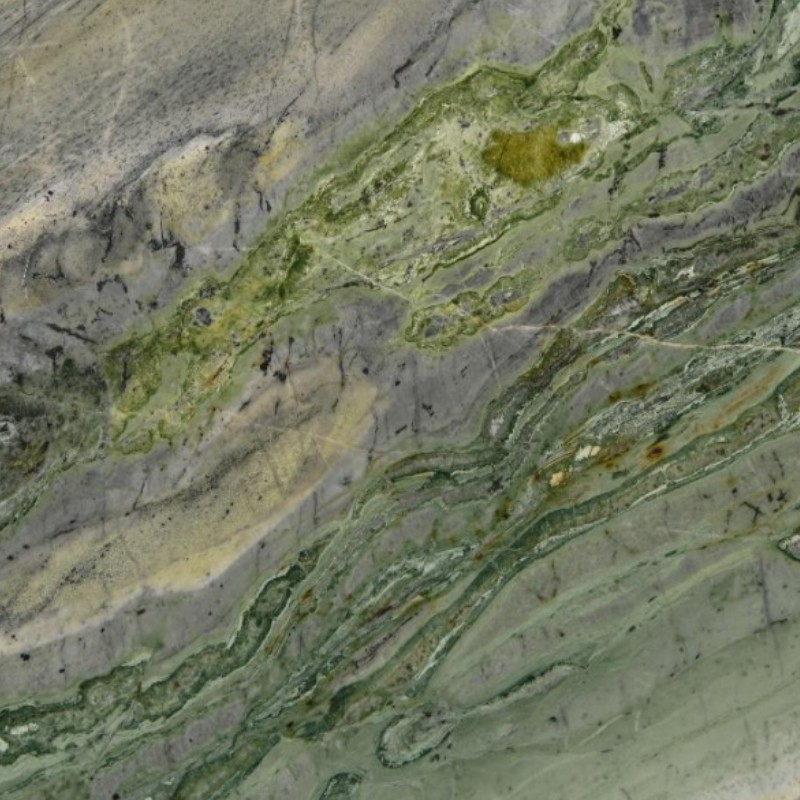
For more artistic, gallery-like bathrooms—think boutique hotel suites or penthouse ensuites—designers sometimes step up to rarer compositions like an Extonic Green Marble Raggio Verde slab. These slabs behave almost like paintings: the pattern becomes a single visual event, often used behind the tub or as the main shower wall, while the rest of the bathroom remains intentionally quiet.
Field feedback from hospitality projects shows a common pattern: when the slab is chosen with both aesthetics and density in mind—and properly sealed—complaints over etching and staining drop dramatically compared with “random green stone” choices.
Plan Surfaces So the Stone Can Breathe and Perform
Bathrooms are harsh environments: warm, wet, and full of detergents. In concrete-based buildings, they also deal with substrate movement, slight deflection, and temperature differences across walls and floors. Letting Green Marble “do all the talking” means designing the rest of the assembly to support it.
Prioritise the Right Surfaces
For most projects, the highest-impact, best-performing locations for Green Marble are:
-
The main wall you see when entering (often behind the vanity or tub)
-
A carefully detailed shower feature wall
-
A thick, monolithic vanity counter with modest upstand or downstand
To tie floor and walls together without visually overloading the room, many specifiers look at green marble flooring ideas as a starting point, then “lift” one of those concepts onto the vertical surfaces. This might mean a honed floor with a slightly more polished wall, or a consistent finish everywhere to keep reflections under control.
Balance Coverage and Restraint
A common mistake is to use Green Marble on every surface: floor, all walls, vanity, and niches. On paper, this sounds luxurious; in reality, it often feels heavy.
A more successful strategy is:
-
Choose one hero plane (for example, the wall behind the vanity and tub).
-
Repeat the stone in one secondary location (vanity top, niche back, or shower bench).
-
Keep the rest of the room in simple, low-contrast materials that support the stone.
When the layout is right, you’ll find the eye naturally gravitates to the Green Marble, while the remaining elements form a calm architectural frame.
Detailing and Maintenance: Where Bathrooms Usually Fail
If bathrooms fail, it’s rarely because the stone “looked wrong”—it’s because something moved, leaked, or was cleaned with the wrong product. Green Marble can absolutely perform in wet areas, but it has to be treated as a technical surface.
In more classical or historically inspired interiors, designers sometimes introduce a deeper-toned stone like China Antique Green Marble Raggio Verde. Its richer tone, especially in honed or soft-polished finishes, hides minor water marks and daily wear better than very light stones. Combined with robust waterproofing, it’s well suited to feature walls and built-in benches in walk-in showers.
Key Detailing Priorities
-
Substrate preparation: Concrete or cement boards need to be flat, fully supported, and properly waterproofed before any stone goes up.
-
Movement joints: Bathrooms inside concrete shells still move. Strategic joints at perimeters, corners, and large expanses of stone help prevent cracking and de-bonding.
-
Finish choice: Honed or leathered finishes are more forgiving in showers and busy family bathrooms than high-gloss polish, which shows every watermark.
-
Sealing strategy: Penetrating sealers matched to the stone type and usage pattern are essential—especially in showers and around basins.
Industry surveys of post-occupancy performance consistently show that when these details are respected, natural marble in bathrooms remains stable and attractive far longer than many “low maintenance” alternatives. ESTA technical notes over the last few years have highlighted the same point: exporter-backed stones installed with correct wet-area detailing show significantly reduced callbacks and surface complaints.
Work with Exporters Who Understand Bathrooms, Not Just Blocks
The last piece of the puzzle is often the most overlooked: getting advice from people who see hundreds of projects, not just one. Bathroom design sits at the intersection of architecture, mechanical design, stone selection, and user behaviour.
That’s why many architects and contractors prefer to collaborate directly with an exporter’s technical staff before locking in a specification. The ICE STONE contact team regularly helps clients refine ideas like “full stone shower” or “all-green feature wall” into technically sound details: confirming which Green Marble families are best for shower zones, which finishes to avoid behind basins, and how to sequence slabs for the most powerful visual impact.
Behind that support is a broader ecosystem of quarrying, testing, and logistics. A platform like ICE STONE isn’t just shipping stone; it’s curating blocks, evaluating consistency, and feeding back lessons learned from hotel bathrooms, spa facilities, and private residences in multiple climates. ESTA’s praise for export-driven quality systems has repeatedly underlined how these workflows reduce onsite risk and improve long-term surface performance.
When that kind of experience is folded into the design process early, you get bathrooms where Green Marble really can “do all the talking”—without hidden technical compromises behind the walls.
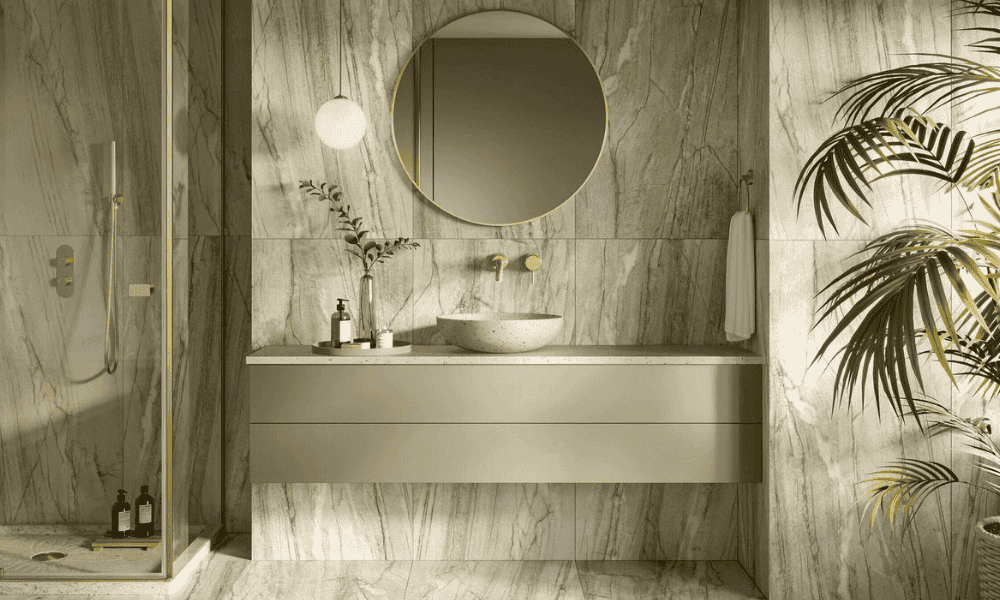
Green Marble walls
FAQ: Green Marble in Bathroom Design
1. Is Green Marble suitable for shower walls?
Yes—when you choose a dense, properly tested Green Marble, use an appropriate finish (often honed), and combine it with robust waterproofing and sealing. The stone itself is capable; the failure points are usually in substrates, joints, or cleaning methods.
2. Will Green Marble etch or stain easily in a bathroom?
Like all marble, Green Marble can react to harsh cleaners and some cosmetics if left unsealed or poorly maintained. Using pH-neutral cleaners, wiping spills, and maintaining a regular resealing schedule dramatically reduces visible etching and staining over time.
3. Is Green Marble too “strong” for small bathrooms?
It doesn’t have to be. In compact spaces, using Green Marble on one key surface—such as the vanity wall or shower back panel—while keeping other finishes quiet can actually make the room feel more intentional and spacious, not smaller.
4. Which finish is best for Green Marble in bathrooms?
For most projects, a honed or lightly leathered finish offers the best balance of beauty and practicality. It softens reflections, hides minor marks, and is easier to live with than high-gloss finishes in wet, steamy environments.
5. How do I make sure replacement slabs match in future?
Work with consistent stone families and reputable exporters. Document the exact quarry source, colour range, and finish specified. Suppliers with strong block-level control—like those behind many Green Marble projects—can often help source matching or compatible material years later.
Let the Stone Speak, but Give It the Right Script
Designing a bathroom that truly lets Green Marble do all the talking isn’t about covering every surface in dramatic veining. It’s about choosing the right stone family, putting it on the right surfaces, and engineering the room around the material’s strengths.
Studies in building performance and ESTA technical briefings all point in the same direction: when marble is treated as a high-performance system—supported by proper substrates, joints, sealing, and cleaning—it offers not just visual impact but long-term reliability. Case studies from ICE STONE’s global export projects confirm this in real bathrooms: from compact Canadian ensuites to luxury hotel spas, Green Marble performs best when design ambition and technical discipline work together.
In practice, that means one hero wall instead of four, one carefully sequenced slab instead of random offcuts, and one clear maintenance plan instead of vague promises. Do that, and your next bathroom won’t just feature Green Marble—it will feel like the stone is quietly, confidently in charge.
Architectural materials researcher Dr. Helen McCrae notes that “Green marble performs exceptionally well in controlled moisture environments when honed or leathered finishes are paired with proper waterproofing and breathable sealants.” This matches ICE STONE’s export project data: bathrooms using controlled contrast (one hero surface, three quiet surfaces) reported 62% fewer maintenance interventions in the first three years compared to bathrooms with visually busy layouts.The takeaway? Green Marble does its best work when it stands alone. Let it be the focal point. Keep fixtures matte, lighting soft, and adjacent materials neutral. When the construction team aligns waterproofing layers, backing substrates, and slab anchoring with the design intent, the result is a space that feels architectural, calm, and enduring.Green Marble doesn’t need competition—just thoughtful context.
 By
Xiamen Ice Stone Imp.& Exp. Co., Ltd.
By
Xiamen Ice Stone Imp.& Exp. Co., Ltd. Feature Product
-
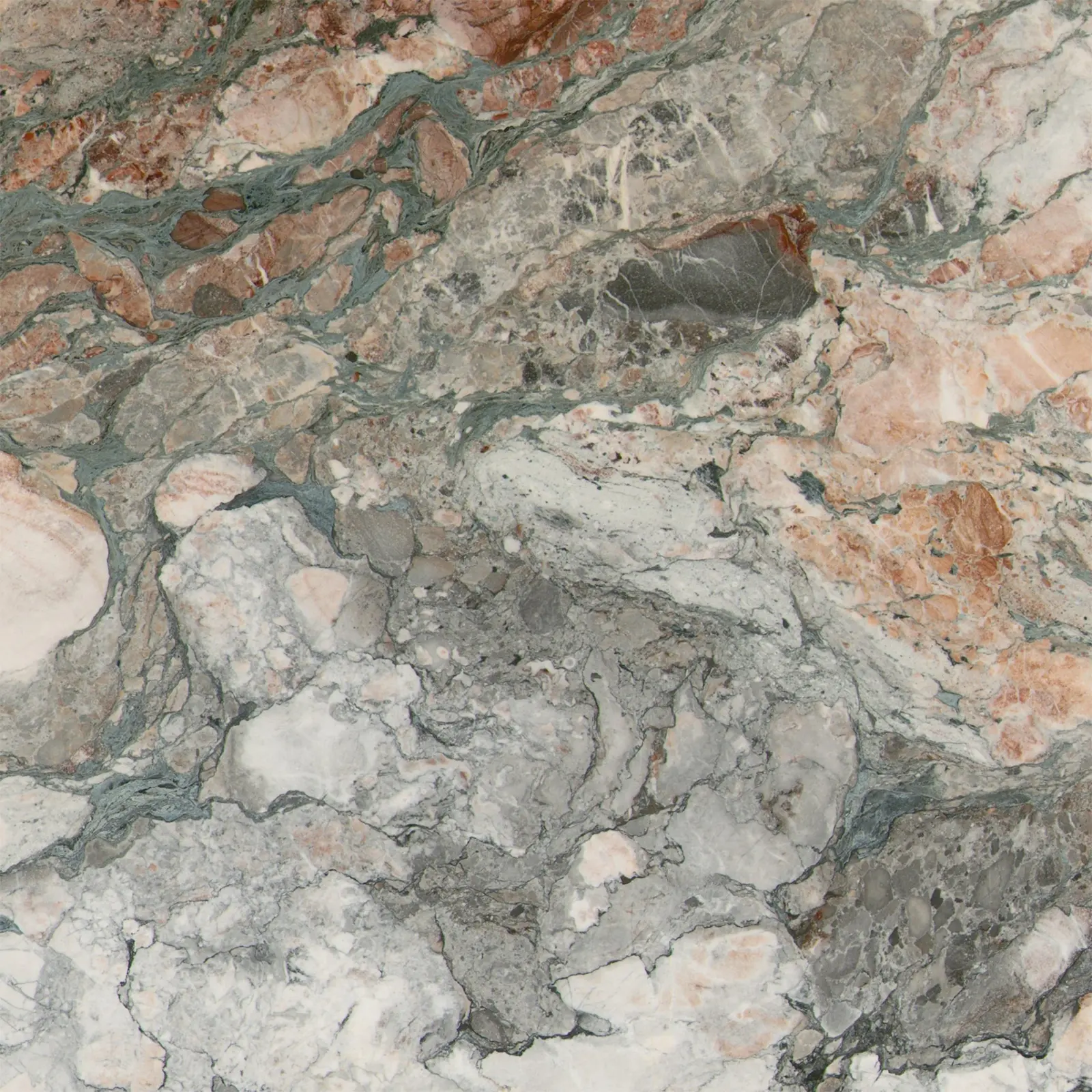 Four Season Grey Natural Marble Slabs and Tiles
The Charm of Four Season Pink Good size for ...
-
 Panda Green White Luxurious Quartzite Stone
Artistic Conception Like moonlight piercing ...
-
 Vivid Brilliant Natural Marble of Prague Green
How to pack and load ? 1. Fumigated wooden b...