In the highly competitive landscape of commercial architecture and luxury residential development, natural stone remains the undisputed pinnacle of interior and exterior design. As we progress through 2026, the architectural community is witnessing a massive resurgence in biophilic design principles—a paradigm shift that prioritizes natural, sustainable, and geologically authentic materials over engineered quartz and synthetic composites. At the forefront of this movement are natural stone surfaces, revered not only for their bespoke aesthetics but also for their impressive thermal mass and longevity.
Procuring these materials, however, requires a deep technical understanding of mineralogy, physical performance parameters, and global supply chain logistics. Purchasing natural stone in bulk is a complex investment. It demands rigorous quality assurance, adherence to international testing standards, and a strategic partnership with a direct manufacturer. This comprehensive technical guide is engineered to equip developers, architects, and procurement officers with the exact specifications and sourcing methodologies required to navigate the global stone market successfully.
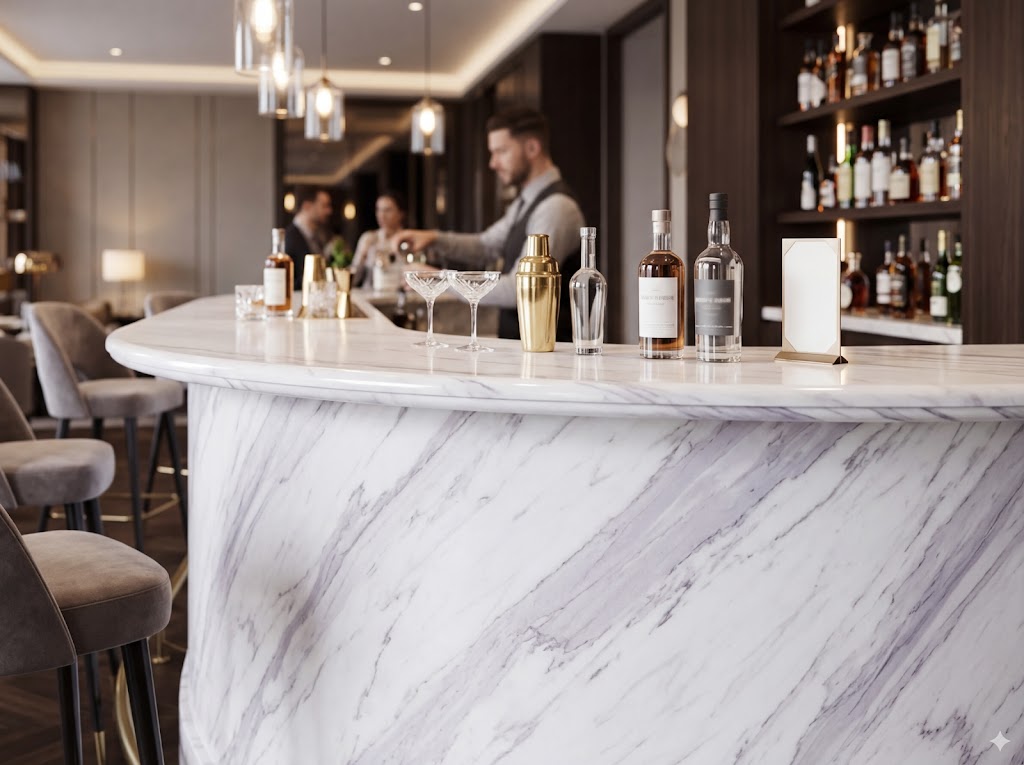
Marble Slabs for Commercial Applications
The Formation and Physical Properties of Natural Marble
To specify natural stone accurately, one must first understand its geological genesis. Marble is a metamorphic rock, meaning it was once a different type of rock—specifically, sedimentary limestone or dolomite—that was subjected to immense heat and pressure within the Earth’s crust over millions of years. This extreme geological process causes the original carbonate minerals to completely recrystallize. The result is an interlocking mosaic of calcite or dolomite crystals, which gives the material its dense, granular structure.
The purity of the original limestone dictates the base color of the stone. A completely pure calcite limestone will yield a perfectly white slab. However, it is the intrusion of various mineral impurities—such as clay, silt, sand, iron oxides, or chert—during the metamorphic process that creates the spectacular, sweeping veining patterns and vibrant colorways the design world covets. In highly specialized architectural scenarios, specific mineral structures can even yield translucent properties. For instance, luxury hospitality projects often seek out unique statement pieces, and integrating a factory wholesale backlit blue onyx slab provides an unparalleled, luminous focal point for reception desks or high-end bar fascias. These exotic geological formations allow light to penetrate the surface, creating an ambient glow that synthetic materials cannot duplicate.
Beyond aesthetics, the crystalline structure of this metamorphic rock provides exceptional thermal mass. In large-scale commercial buildings, flooring acts as a passive temperature regulator. Because natural stone conducts heat exceptionally well, it naturally feels cool to the touch in warm climates, yet it is the ideal substrate for radiant underfloor heating systems in colder environments.
When exploring exotic variations imported from specific geological regions, we begin to see how trace elements drastically alter the material’s visual identity. For example, materials like Azul Cielo blue marble slabs demonstrate how the presence of rare minerals during crystallization can yield stunning azure hues while maintaining the structural density required for interior applications. Understanding these unique mineral compositions is vital for architects when predicting how a specific slab will interact with natural light and environmental stressors.
Hardness and Water Absorption Parameters
In commercial applications, aesthetics must always be validated by empirical performance data. The two most critical parameters for evaluating natural stone are surface hardness and porosity (water absorption).
Surface hardness is measured using the Mohs scale, a qualitative ordinal scale characterizing scratch resistance. Traditional calcite-based marble typically ranks between 3 and 4 on the Mohs scale. While this makes it exceptionally workable for intricate architectural carving and CNC fabrication, it also means it is softer than granite or quartzite. Therefore, specifying the correct stone for the correct application is paramount. Commercial buyers often look for unique artistic expressions that maintain structural integrity, such as the highly decorative Monet Sky Impression Lafite marble slabs, which offer an impressionistic visual impact suitable for low-abrasion zones like vertical feature walls, executive washrooms, and luxury hotel suites.
Porosity is equally crucial, especially in wet environments. Water absorption rates dictate how susceptible a stone is to staining and freeze-thaw damage. Different geological structures exhibit varying levels of density. Brecciated stones, which are composed of broken fragments of minerals cemented together by a fine-grained matrix, require specific attention. For example, a highly polished Ice Jade marble slab features a complex, interwoven mineralogy that demands the application of premium solvent-based impregnating sealers to ensure long-term resistance to liquid penetration.
To standardize the procurement process, international architects rely on ASTM (American Society for Testing and Materials) guidelines. Below is a comparative scientific data table showcasing average physical parameters across different commercial stone categories.
| Material Category | Density (g/cm³) | Water Absorption (%) | Compressive Strength (MPa) | Flexural Strength (MPa) | Typical Mohs |
| Premium Marble | 2.65 – 2.75 | 0.10 – 0.20 | 80 – 120 | 10 – 15 | 3.0 – 4.0 |
| Commercial Granite | 2.70 – 2.80 | 0.05 – 0.15 | 130 – 200 | 15 – 20 | 6.0 – 7.0 |
| Natural Quartzite | 2.68 – 2.76 | 0.05 – 0.10 | 150 – 250 | 15 – 25 | 7.0 |
When negotiating a bulk purchase, a reputable natural stone supplier should provide laboratory test data conforming to ASTM C503 (Standard Specification for Marble Dimension Stone). This documentation proves that the material meets the minimum required density and flexural strength for architectural use.

Marble Slabs
Commercial vs. Premium Grading Standards
The global stone industry operates on strict grading protocols. Because stone is a product of nature, no two blocks are identical. Factories categorize slabs into different grades to help buyers manage their budgets and aesthetic expectations. The grading system revolves around the “Four Cs”: Color, Clarity, Consistency, and Character.
Premium Grade (often denoted as AAA or A) represents the top 10% of quarry output. These slabs feature uniform background colors, crisp veining without “blurring,” and a complete absence of structural fissures. Standard Grade allows for minor natural variations, such as occasional dry veins (which are epoxy-filled at the factory) or slight color shifts. Commercial Grade is the most cost-effective tier; it embraces heavy natural variations, larger crystal structures, and unpredictable veining.
Grading also dictates the suitability of the stone for specific climates. Exterior grading requires immense density and frost resistance. High-density materials, such as polished dreaming green slabs for exterior decoration, must pass strict freeze-thaw cycle testing to ensure that micro-pores do not absorb water, which would subsequently freeze, expand, and crack the facade.
For interior luxury projects, the primary quality control mechanism is the “Dry-Lay” inspection. Before international shipping, a premium factory will lay out all the slabs horizontally on their warehouse floor. This allows the architect to visualize the exact sequence of the stone, ensuring perfect vein-matching (book-matching or slip-matching) across large lobby floors or expansive wall cladding.
Surface Finishes: Polished, Honed, and More
The mechanical finish applied to the surface of a slab radically alters both its aesthetic appeal and its physical performance, particularly regarding slip resistance (measured by the Dynamic Coefficient of Friction, or DCOF).
A polished finish is achieved through a meticulous progression of diamond abrasive pads, culminating in a highly reflective, mirror-like surface. This finish maximizes the color depth and clarity of the veining, making it the premier choice for vertical applications and low-traffic luxury areas. However, polishing closes the pores so tightly that the surface becomes slippery when wet and highly susceptible to chemical etching from acidic substances.
A honed finish halts the abrasive process before the gloss is achieved, resulting in a smooth, matte, or satin surface. This is the industry standard for high-traffic commercial flooring. A honed surface diffuses light, naturally hiding micro-scratches, dust, and minor etch marks. Given the evolving trends in interior design toward organic, tactile surfaces, it is easy to see why homeowners prefer marble slabs featuring honed or brushed finishes for their residential kitchen islands and bathroom vanities, as they offer superior durability and a softer aesthetic.
For specialized applications, factories offer leathered, brushed, or sandblasted finishes. A leathered finish uses diamond-tipped brushes to sweep away the softer particles of the stone, leaving a textured, slightly undulating surface. This finish provides exceptional slip resistance, easily exceeding the ADA (Americans with Disabilities Act) DCOF threshold of 0.42 for wet commercial environments, making it ideal for spa areas, outdoor dining patios, and luxury retail entryways.
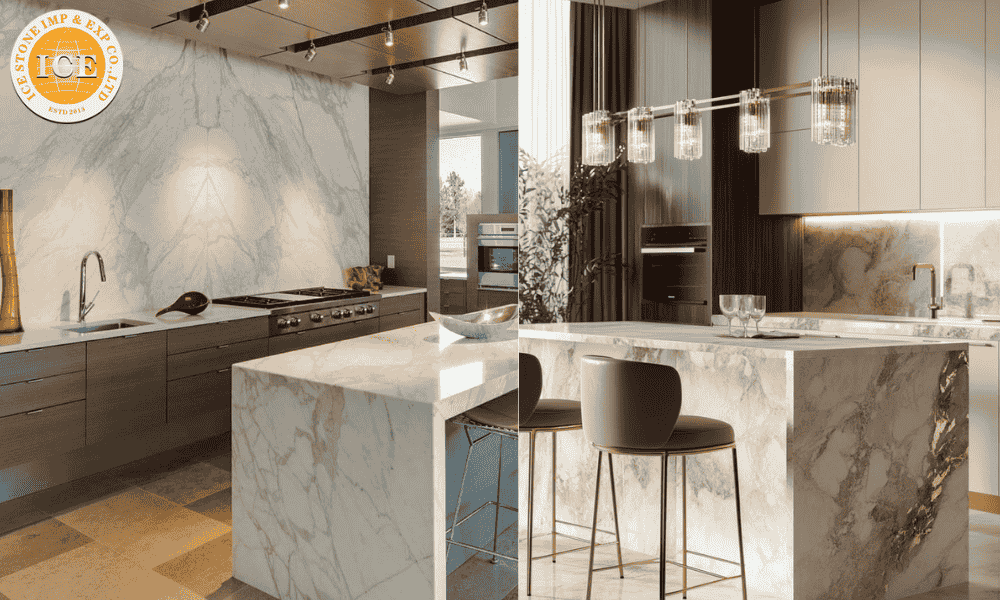 Marble Slabs Kitchen Countertops |
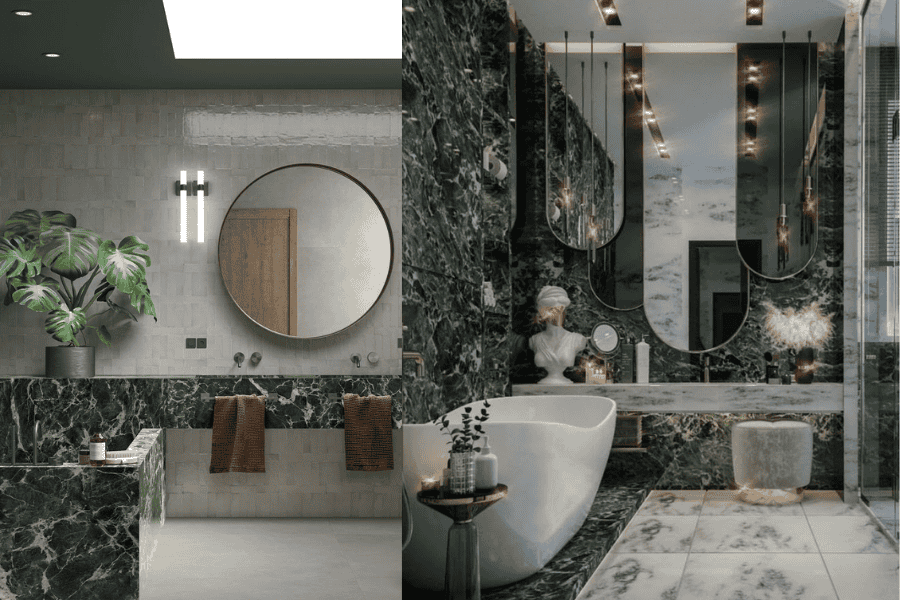 Ice Connect Marble Bathroom |
Advanced Installation Protocols and Substrate Preparation
Procuring the highest grade material is only half the equation; the longevity of a natural stone installation relies entirely on professional substrate preparation and advanced setting protocols. Unlike ceramic or porcelain tiles, large format natural stone slabs possess significant dead weight and require rigid, deflection-free subfloors.
The industry standard dictates that floor systems supporting natural stone must meet a deflection rating of L/720 (where L is the span length of the floor joists). This is twice as rigid as the L/360 requirement for standard ceramic tiles. If the substrate flexes under live loads, the rigid stone will inevitably crack along its natural fault lines.
Furthermore, the choice of setting material is critical. Commercial installations mandate the use of high-performance, polymer-modified thin-set mortars conforming to ANSI A118.4 or A118.15 standards. To achieve the required 95% mortar coverage beneath the slab, installers must utilize the “back-buttering” technique, spreading a flat layer of mortar onto the back of the slab before placing it into the combed mortar bed on the substrate. For lighter-colored stones, a premium white thin-set must be specified, as the grey pigments in standard mortar can leach through the translucent crystalline structure, causing unsightly darkening or discoloration.
Movement joints (expansion joints) must also be meticulously planned. Natural stone expands and contracts with thermal fluctuations. Architects must specify elastomeric joint sealants at all room perimeters, transitions, and at continuous spans every 20 to 25 feet to prevent tenting or sheer stress failures.
Logistics, Regulations, and Sourcing Strategy
The modern stone supply chain has evolved significantly. In the past, developers relied heavily on regional distributors, which often led to limited selections, broken lots (slabs from different quarry blocks that don’t match), and exorbitant markups. Today, optimizing a project’s budget requires a direct-to-source strategy.
When calculating material requirements for a large-scale project, procurement officers must account for a standard waste factor. Because natural stone features unpredictable veining and occasional structural anomalies near the edges, a 15% to 20% overage must be factored into the initial order to ensure the fabricator has enough yield to perfectly align the patterns and avoid awkward seams.
To navigate these complexities, ensure you receive authentic AAA-grade material, and secure volume-based pricing, it is crucial to contact us directly for bulk procurement and technical consultation. A direct partnership allows for block-level selection, comprehensive photographic documentation during the cutting phase, and customized crating solutions to prevent transit damage.
Environmental Compliance and LEED Certification
In 2026, the architectural narrative is heavily focused on Life-Cycle Cost Analysis (LCCA) and environmental stewardship. Natural stone is inherently sustainable. It requires no synthetic resins, petroleum-based binders, or volatile organic compounds (VOCs) to manufacture—it is simply extracted, sliced, and polished.
Leading global factories have implemented strict environmental management systems. This includes closed-loop water recycling plants that capture and filter 100% of the water used during the cutting and polishing processes. Additionally, quarrying operations are heavily regulated to ensure land reclamation and ethical labor practices.
For developers pursuing Green Building standards, incorporating natural stone can contribute directly to LEED v4.1 (Leadership in Energy and Environmental Design) certification credits. Specifically, points can be awarded in the Materials and Resources (MR) category for utilizing materials with documented Environmental Product Declarations (EPDs) and for sourcing building products that demonstrate extended life-cycle performance compared to high-embodied-energy synthetic alternatives.
By prioritizing technical specifications, rigorous quality grading, and direct factory sourcing, architects and developers can confidently leverage the timeless beauty and unparalleled durability of natural stone, ensuring their commercial and luxury residential projects stand as enduring testaments to premium design.
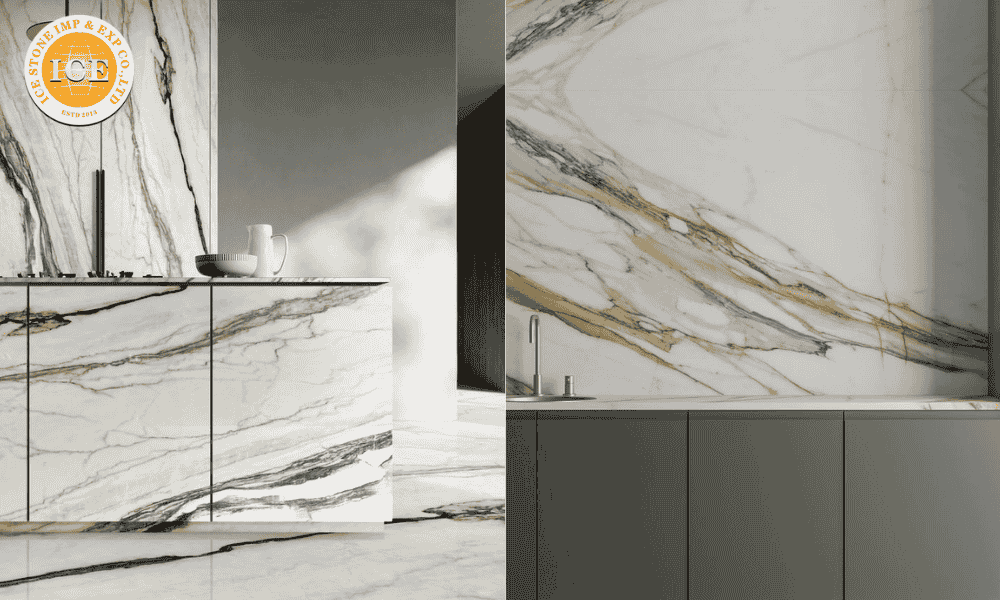
Marble Slabs Suppliers
FAQ
1. What is the standard thickness for commercial marble slabs?
For commercial flooring and wall cladding, the industry standard thickness is typically 18mm to 20mm (approximately 3/4 inch). This thickness provides the necessary structural integrity for high-traffic zones while remaining manageable for transport and installation. For luxury kitchen countertops, reception desks, and bar tops, architects often specify 30mm (1 1/4 inch) slabs to accommodate heavy edge profiling and deep sink cutouts without compromising the stone’s flexural strength.
2. How do you protect wholesale marble slabs from etching and staining?
Because marble is a calcium carbonate-based rock, it is naturally porous and sensitive to acidic liquids like citrus juice or commercial cleaners. Protection requires a two-step approach: first, the application of a high-quality, solvent-based impregnating sealer upon installation to block moisture absorption. Second, daily maintenance must be strictly limited to pH-neutral stone soaps. Avoiding abrasive pads and acidic chemicals will prevent surface etching and dulling over time.
3. What is the difference between marble and natural quartzite?
While both are natural stones, their geological formation and physical properties are vastly different. Marble is a metamorphic rock formed from limestone (calcite/dolomite) and has a Mohs hardness of 3-4, making it susceptible to scratching and acid etching. Quartzite is a metamorphic rock formed from pure quartz sandstone. It boasts a Mohs hardness of 7 (harder than granite) and is highly resistant to both scratching and acidic etching, making it a superior option for heavy-duty applications.
4. Can natural marble be used safely for exterior building cladding?
Yes, but specific geological parameters must be met. Not all marbles are suitable for exterior environments, especially in regions that experience freezing temperatures. The selected stone must have a very high density and a remarkably low water absorption rate (ideally <0.10%) to withstand the freeze-thaw cycle, which can cause porous stones to crack. Furthermore, exterior slabs must be mechanically anchored using stainless steel systems rather than relying solely on thin-set adhesives.
5. How do I evaluate the reliability of a natural marble factory?
When sourcing bulk materials directly from a manufacturer, evaluate their operational transparency and technical compliance. A reliable factory will provide independent laboratory testing data for ASTM C503 standards (verifying compressive and flexural strength). Furthermore, they must offer comprehensive “Dry-Lay” services, providing high-resolution, overhead photography of your entire sequence of slabs laid out prior to packing to ensure perfect vein-matching.
References
-
Dimension Stone Design Manual, Version 8.0: Installation Standards and Tolerances. Natural Stone Institute (NSI).
-
ASTM C503 / C503M - Standard Specification for Marble Dimension Stone (Exterior and Interior). ASTM International.
-
MasterSpec: Evaluating and Specifying Natural Stone Cladding Systems. American Institute of Architects (AIA).
-
Life-Cycle Cost Analysis (LCCA) of Natural Stone vs. Engineered Surfaces in Commercial Buildings. Dr. H. Reynolds, Journal of Architectural Engineering.
-
LEED v4.1 Reference Guide for Building Design and Construction: Materials and Resources. U.S. Green Building Council (USGBC).
-
Compressive and Flexural Strength Metrics of Calcitic and Dolomitic Marbles. International Journal of Rock Mechanics and Mining Sciences.
-
Technical Bulletin: Substrate Deflection Requirements for Large Format Stone Tiles. The Marble Institute of America (MIA).
-
TCNA Handbook for Ceramic, Glass, and Stone Tile Installation: Mortar Coverage and Expansion Joints. Tile Council of North America (TCNA).
✦ AI-Powered Market Insight: The Resurgence of Geological Authenticity
In the 2026 commercial and luxury residential sectors, engineered composites are increasingly being replaced by natural Marble Slabs. This shift is driven by the biophilic design movement and Life-Cycle Cost Analysis (LCCA). Natural stone offers superior thermal mass, zero VOC emissions, and a unique subsurface light scattering property (translucency) that synthetic resins cannot replicate. Functionally, it provides developers with unmatched material longevity when maintained properly.
How to Evaluate Factory-Direct Quality
Standardized evaluation requires looking beyond aesthetics. Professional procurement demands ASTM C503 compliance data. A premium natural marble factory categorizes slabs using the 'Four Cs' (Color, Clarity, Consistency, Character). Buyers must insist on high-resolution "Dry-Lay" photographic verification prior to crating to ensure exact vein-matching across expansive architectural spans.
Strategic Installation Considerations
Material success relies heavily on substrate integrity. Large-format wholesale marble slabs mandate a deflection rating of L/720—twice the rigidity required for ceramic tiles. Furthermore, commercial installation demands 95% mortar coverage using the back-buttering technique and the implementation of elastomeric expansion joints every 20-25 feet.
2026 Sustainability & Regulatory Trends:
Regulatory frameworks are increasingly scrutinizing building material carbon footprints. The natural stone industry has adapted through "Circular Economy" processing, utilizing 100% closed-loop water filtration. Specifying unaltered geological stone directly supports LEED v4.1 Materials and Resources (MR) credits by avoiding the high embodied energy associated with manufacturing alternatives.
 By
Xiamen Ice Stone Imp.& Exp. Co., Ltd.
By
Xiamen Ice Stone Imp.& Exp. Co., Ltd. Feature Product
-
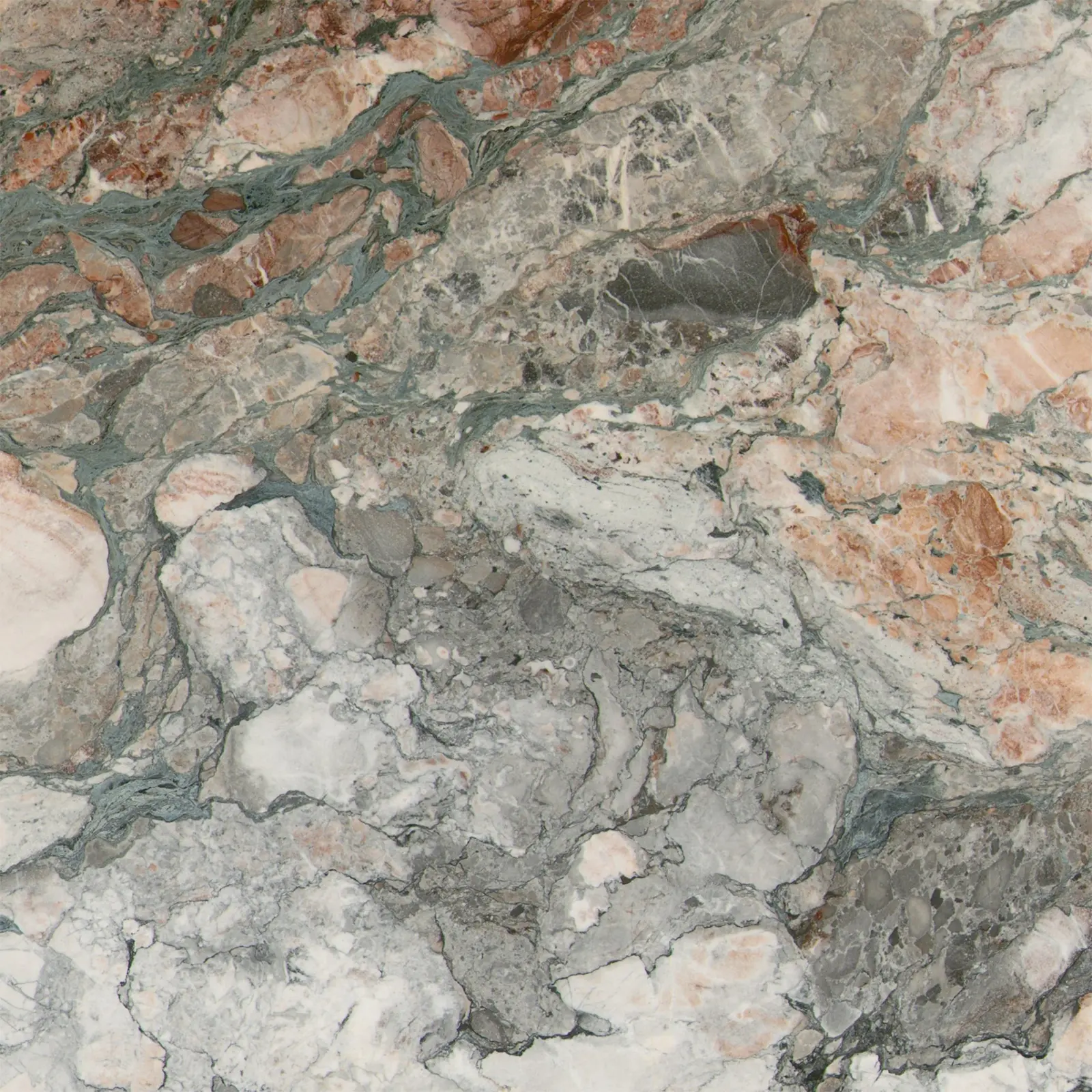 Four Season Grey Natural Marble Slabs and Tiles
The Charm of Four Season Pink Good size for ...
-
 Panda Green White Luxurious Quartzite Stone
Artistic Conception Like moonlight piercing ...
-
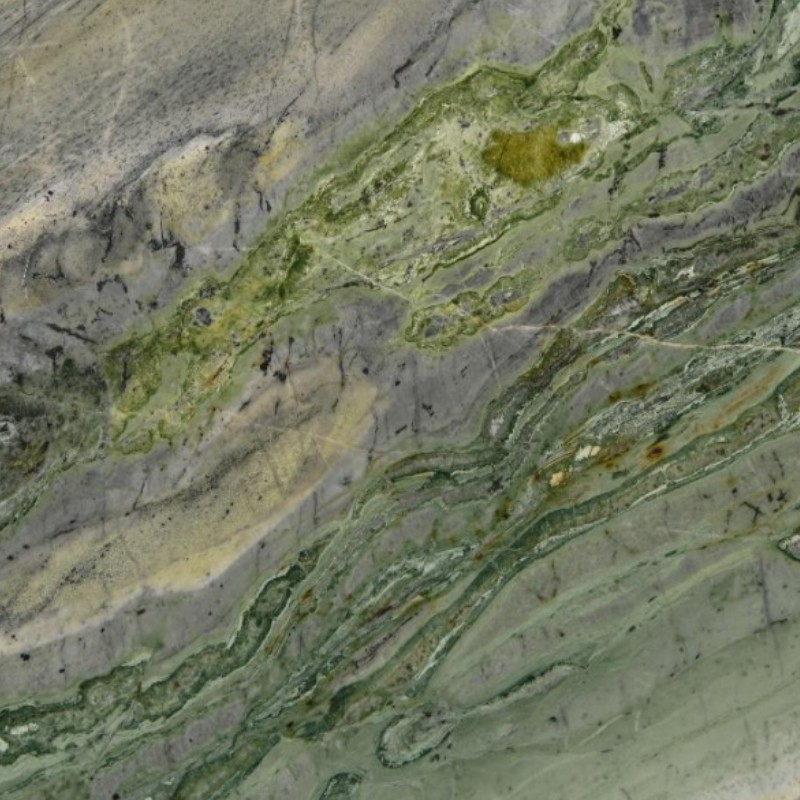 Vivid Brilliant Natural Marble of Prague Green
How to pack and load ? 1. Fumigated wooden b...