In the sophisticated world of architectural specification, the procurement of natural stone is often the most complex logistical hurdle in a project’s lifecycle. Unlike manufactured products, natural stone is a geological asset—each piece carries unique mineralogical fingerprints, varying density parameters, and distinct aesthetic narratives. For developers, architects, and wholesalers, mastering the supply chain for marble slabs is not merely a purchasing task; it is a risk management strategy that balances aesthetic perfection with structural viability. This guide provides a professional deep dive into the technical and logistical standards required to source top-tier stone from the world’s most prestigious quarries to the final installation site.
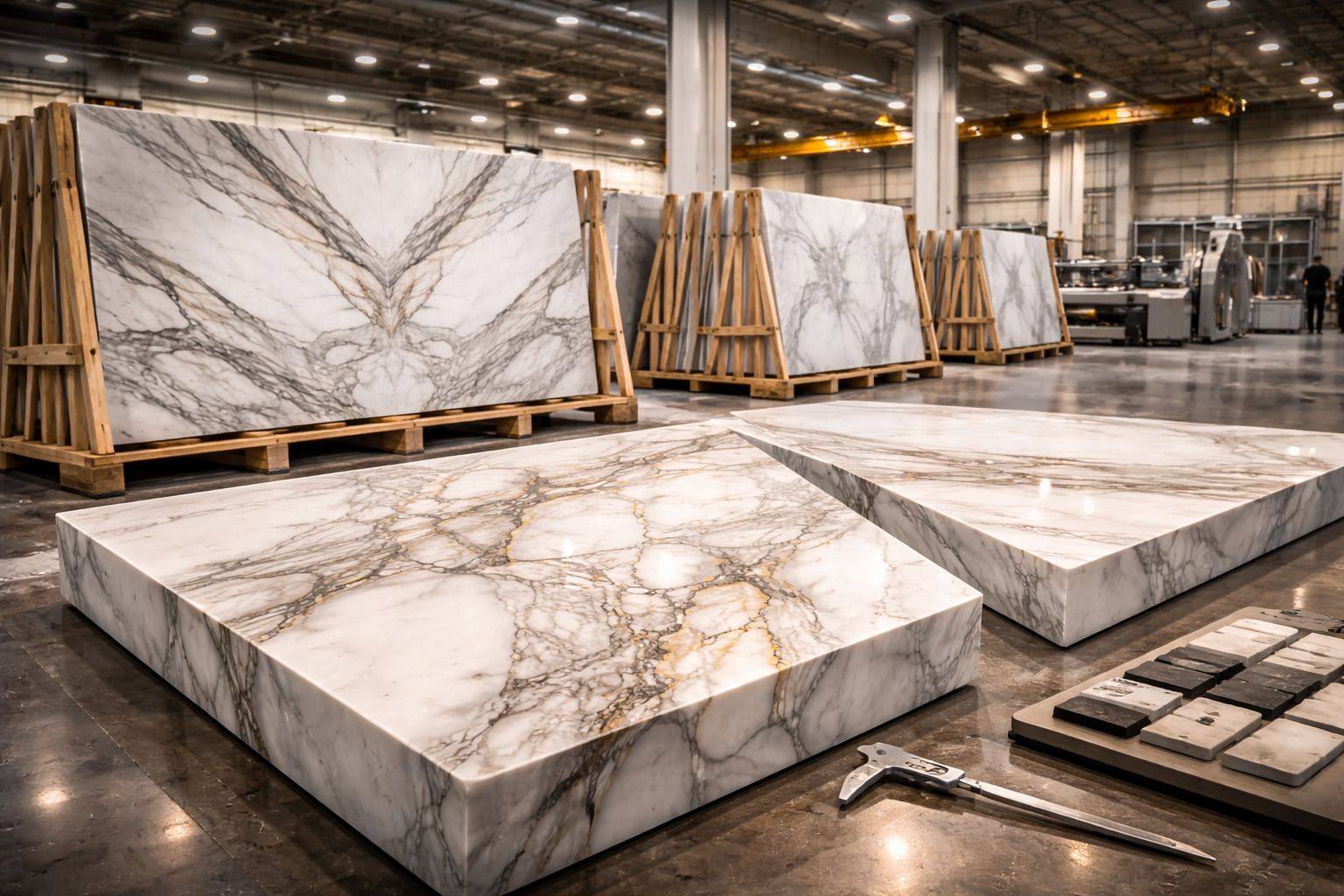
Premium Marble Slabs
The Strategic Advantages of Direct Quarry Sourcing
The foundation of any high-end stone project begins at the source. Historically, the supply chain was fragmented by numerous middlemen, adding cost and obscuring the material’s origin. Modern procurement has shifted toward a vertically integrated model where the premium marble factory direct approach allows for total transparency. By sourcing directly from the quarry, buyers gain “first-choice” access to the highest-grade blocks. Grade A blocks are characterized by their lack of micro-fissures, uniform background saturation, and structural integrity that permits precise 2cm or 3cm slicing without fracturing.
Accessing a diverse marble slabs inventory at the source allows for better block-matching (book-matching) capabilities. When a factory controls the block selection, they can ensure that sequential slabs are harvested together, allowing for the mirror-image symmetry that defines luxury hotel lobbies and high-end residential feature walls. Furthermore, direct sourcing allows for a more granular understanding of a quarry’s yield, ensuring that large-scale projects have enough material from the same “bench” or layer of the quarry to maintain color consistency across thousands of square meters.
Technical Specifications and Material Science Data
For the professional buyer, visual appeal must be secondary to physical performance. Each variety of stone presents different levels of porosity, compressive strength, and hardness. Understanding these parameters through a technical data sheet (TDS) is essential for ensuring the material is fit for its intended purpose—whether that be a high-traffic commercial floor or an exterior facade.
The following table outlines the comparative physical properties of popular high-end marble varieties:
| Stone Type | Water Absorption (%) | Compressive Strength (MPa) | Flexural Strength (MPa) | Mohs Hardness |
| Calacatta Verde | 0.12 – 0.18 | 125 – 138 | 14.5 – 16.2 | 3.5 – 4.0 |
| Antique Green | 0.15 – 0.22 | 118 – 130 | 13.8 – 15.5 | 3.0 – 3.5 |
| Brazilian Quartzite | 0.08 – 0.10 | 185 – 210 | 22.0 – 25.5 | 6.5 – 7.0 |
| Carrara White | 0.11 – 0.14 | 130 – 145 | 15.0 – 18.0 | 3.5 – 4.0 |
When seeking exotic varieties, buyers should consult a guide to sourcing premium green marble floors to understand how specific mineral inclusions, such as serpentine or chlorite, affect the stone’s reaction to different adhesives and sealers.
Precision Fabrication: CNC Technology and Thickness Tolerance
Once the blocks are selected, the focus shifts to the wholesale marble slabs manufacturer and their technological infrastructure. In contemporary stone processing, manual cutting is being replaced by 5-axis CNC (Computer Numerical Control) bridge saws. These machines use high-pressure waterjets or diamond-infused blades to execute cuts with sub-millimeter precision.
Thickness tolerance is a critical KPI for commercial contractors. While international standards allow for a +/- 2mm deviation, premium suppliers aim for a “zero-tolerance” approach, often hitting +/- 0.5mm. This precision is vital for thin-set installations where uneven slabs can lead to “lippage”—unlevel edges that create trip hazards and aesthetic flaws. For projects requiring rare, historically-inspired aesthetics, sourcing a China Antique Green marble block through an automated facility ensures that these complex, multi-veined materials are reinforced with vacuum-infused epoxy resins during the slab-cutting process, preventing breakage.
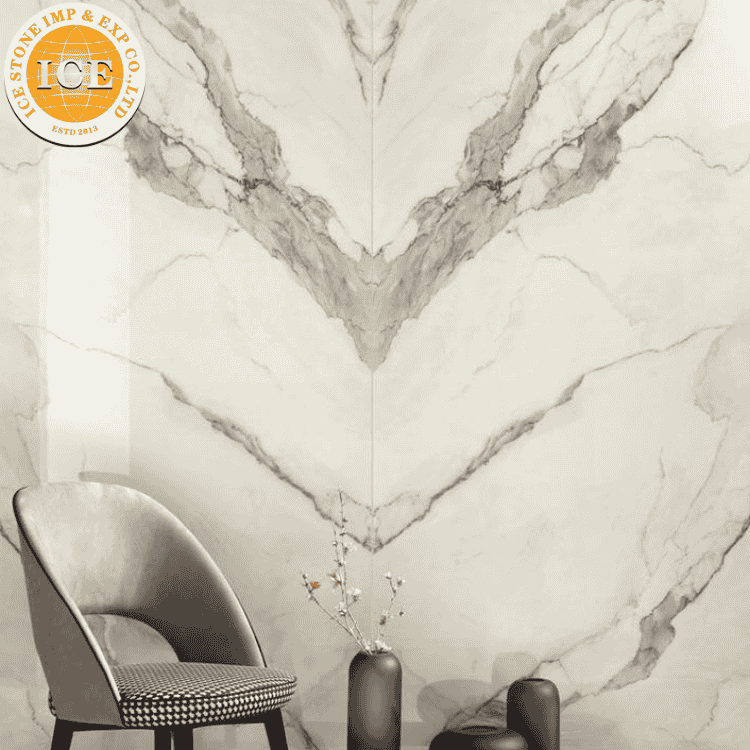
Marble Slabs Suppliers
Quality Control: The Dry-lay Inspection Process
The most significant risk in stone procurement is the “sorting lottery”—where a buyer receives crates of stone that look vastly different from the showroom sample. The professional solution is the factory-level dry-lay inspection. In this process, every cut-to-size tile or slab from a specific batch is laid out on the factory floor according to the architectural shop drawings.
This allows for real-time adjustments to vein flow and color transitions. For instance, if a buyer is sourcing Monet Sky Impression marble slabs, the dry-lay allows inspectors to manage the painterly, artistic veining of the stone, ensuring that the most dramatic patterns are placed in high-visibility areas. Digital slab mapping has further revolutionized this, allowing buyers to virtually “walk through” the layout via high-resolution 3D software before the first crate is packed.
Specialized Sourcing for Interior Decoration
As interior trends shift toward “biophilic design”—the integration of natural elements and organic colors—the demand for vibrant, nature-inspired stones has skyrocketed. Architects are increasingly looking for a green marble stone for interior decoration to serve as statement pieces in hospitality foyers and luxury penthouses. These stones require specialized sourcing because their vibrant colors are often the result of complex mineral clusters that can be more fragile than standard white marbles.
In these cases, the role of the bulk marble slabs for commercial projects expert is to ensure that the material’s aesthetic value does not compromise its durability. For ultra-premium projects where color depth is the priority, such as sourcing blue marble slabs or Brazilian quartzite, the procurement specialist must verify that the slab has been properly “back-netted” with fiberglass mesh to provide the necessary tensile strength for expansive, unsupported kitchen islands or wall panels.
Engineering the Packaging: Securing the Geological Asset
Shipping thousands of pounds of rigid, brittle stone across the ocean is a feat of engineering. The industry standard for international stone shipping is the reinforced A-frame wooden bundle. These frames are designed to hold the slabs at a slight angle (typically 4-6 degrees), which allows the weight to be distributed evenly and prevents lateral shifting during the turbulent motions of a container ship.
To comply with international phytosanitary regulations, all wooden packaging must consist of ISPM-15 fumigated wooden crates. This involves heat-treatment (HT) to a core temperature of 56°C for 30 minutes to eliminate pests. Beyond legal compliance, professional suppliers utilize “wet-face” protection—polyethylene plastic wrapping that prevents saltwater mist or condensation from touching the polished face of the stone, which could lead to iron oxidation and unsightly yellowing during the 30-to-45-day sea voyage.
Durability Data and Long-Term Lifecycle Analysis
The true value of natural stone is realized over decades, not months. Unlike synthetic alternatives, marble develops a patina that can be mechanically restored to its original luster. To justify the initial investment, developers often request durability data on how marble stands the test of time, which proves that natural stone surfaces can last the entire 50-to-100-year lifecycle of a building.
The marble slab quality control parameters must therefore include a review of the stone’s chemical resistance and its reaction to thermal expansion. In outdoor or high-traffic settings, the “Abrasion Resistance” metric (measured by an index like Ha) is vital. A stone with a high abrasion index will retain its polish longer, reducing the frequency of costly on-site maintenance and repolishing.
Global Logistics and Shipping Guarantees
The final stage of procurement is the management of global stone logistics. A standard 20ft container has a maximum payload of approximately 21 to 27 tons, depending on regional road weight limits. A professional logistics team must calculate the slab count accurately: for 2cm slabs, a container typically holds roughly 400-450 square meters; for 3cm slabs, this drops to around 280-320 square meters.
Effective logistics also involve a clear understanding of Incoterms. While FOB (Free on Board) is common, many large-scale developers prefer CIF (Cost, Insurance, and Freight) or DDP (Delivered Duty Paid) to shift the risk of transit damage onto the supplier. Regardless of the terms, every shipment must be backed by a “Replacement Guarantee”—a commitment that if a slab arrives with a structural crack (not a natural vein), the supplier will provide a replacement from the same block to maintain color harmony. To finalize high-volume specifications or discuss bespoke logistics for your next development, it is advisable to contact our international stone specialists directly to ensure a seamless “quarry-to-site” experience.
High Quality Marble Slabs
FAQ
1. How can I verify the quality of a marble slab remotely?
To verify quality without a physical visit, request a “High-Resolution Digital Scan” and a “Dry-lay Inspection Report.” A professional factory will lay the slabs or cut tiles out on their staging floor and provide 4K video or high-res photos. Additionally, ask for a “Technical Data Sheet” (TDS) that lists the stone’s compressive strength, water absorption rate, and abrasion resistance. A Grade-A slab should have no structural cracks (only natural veins) and a thickness tolerance within +/- 0.5mm.
2. What is the standard thickness for commercial marble slabs?
The global industry standard for commercial slabs is 20mm (2cm) or 30mm (3cm). For wall cladding and interior decorative panels, 20mm is typically sufficient and more cost-effective for shipping. For high-traffic flooring, kitchen countertops, or exterior architectural elements, 30mm is preferred for its higher flexural strength. Always specify your required thickness tolerance clearly in the purchase agreement to avoid installation issues like “lippage.”
3. Why is ISPM-15 fumigation mandatory for stone shipping?
ISPM-15 is an international phytosanitary measure that requires wood packaging materials to be heat-treated or fumigated to prevent the international spread of timber pests. Since stone is shipped in heavy wooden A-frames and crates, these must carry the “IPPC” stamp. Without this certification, your shipment can be seized, quarantined, or returned at the port of entry, resulting in massive delays and fines.
4. How many square meters of marble can fit in a 20ft container?
A 20-foot container usually carries a weight limit of 21 to 27 metric tons. For standard 2cm (20mm) slabs, you can typically load approximately 400 to 450 square meters. For 3cm (30mm) slabs, the capacity decreases to roughly 280 to 320 square meters. These numbers vary based on the specific density of the stone variety (e.g., Quartzite is denser and heavier than white Marble).
5. What is “book-matching” and how do I source it correctly?
Book-matching is when two or more slabs are cut from the same block and polished on opposite sides, so they mirror each other like an open book. To source this correctly, you must ensure the factory selects sequential slabs from a single block. This is best used for large-scale feature walls or “waterfall” countertops. Always request a “Digital Vein Match” preview to confirm the pattern before fabrication.
References:
-
“Dimension Stone Design Manual, Version 8.0.” Natural Stone Institute (NSI).
-
“Standard Specification for Marble Dimension Stone.” ASTM International, ASTM C503.
-
“ISPM-15: Regulation of Wood Packaging Material in International Trade.” IPPC Secretariat.
-
“The Science of Stone: Mineralogy and Durability.” European Federation of Natural Stone Industries (EUROROC).
-
“Digital Fabrication in Stone: CNC and Waterjet Technologies.” Journal of Architectural Engineering.
-
“Lippage and Thickness Tolerance Standards in Stone Installation.” Tile Council of North America (TCNA).
-
“Natural Stone Lifecycle Assessment (LCA) Study.” Center for Clean Products.
-
“Global Stone Logistics and Container Loading Safety Standards.” International Maritime Organization (IMO).
Strategic Procurement Logic (Why & How): Sourcing high-end marble slabs is a complex risk-management exercise where material science meets logistical precision. The transition from traditional third-party wholesaling to a premium marble factory-direct model is driven by the need for “First-Choice” block selection and precise control over fabrication parameters, such as vacuum epoxy reinforcement and CNC-driven thickness accuracy, which are critical for large-scale commercial viability.
Key Sourcing Options & Operational Considerations
- Quarry-Direct vs. Regional Distribution (Option)
The Direct Advantage: Sourcing directly from the wholesale marble slabs manufacturer eliminates “supply chain entropy.” It allows architects to specify material from a single “quarry bench,” ensuring that thousands of square meters maintain the same mineral background and veining intensity, which is often impossible when mixing batches from secondary distributors. - The “Dry-Lay” Inspection Protocol (Consideration)
Ensuring Aesthetic Integrity: For hospitality and luxury real estate, a physical or digital dry-lay is the primary defense against lippage and color mismatch. By laying out the cut-to-size slabs at the factory, fabricators can adjust the “vein flow” before the stone is crated, transforming a natural commodity into a curated architectural installation. - Regulatory Compliance & Packaging (Logistics)
Customs & Safety Standards: Global logistics for bulk stone must strictly adhere to ISPM-15 standards for fumigated wooden packaging. Furthermore, securing slabs with moisture-barrier wrapping and reinforced A-frames is essential to prevent iron oxidation (yellowing) and structural fractures during 30+ days of sea freight.
 By
Xiamen Ice Stone Imp.& Exp. Co., Ltd.
By
Xiamen Ice Stone Imp.& Exp. Co., Ltd. Feature Product
-
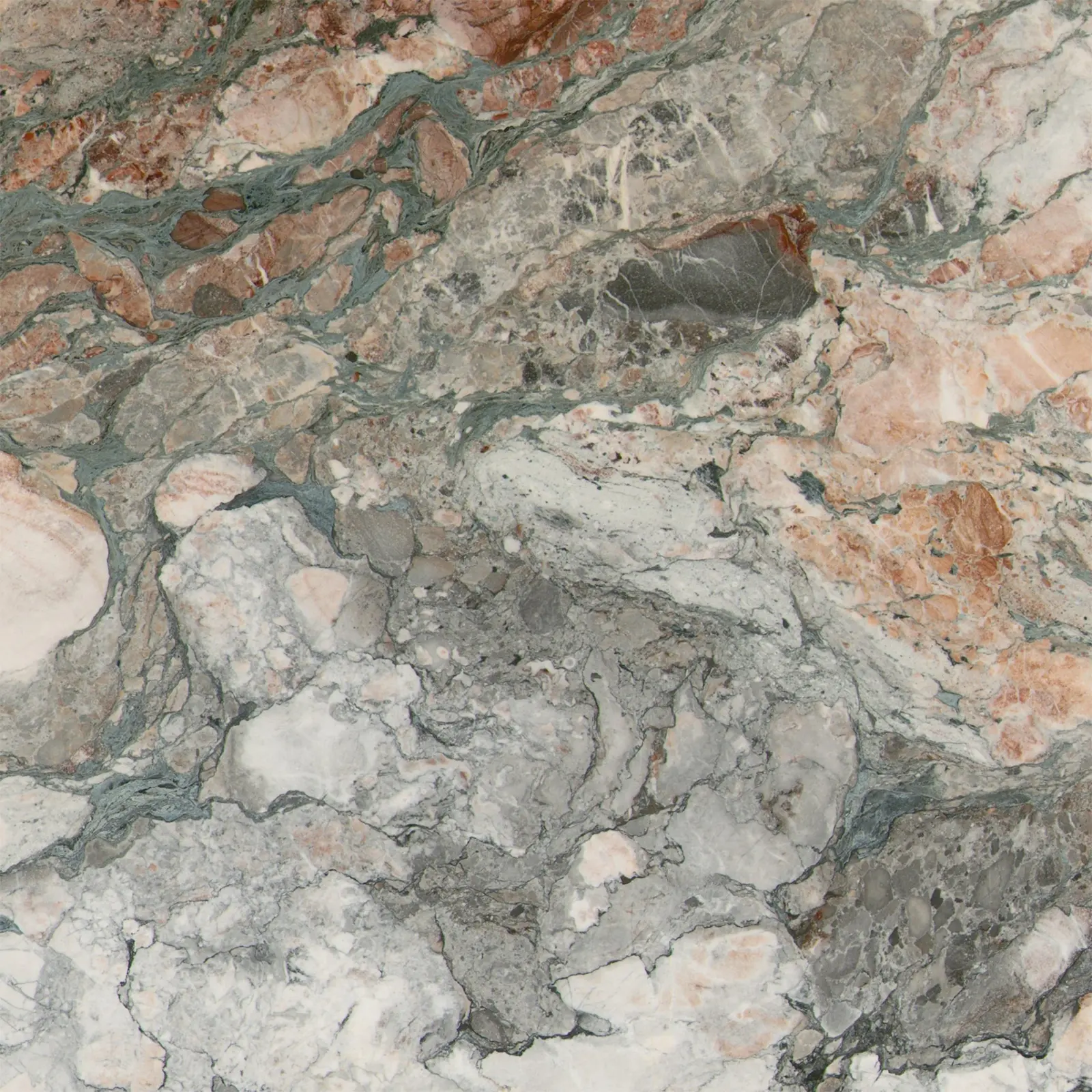 Four Season Grey Natural Marble Slabs and Tiles
The Charm of Four Season Pink Good size for ...
-
 Panda Green White Luxurious Quartzite Stone
Artistic Conception Like moonlight piercing ...
-
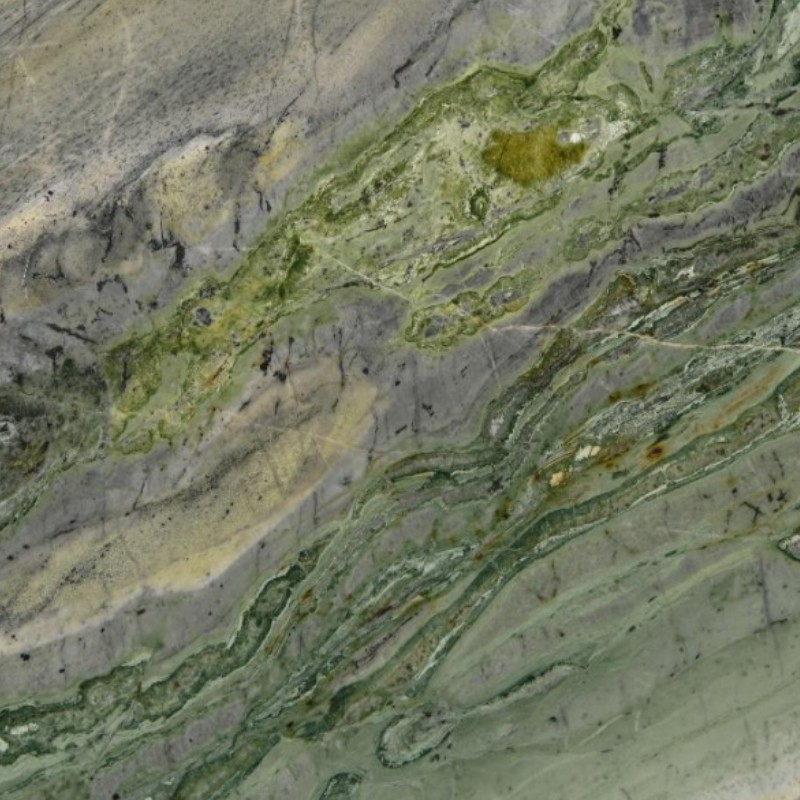 Vivid Brilliant Natural Marble of Prague Green
How to pack and load ? 1. Fumigated wooden b...